Lina Irawan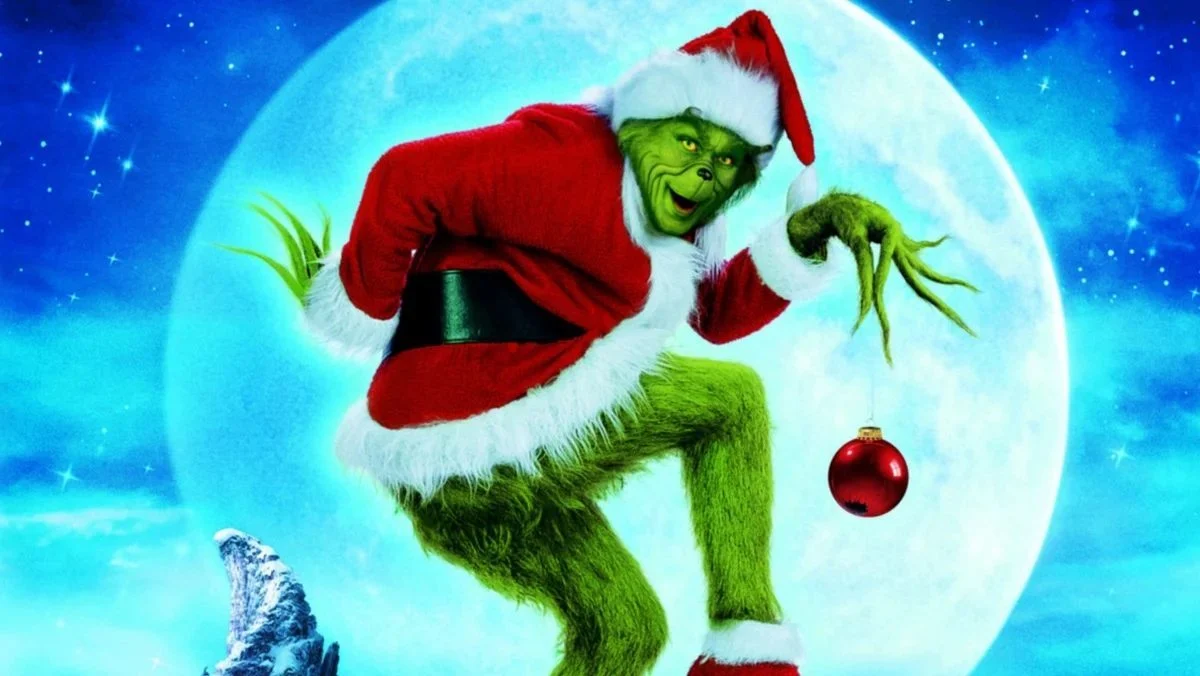
For millions of families worldwide, the turn of the millennium was defined by a singular, green, cantankerous icon. In the year 2000, Ron Howard’s live-action adaptation of Dr. Seuss’s How the Grinch Stole Christmas didn’t just top the box office; it etched itself into the cultural bedrock of the holiday season. Now, more than a quarter-century later, reports indicate that the gates of Mount Crumpit may be swinging open once more.
According to a recent report by Variety, Universal Pictures and Imagine Entertainment are in the early stages of exploring a potential sequel to the 2000 classic. The project, while not yet officially greenlit, is generating significant industry buzz, primarily because it aims to reunite the original dream team: star Jim Carrey and director Ron Howard.
The Main Facts: A Potential Reunion
The prospect of a sequel to a film that is widely considered a "one-and-done" fairy tale is as surprising as the Grinch’s own heart-growing epiphany. Should the project move forward, it would represent one of the most anticipated—and scrutinized—legacy sequels in Hollywood history.
The studio is reportedly looking to bring back Jim Carrey to reprise his iconic, Golden Globe-nominated performance as the titular Grinch. Simultaneously, Ron Howard, who steered the original film through the logistical nightmare of heavy prosthetic work and elaborate set design, is being eyed to return to the director’s chair.
The narrative heavy lifting for this potential follow-up is being entrusted to a trio of comedy veterans: Alec Berg, Jeff Schaffer, and David Mandel. This writing team, whose shared pedigree includes the cynical, observational brilliance of HBO’s Curb Your Enthusiasm, alongside projects like Barry and Silicon Valley, suggests that a potential sequel might lean into a more mature or sharply comedic tone than the whimsical 2000 original.
A Chronological Look at the Grinch Legacy
To understand why a sequel is so momentous, one must look at the timeline of the franchise’s history:
- 1957: Dr. Seuss publishes the original children’s book, How the Grinch Stole Christmas!, cementing the Grinch as an eternal literary symbol of holiday cynicism and redemption.
- 1966: The classic Chuck Jones animated special airs, establishing the character’s visual identity and iconic theme song, "You’re a Mean One, Mr. Grinch."
- 2000: Universal Pictures releases Ron Howard’s live-action adaptation. Despite mixed critical reviews, it becomes a massive commercial phenomenon, grossing $265 million domestically—an extraordinary sum for the era—and becoming the top-grossing holiday film of the year.
- 2018: Illumination Entertainment releases a successful animated feature, voiced by Benedict Cumberbatch, introducing the character to a new generation of digital-native viewers.
- 2024: In an interview with ComicBook, Jim Carrey addresses the possibility of a sequel, noting that while he is open to the idea, his willingness is contingent upon the evolution of technology regarding the character’s physical transformation.
- 2026: Reports surface that Universal and Imagine Entertainment are actively developing a screenplay, reigniting the prospect of a live-action return to Whoville.
Supporting Data: Why Now?
The financial success of the 2000 original cannot be overstated. Adjusted for inflation, that $265 million domestic haul represents a massive return on investment. In the landscape of 2026, where "legacy sequels" and "IP-driven storytelling" dominate the box office—as seen with the success of Top Gun: Maverick or Beetlejuice Beetlejuice—the Grinch remains an incredibly valuable intellectual property.
The decision to pair the project with the Curb Your Enthusiasm writing team is a strategic pivot. While the original film focused on a family-centric, heartfelt adaptation of Seuss’s rhyming prose, the involvement of Berg, Schaffer, and Mandel suggests a shift toward the "meta-humor" that has become a staple of modern family blockbusters. The studio is betting that the adult audience who grew up with the 2000 film is now eager to see a version of the Grinch that balances nostalgia with a more sophisticated, perhaps sharper, comedic edge.
The Physicality Problem: Carrey’s Stance on Prosthetics
Perhaps the most significant hurdle to this project is the physical toll the role took on Jim Carrey. The 2000 production was notoriously difficult for the actor. Carrey famously described the makeup process—which involved several hours in the chair daily to apply latex appliances, fur, and the signature yellow contact lenses—as an act of "torture."
In his 2024 interview, Carrey provided a candid look at his perspective: "I do that with a ton of makeup and can hardly breathe. It was an extremely excruciating process. The children were in my mind all the time. ‘It’s for the kids. It’s for the kids.’"
However, Carrey’s comments also provided a roadmap for his potential return: "And now, with motion capture and things like that, I could be free to do other things."
This hint at motion capture (mocap) technology suggests that the studio may be looking to replace the practical prosthetics that defined the original aesthetic with a hybrid approach. While many purists argue that the tactile, practical effects were the heart of the 2000 film’s charm, the shift to mocap would allow Carrey to deliver his performance without the physical claustrophobia of the latex mask.
Implications: Can a Fairy Tale Sustain a Franchise?
The question looming over this development is whether a story defined by its definitive, moral conclusion can be successfully expanded. Dr. Seuss’s original work is a closed loop: the Grinch learns his lesson, his heart grows, and he returns the presents. There is no traditional "villain" to face in a sequel, nor is there a clear narrative trajectory for a character who has already completed his primary arc.
The Creative Challenge
The writers face the "sequel trap." If the Grinch is already a "reformed" character, the narrative tension must shift. Will the film explore his struggle to maintain his newfound holiday spirit? Will it introduce a new antagonist from the world of Whoville? Or will it lean into the self-referential comedy for which the writing team is known?
The Technological Gamble
If the film relies heavily on digital motion capture, it risks alienating the audience that cherishes the 2000 film specifically for its practical, tactile aesthetic. The "uncanny valley" effect is a constant threat in high-budget family films. If the digital Grinch does not retain the frantic, elastic energy of Carrey’s original physical performance, the film may struggle to replicate the magic of the original.
The Legacy Factor
Universal Pictures is playing a long game. By securing a creative team known for adult-oriented comedy and potentially utilizing modern visual effects, they are attempting to bridge the gap between two generations: those who saw the film in theaters in 2000, and their children who know the Grinch primarily through streaming and the 2018 animated film.
Final Thoughts: The Road to Mount Crumpit
Whether or not this project sees the light of day depends on a convergence of factors: Jim Carrey’s schedule and comfort levels, the studio’s confidence in the script, and the willingness of audiences to accept a "new" version of a character that feels deeply rooted in a specific time and place.
For now, the project remains in the "developmental" phase, a tentative, shimmering hope for fans of the holiday classic. If the stars align—and if the writers can find a way to justify a return to a story that was perfect the first time—we might just find ourselves back in Whoville by the end of the decade. Until then, the Grinch remains exactly where we left him: at the top of the mountain, watching over the town, and perhaps, waiting for a reason to descend once more.

 Siti Muinah
 Azzam Bilal Chamdy