Ali Ikhwan
In the rapidly evolving landscape of streaming television, it is rare to find a series that strikes a perfect, razor-thin balance between the existential dread of Stephen King and the wry, character-driven humor of Parks and Recreation. Yet, Apple TV’s breakout hit Widow’s Bay has achieved exactly that, becoming an overnight cultural phenomenon. Garnering praise from luminaries such as Guillermo del Toro and Lost creator Damon Lindelof, the series has transcended the typical "horror-comedy" label to become arguably the most addictive television event of the year.
As the series continues to dominate social media discourse and viewership metrics, it stands as a masterclass in tone, world-building, and the art of the "dangerous excitement."
Main Facts: A Town Waking From Its Slumber
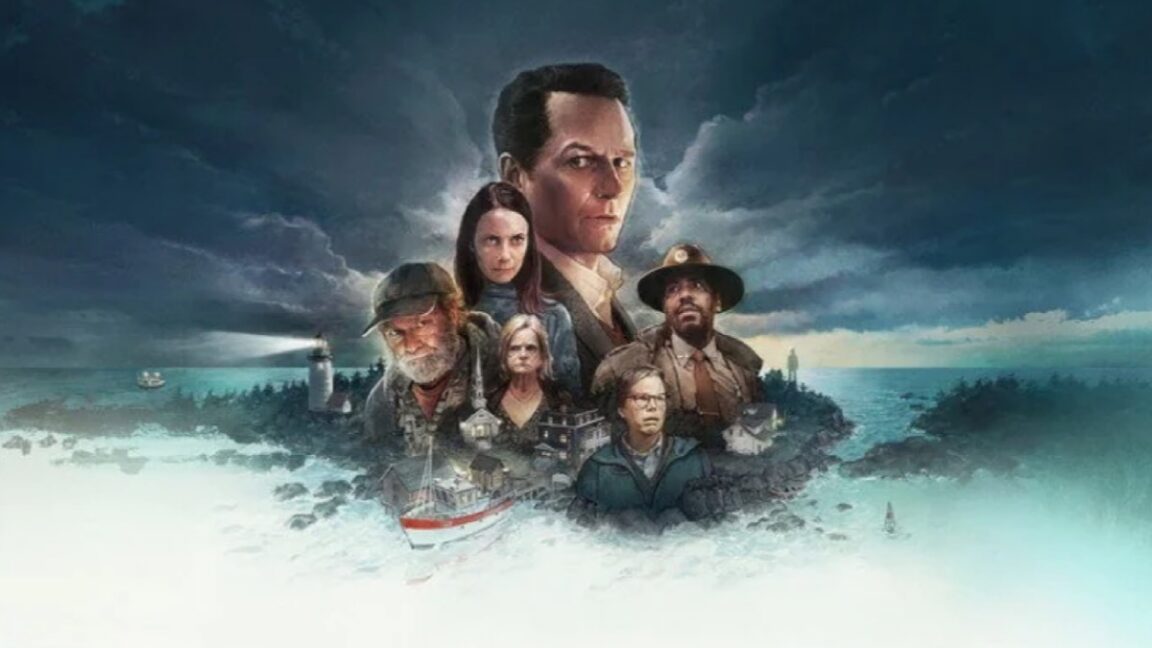
Widow’s Bay is set in a quaint, isolated seaside town that hides a history of recurring tragedy behind a mask of New England charm. The narrative centers on Tom Loftis, played with weary, earnest perfection by Matthew Rhys, the town’s mayor. Loftis is a man possessed by a single vision: to transform his sleepy, perpetually grieving town into a thriving summer tourism destination.
His aspirations are challenged by the arrival of Arthur Lloyd (Bashir Salahuddin), a New York Times travel journalist whose endorsement could put the town on the map. However, Lloyd’s arrival coincides with the onset of a dense, unnatural fog that seems to portend the "waking up" of the island itself.
The central conflict is not merely survival, but the tension between the town’s desperate need for economic revitalization and the dark, supernatural reality of its geography. As residents begin to exhibit signs of madness—most notably the chilling detail of eyes turning white before death—Mayor Loftis finds himself caught in a web of denial, political duty, and creeping existential terror.
Chronology: The Escalation of the Uncanny
The series operates on a tight, well-paced timeline that tracks the slow erosion of the town’s normalcy.
- The Catalyst: The arrival of Arthur Lloyd sets the narrative in motion. While Lloyd writes a glowing, romanticized account of the town, the local environment shifts. The fog descends, and the first casualties appear, starting with a sailor who loses his sanity in the mist.
- The Denial Phase: Mayor Loftis attempts to normalize the chaos. His attempts to prove the town’s "haunted hotel" safe—a sequence of mounting tension and comedic irony—underscore his character’s desperate need to maintain order in a world that is clearly defying it.
- The Inevitable Breach: As tourists flock to the island following Lloyd’s article, the supernatural incidents move from the fringes into the public sphere. Patricia, the mayor’s assistant, attempts to host a "sunset cocktails" event meant to boost social standing, only to have the evening descend into high-stakes supernatural mayhem.
- The Historical Reckoning: The narrative arc pivots toward the town’s origins, specifically the legacy of founder Richard Warren (Hamish Linklater). It is revealed that the island’s history is inextricably linked to its present, with a local legend holding that those born on the island are destined to remain there forever.
Supporting Data: An Unprecedented Surge in Viewership
The success of Widow’s Bay is not just critical; it is statistical. According to industry tracking, the show has experienced a "viral trajectory" rarely seen in the current streaming market. By the airing of the fourth episode, "Beach Reads," total viewership numbers had tripled since the show’s launch week.
The series has maintained a consistent 20% week-over-week growth rate since its April debut, cementing it as Apple TV’s fastest-growing first-year series to date. This growth is largely attributed to aggressive, positive word-of-mouth. The "Patricia-centric" episode served as a significant inflection point, drawing in viewers who had previously been on the fence about the show’s genre-bending premise.
Official Responses and Creative Intent
Creator Katie Dippold, formerly a pivotal writer for Parks and Recreation, has been vocal about the evolution of the show. In recent interviews, she revealed that Widow’s Bay began as a spec script that was significantly more comedic—essentially a spoof.
"That version was much jokier," Dippold noted in a discussion with Deadline. "It was more comedic and I think it gave a good idea of my sense of humor. But as a horror fan, I just want to be immersed in the island. I want to feel like I could go explore this island and find all the little nooks and crannies and terrifying little spots."
Dippold’s transition from a pure comedy writer to a horror-comedy architect is a significant point of interest for critics. She describes the tone as a "dangerous excitement," aiming to replicate the feeling of being a child exploring an abandoned house—a blend of genuine, heart-pounding fear and the uncontrollable laughter that follows a release of tension.
The cast, led by Rhys and including the inimitable Stephen Root as the foreboding local Wyck, has been widely lauded for maintaining this tonal tightrope. Even minor characters, such as the eccentric "Todd the Shaman" (Chris Fleming), are written with a depth that suggests a vast, lived-in world, rather than mere plot devices.

Implications: The Future of the "Monster of the Week"
The success of Widow’s Bay holds significant implications for the future of serialized television. It proves that the "monster of the week" format, when married to a long-form, character-driven narrative, remains a potent engine for engagement.
By grounding the supernatural in the mundane frustrations of local politics and familial rebellion (embodied by the mayor’s son, Evan), the show creates a sense of stakes that feel personal. When a town’s tourism board is fighting a literal sea hag, the comedy and the horror reinforce each other rather than detracting from one another.
A Look Ahead
With the confirmation that a second season is already in active development, the conversation has shifted toward what comes next. Dippold has jokingly teased that the next chapter will focus on "how everything is great on the island and there’s nothing to worry about," a sentiment that fans of the show are rightfully interpreting with extreme skepticism.
The rapid renewal highlights Apple TV’s strategy of leaning into high-concept, auteur-driven projects that foster dedicated fanbases. For Widow’s Bay, the future is as foggy and mysterious as the island itself, but if the first ten episodes are any indication, the journey will be just as rewarding as the destination.
As the series stands, it is a testament to the idea that the best horror stories are those that feel like home—even if that home is haunted, cursed, and surrounded by a mist that won’t let you leave. For viewers, the invitation is clear: pull up a chair, grab a cocktail, and hope that you aren’t the one who has to face the sea hag during the next inaugural swim.


 Laily UPN
 Azzam Bilal Chamdy