Asep Darmawan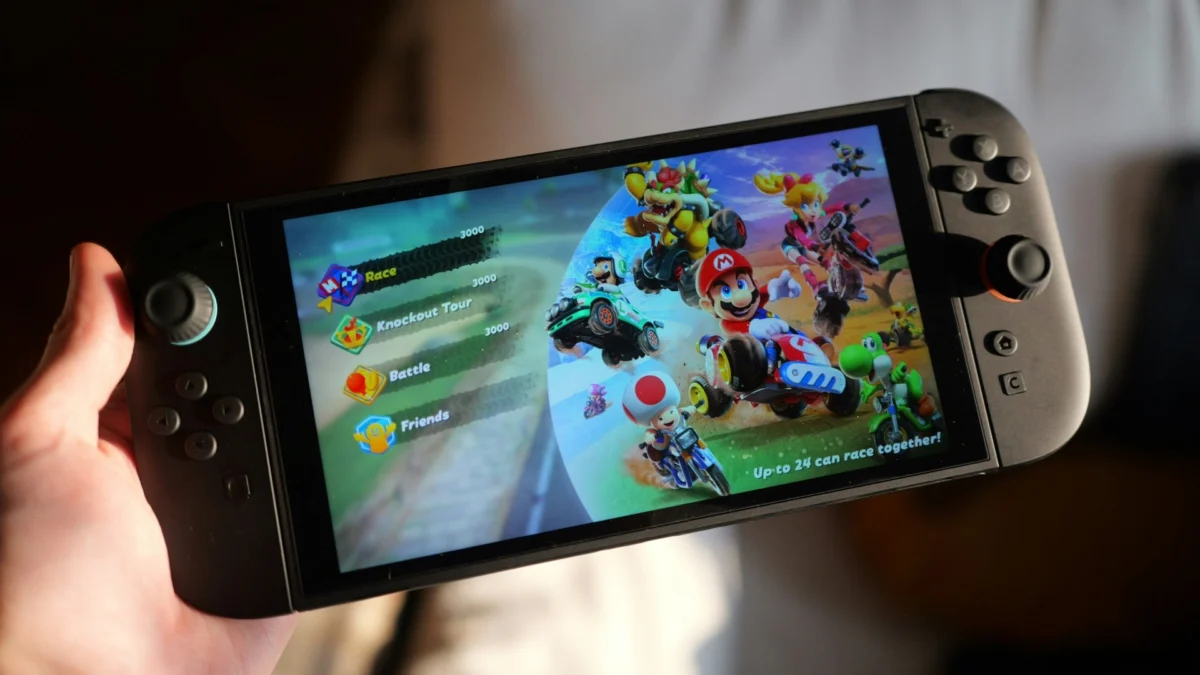
In a decisive move to protect its consumer base and maintain market stability, Nintendo has announced a series of stringent purchasing requirements for the upcoming multi-language version of the Nintendo Switch 2 in Japan. As the gaming giant navigates a complex global economic landscape characterized by fluctuating currency values and rising production costs, these measures aim to ensure that the console reaches genuine fans rather than predatory resellers.
The new policy dictates that purchases will be strictly limited to one console per Nintendo Account. Furthermore, to verify the authenticity and commitment of prospective buyers, Nintendo has mandated that all purchasers must demonstrate at least 50 hours of total playtime on their current Nintendo Switch systems by the end of May 2026.
The Chronology of a Market Shift
The landscape of hardware distribution has shifted dramatically over the past two years. Nintendo’s decision to gate-keep hardware sales is not a sudden reaction, but rather the latest chapter in an ongoing battle against the secondary market.
The 2024 Precedent
The strategy currently being rolled out in Japan is a direct evolution of the protocols established during the console’s initial international rollout last June. At that time, Nintendo observed a massive influx of automated bots and professional scalpers attempting to corner the market in the US, Canada, and the UK. In response, the company introduced a "loyalty-first" model, requiring consumers to have maintained at least two years of Nintendo Switch Online (NSO) membership alongside a 50-hour minimum playtime threshold.
The Escalation of Economic Pressure
Following that initial launch, Nintendo faced significant headwinds. In the months leading up to the current announcement, the company confirmed that it would be hiking the MSRP of the Switch 2 across major global territories, including North America and Europe. This decision was largely driven by the weakening yen, which made the console an attractive target for international scalpers looking to exploit price arbitrage. By buying units in Japan and reselling them in stronger-currency markets, these resellers threatened to drain domestic stock and alienate Nintendo’s most loyal Japanese customers.
Supporting Data: Why "Playtime" Matters
Nintendo’s use of playtime as a metric for eligibility is a strategic pivot in consumer engagement. For a hardware manufacturer, the goal is to cultivate an ecosystem where the console is used as a gateway to software purchases.
Internal industry analysis suggests that the "50-hour threshold" serves two primary purposes:
- Bot Mitigation: Automated scripts, while capable of creating accounts and solving simple CAPTCHAs, cannot easily simulate 50 hours of organic, non-linear gameplay across multiple titles. This creates a significant barrier to entry for bulk-account farming.
- Ecosystem Retention: By prioritizing users with established play history, Nintendo is essentially rewarding its "power users." These individuals are statistically more likely to purchase multiple titles, subscribe to premium services, and engage with the Nintendo ecosystem long-term, providing a higher lifetime value (LTV) than a one-time buyer who may be a bot or a low-engagement scalper.
Official Responses and Corporate Strategy
The climate of the gaming industry has changed, and Nintendo’s leadership has been vocal about the necessity of these difficult decisions. President Shuntaro Furukawa has been at the forefront of explaining these measures to investors and the public.
The Cost of Innovation
In a statement regarding the broader price increases, Furukawa clarified that the decision was not merely a matter of profit margin, but one of operational survival. "The recent surge in memory and other component prices, coupled with volatile trends in the foreign exchange market and the rising cost of logistics and oil, are factors that we anticipate will continue over the medium to long term," Furukawa stated.
He emphasized that Nintendo’s philosophy has always been to make hardware accessible, but noted that, "We felt that the profitability of our hardware would suffer significantly if we maintained our existing pricing, potentially impacting our business operations over this time frame."
Preparing for Volatility
Furukawa’s rhetoric points toward a "fortress" mentality. By controlling the distribution chain so tightly, Nintendo is attempting to stabilize the hardware market before it reaches the retail shelf. The company has explicitly stated that they are making "necessary preparations to ensure that [they] can respond to whatever situation arises," suggesting that if the 50-hour rule proves successful in Japan, it could become a standard global requirement for all future hardware releases.
Implications for the Gaming Market
The repercussions of Nintendo’s latest move extend far beyond the immediate frustration of those who may not meet the 50-hour requirement.
The Death of the "Day One" Scalper
The primary implication is the near-total suppression of the "day-one" scalper market in Japan. By forcing a history of usage, Nintendo has effectively removed the incentive for resellers to hoard inventory. Without the ability to move thousands of units on secondary marketplaces like eBay or Yahoo! Auctions at a massive markup, the financial risk for professional scalpers becomes unsustainable.
Impact on Casual Consumers
While beneficial for long-term stability, this policy does pose a barrier for new entrants. Parents buying a console for a child for the first time, or individuals who are moving to the Nintendo ecosystem from other platforms, may find themselves excluded from the initial wave of sales. This creates a potential "insider" culture, where only established fans have immediate access to the latest technology. It remains to be seen if Nintendo will implement a secondary "general sale" for those who do not meet the playtime requirements once the initial demand from core fans is satisfied.
A New Standard for Hardware Launches?
Industry analysts are watching this development closely. If Nintendo succeeds in managing its stock and keeping prices stable through these restrictions, other platform holders like Sony and Microsoft may face pressure to adopt similar "proof-of-play" or "loyalty-gated" sales models. The era of the "open" launch, where anyone with a credit card and a fast internet connection can secure a console, may be coming to a close.
The Future of Hardware Accessibility
As we look toward the remainder of the fiscal year, the success of this strategy will be measured by the secondary market price of the Switch 2 in Japan. If the price remains close to the MSRP, it will be considered a victory for Nintendo’s consumer-centric approach. If, however, the "50-hour rule" creates a black market for accounts themselves—where individuals sell their high-playtime accounts to scalpers—Nintendo may have to pivot to even more advanced verification methods, such as biometric or physical hardware-linked identity verification.
For now, Nintendo is banking on the idea that the "most dedicated players" are the bedrock of their success. By prioritizing them, the company is betting that the health of the community and the stability of the brand are worth the friction caused by these new, highly regulated sales policies. Whether this creates a more equitable marketplace or merely shifts the goalposts for resellers remains the defining question of the next generation of console hardware.


 Sagoh
Sagoh
 Ammar Sabilarrohman