Nana Wu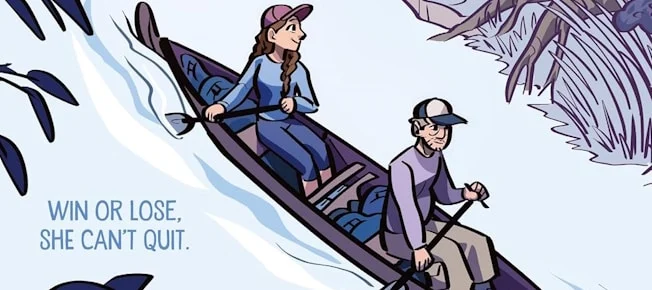
In the high-stakes world of modern adolescence, the pressure to curate a "perfect" life—one defined by extracurricular achievements, academic accolades, and an impenetrable resume—has reached a fever pitch. This cultural phenomenon serves as the backdrop for the latest graphic novel release from First Second, a poignant story penned by Sarah Broyles and illustrated by Hanna Schroy. The book explores the fragile intersection of parental expectations, the crushing weight of Ivy League aspirations, and the transformative power of stepping off the beaten path.
The Core Narrative: Miranda’s Quest for Authenticity
At the center of the story is Miranda, a junior in high school whose existence is dictated by a singular, rigid objective: admission into an elite Ivy League institution. To Miranda, every waking moment is an investment; if an activity does not bolster her college application, it is deemed unworthy of her time. Her life is a meticulously managed checklist of clubs, competitions, and leadership committees.
However, the structural integrity of Miranda’s life begins to fracture under the weight of her own ambition. When her parents, perhaps sensing the toll the pressure is taking on their daughter, force her to step back from her obligations, Miranda finds herself adrift. Stripped of her academic armor, she loses her sense of self, leaving her in desperate search of a new, compelling narrative to satisfy both her own desire for success and the requirements of the admissions process.
Chronology of a Transformation
The narrative arc centers on a radical departure from Miranda’s comfort zone: the Texas Water Safari. This is not a leisurely outing; it is an endurance race often described as the "World’s Toughest Canoe Race," spanning 260 miles of grueling, unpredictable, and often treacherous river terrain.
The Catalyst
Miranda’s mother had originally intended to compete in the race alongside Miranda’s grandfather, a veteran of the water. When a physical injury renders her mother unable to participate, a window of opportunity opens. Seeing the race as a unique, "high-value" anecdote for her college essay, Miranda steps into the empty seat.
The Crucible of the River
The transition from the sterile, air-conditioned environment of a high school classroom to the scorching, messy reality of the Texas wilderness serves as the story’s primary conflict. The race is a physical and psychological trial. As the miles accumulate, the veneer of perfectionism begins to peel away. The story tracks Miranda’s evolution from a girl concerned with how her actions look on paper to a young woman grappling with the visceral reality of physical exhaustion, the dynamics of her relationship with her grandfather, and the sheer unpredictability of nature.
Supporting Data: The Reality of Academic Pressure
The premise of Broyles and Schroy’s work is grounded in an increasingly common sociological reality. Data from the American Psychological Association (APA) and various educational studies indicate that "academic stress" is one of the leading causes of mental health struggles among teenagers in the United States.
- The "Ivy League" Effect: Research suggests that students in high-achieving school districts—often referred to as "achievement-oriented" cultures—report higher rates of anxiety and depression compared to national averages.
- Extracurricular Burnout: The trend of "resume building" has transformed hobbies into professionalized extracurriculars. Many students spend upwards of 20 to 30 hours a week on school-related activities outside of classroom hours, leading to what psychologists term "burnout syndrome."
- Parental Influence: While parents often encourage high performance out of a desire for their children to have security, studies consistently show that perceived parental pressure is a significant predictor of self-critical perfectionism in adolescents.
The Texas Water Safari serves as an effective metaphor for these struggles. While the race is optional, Miranda’s initial approach to it—viewing it as a tactical move for college admissions—highlights the way modern students are conditioned to turn every aspect of their humanity into a "brand" or an "achievement."
Official Perspectives and Creative Vision
The creative team behind the book—writer Sarah Broyles and artist Hanna Schroy—has crafted a visual and narrative language that captures the stark contrast between the two worlds Miranda inhabits.
Sarah Broyles’ Writing
Broyles focuses on the internal monologue of the perfectionist. By stripping away Miranda’s external props, she forces the reader to confront the question: Who is Miranda when the world isn’t watching? Broyles’ dialogue captures the frantic, anxious energy of a teenager who feels as though her entire future is at stake, providing a relatable voice for a generation raised under the "Always Be Achieving" doctrine.
Hanna Schroy’s Artistry
Schroy’s illustrations are pivotal to the story’s impact. The transition from the rigid, structured panels of Miranda’s school life to the fluid, chaotic, and expansive depictions of the Texas river allows the art to mirror the character’s internal arc. The use of color and shadow helps convey the heat and the physical toll of the race, making the reader feel the weight of the paddles and the burn of the sun.
Implications for Young Adult Readers
The release of this graphic novel arrives at a time when the conversation regarding student mental health is more urgent than ever. By placing the story in the context of a graphic novel, the authors make these heavy themes accessible to a demographic that is currently living through these pressures.
Breaking the Cycle
The implication of the story is that the "checklist" approach to life is fundamentally unsustainable. Miranda’s journey suggests that true identity is not found in the accolades we collect, but in the experiences we survive—and the relationships we nurture along the way. Her grandfather, who represents a different generation and a different value system, serves as a bridge, helping her see that the value of the race lies in the journey, not the outcome.
A Resource for Parents and Educators
The book also serves as a mirror for parents. It highlights the unintended consequences of shielding children from failure or pushing them too hard toward a pre-determined path. Educators and school counselors have already begun to point toward such literature as a means to initiate discussions about mental health, the dangers of perfectionism, and the importance of resilience.
Conclusion: Why This Story Matters
In an era where "college admissions" has become a multi-billion dollar industry of consultants, tutors, and specialized programs, Miranda’s story is a necessary correction. It asks the reader to consider the cost of success.
Is a prestigious degree worth the loss of one’s sense of self? Can a perfectionist find value in a task that offers no grade, no trophy, and no clear "line item" for a resume? As Miranda learns on the river, the most transformative experiences are often the ones we cannot control. The Texas Water Safari may have started as a means to an end, but it ended as a beginning—a space where Miranda could finally stop performing and start living.
For readers seeking a story that balances the grit of physical adventure with the nuances of psychological growth, Broyles and Schroy have delivered a resonant, timely, and beautifully realized work. It is a testament to the fact that sometimes, the only way to find out who you are is to get lost in the wild.
Availability
The graphic novel is currently available for purchase through various retailers, including Bookshop and Amazon. For those interested in supporting local businesses, readers are encouraged to visit their nearest independent comic shop by utilizing the Comic Shop Locator service (www.comicshoplocator.com) or by calling 1-888-COMICBOOK.
Disclaimer: This article contains affiliate links. Graphic Policy may receive a commission for purchases made through these links. The publisher, First Second, provided a copy of the book for the purpose of this review.

 Sagoh
Sagoh
 Ammar Sabilarrohman