

Fact File
- Price: £16.79
- Developer: Daniel Mullins Games
- Publisher: Devolver Digital
- Platform: PC
In the crowded landscape of digital card games, Inscryption stands as an anomaly—a genre-bending masterpiece that refuses to play by the rules of its own medium. Developed by Daniel Mullins Games and published by the avant-garde masters at Devolver Digital, Inscryption is not merely a game about cards; it is an experience of psychological entrapment, atmospheric horror, and structural defiance. From the moment you boot up the client, the game begins its systematic dismantling of your expectations, forcing you into a narrative loop where the distinction between player and pawn vanishes.
The Illusion of Choice: A Chronology of Obsession
The brilliance of Inscryption begins before the first card is drawn. Upon arriving at the main menu, players are greeted with a faux-loading screen and a "New Game" button that is deliberately unresponsive. This is the first of many lessons: in this dark cabin, you are not a consumer of entertainment, but a participant in a ritual. There is no "New Game." There is only "Continue." You have been here for a long time, and you will be here for a long time more.
The Shack and the Shadow
You find yourself seated at a rough-hewn wooden table in a dimly lit, claustrophobic cabin. Opposite you sits a figure shrouded in shadow, possessing eyes that blink with unsettling frequency and withered hands that drum rhythmically against the tabletop. The atmosphere is thick with the scent of pine and decay, underscored by a low, soul-shaking buzz that permeates the silence—a sound one might associate with the infernal machinery of a cosmic predator.
The Mechanics of Sacrifice
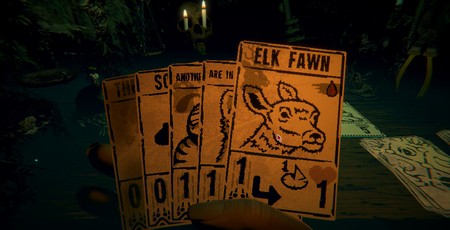
The gameplay cycle is deceptively simple. You hold a hand of woodland creature cards, each possessing specific attack and health stats. The turn structure is brutal:
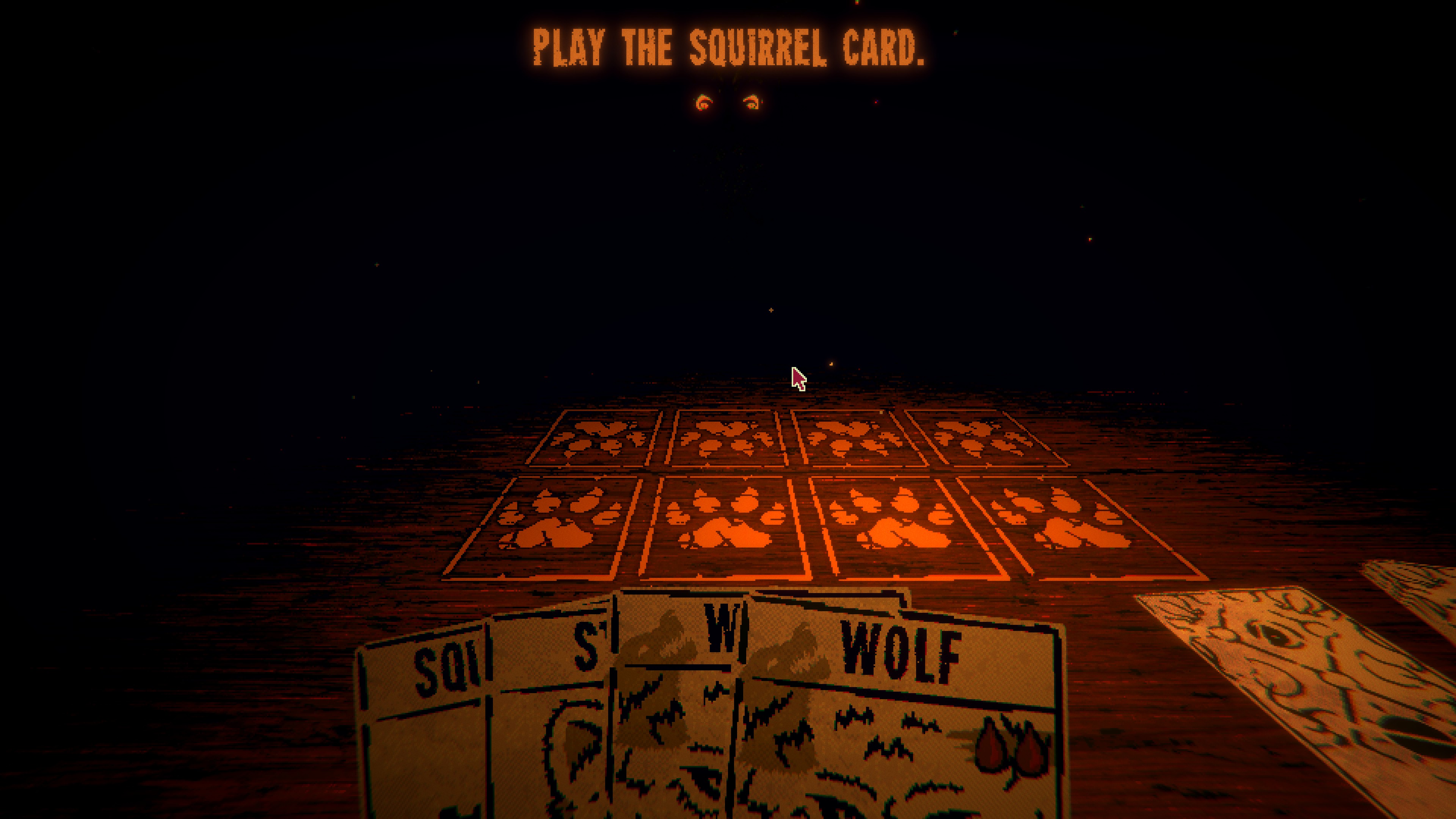
- The Offering: You must play low-value cards, such as a Squirrel, to serve as "blood sacrifices."
- The Escalation: By sacrificing the Squirrel, you gain the blood tokens required to summon more powerful entities, like the Stoat or the Wolf.
- The Scales: Combat is resolved through a literal set of scales. Damage dealt to your opponent tilts the balance in your favor; receive damage, and the scales tip against you.
What makes this system uniquely "Mullins-esque" is that the cards talk back. The Stoat, for instance, will advise you, mock you, and provide meta-commentary that suggests it is as much a prisoner of the cabin as you are.
Supporting Data: The Architecture of the Cabin
Inscryption is a "room-scale" card game. While the matches take place on the table, the game’s true depth lies in the environment surrounding you.
Exploration and Environmental Puzzles
When not locked in a life-or-death match, you are encouraged to rise from your stool and explore the cabin. This is where the game transitions from a roguelike deck-builder into an escape-room mystery. You can fiddle with the combination lock on a nearby safe, adjust the hands of a grandfather clock, or consult a rulebook that contains cryptic hints about how to manipulate the game board itself.
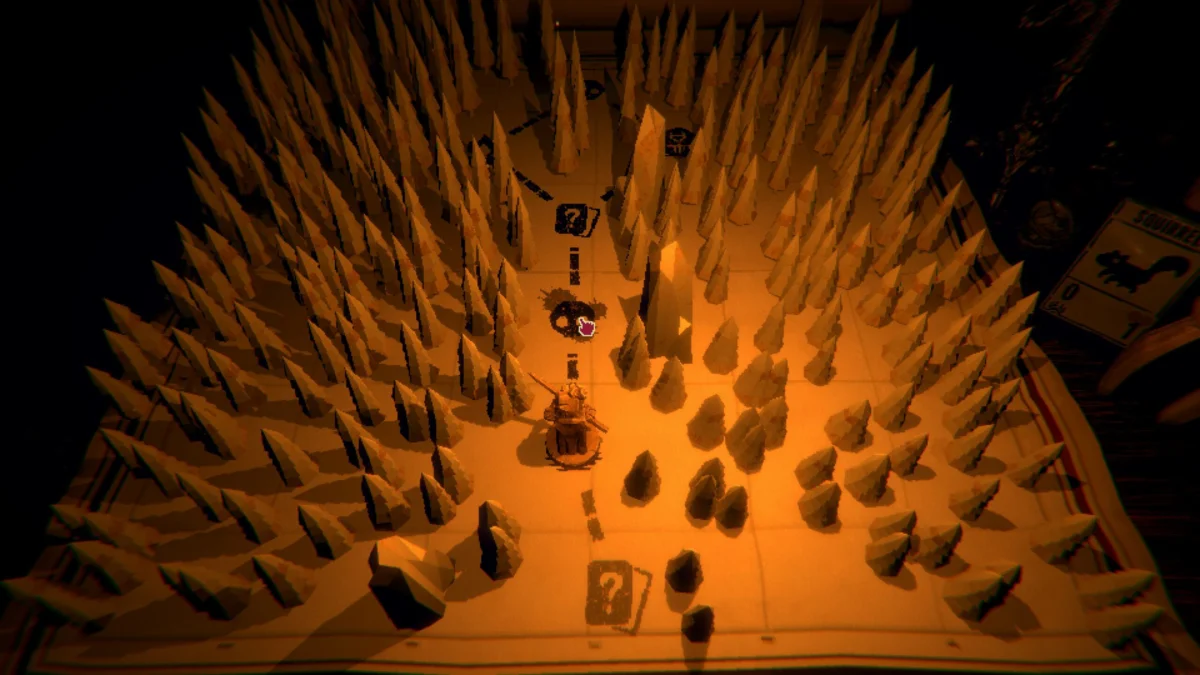
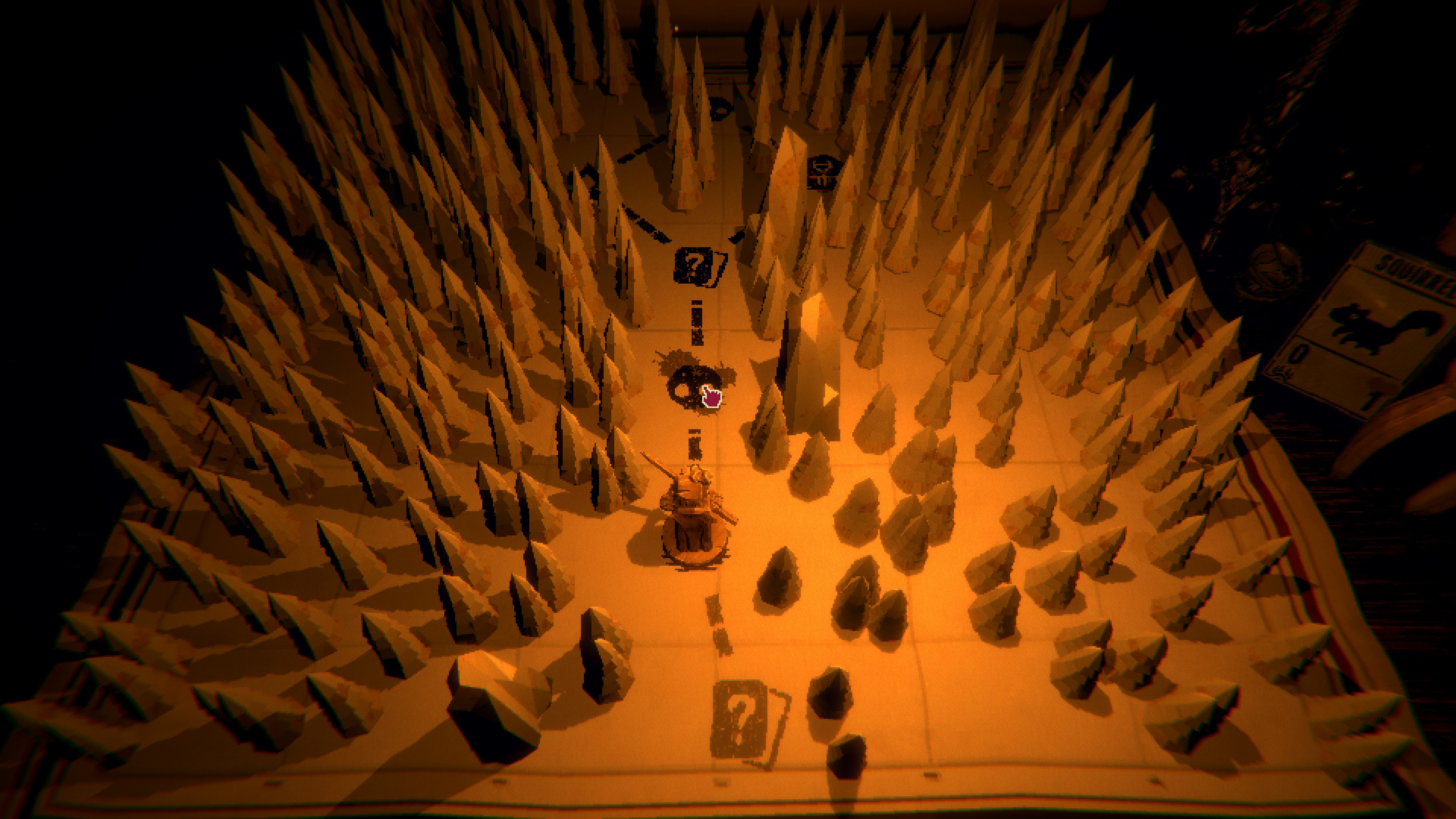
The visual design utilizes a "crunchy" pixel aesthetic that grounds the surrealism in a tactile reality. Every object—the candles, the rotting pelts, the carved figurines on the map—serves a purpose. These items are not mere set dressing; they are tools of subversion. The map, a tabletop board you navigate via a small carved totem, is where you make strategic choices about your path: will you seek new, more powerful cards like the Venomous Adder, or will you stop at an altar to sacrifice one creature to empower another?
The Complexity of Resource Management
As the game progresses, the complexity of your deck becomes a double-edged sword. You can augment your army with:
- Bones: A secondary currency generated whenever one of your animals dies.
- Pelts: Trading with the Trapper for skins, which can later be exchanged for rare, high-tier creatures.
- Sigils: Inherited powers that turn standard cards into game-breaking behemoths.
The game reaches a point where the player can become almost too powerful, crafting decks that can overwhelm the shadowy opponent. However, the game acknowledges this, often using your own strength as a narrative device to advance the horror.
Official Responses and Industry Reception
Since its release, Inscryption has been hailed by critics and fans alike as a landmark title. Devolver Digital’s involvement, known for backing titles that challenge conventions (such as Hotline Miami or The Messenger), was a clear signal that this was no standard card game.
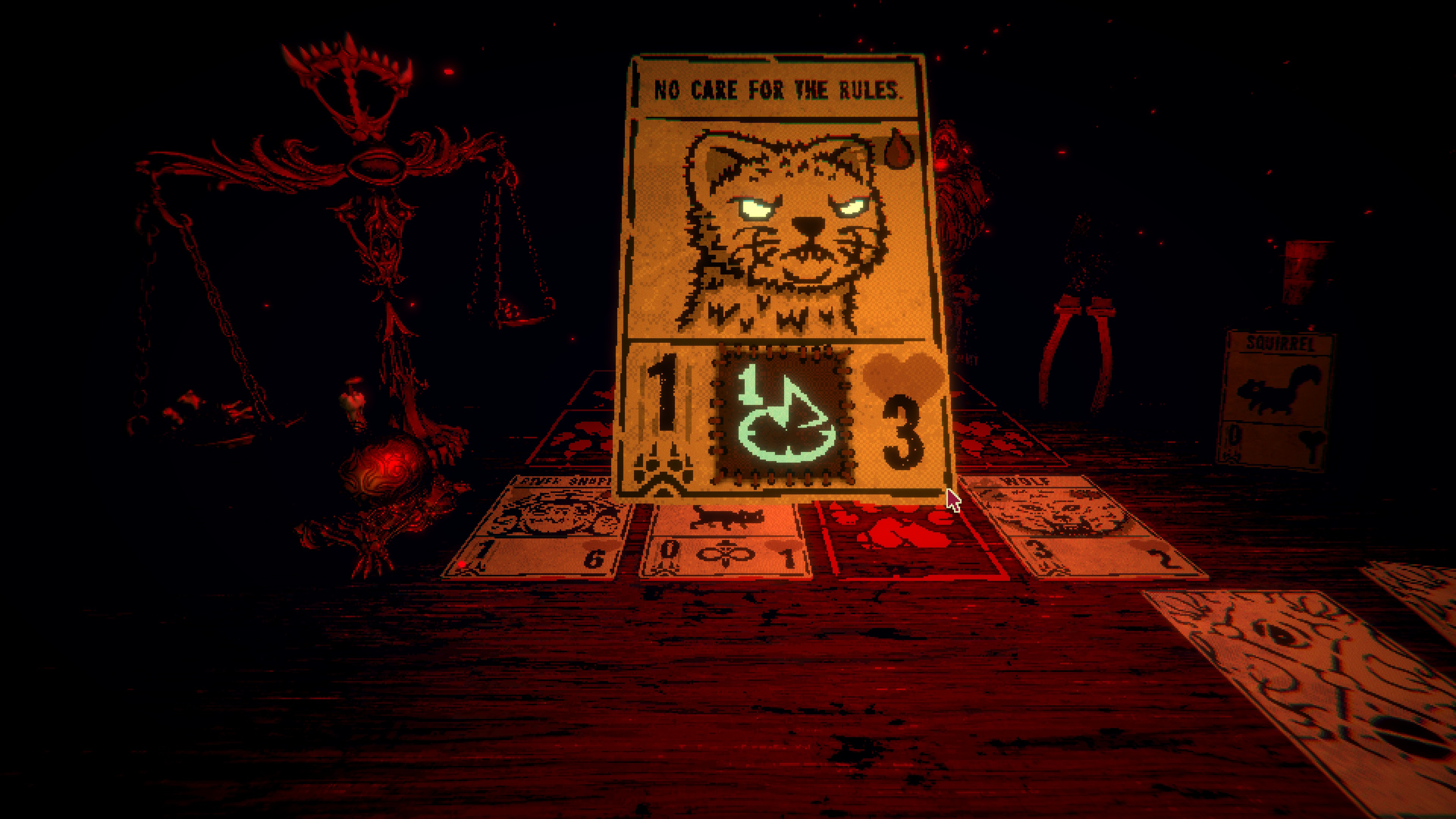
Developer Daniel Mullins, previously known for Pony Island, has stated in interviews that the goal of the project was to create a sense of "meta-horror." The design philosophy was to make the player feel that the game was aware of them. The "official" stance on the game’s difficulty is that losing is not a failure state, but a narrative bridge. Death in Inscryption is a feature, not a bug—a way for the game to provide you with new cards and new ways to view the world, ensuring that no two "runs" are ever truly the same.
Implications: A New Benchmark for Meta-Narratives
The success of Inscryption carries significant implications for the future of indie game design. It proves that the "deck-builder" genre is not a stagnant pool of math-based optimization, but a fertile ground for narrative experimentation.
The Erosion of the Fourth Wall
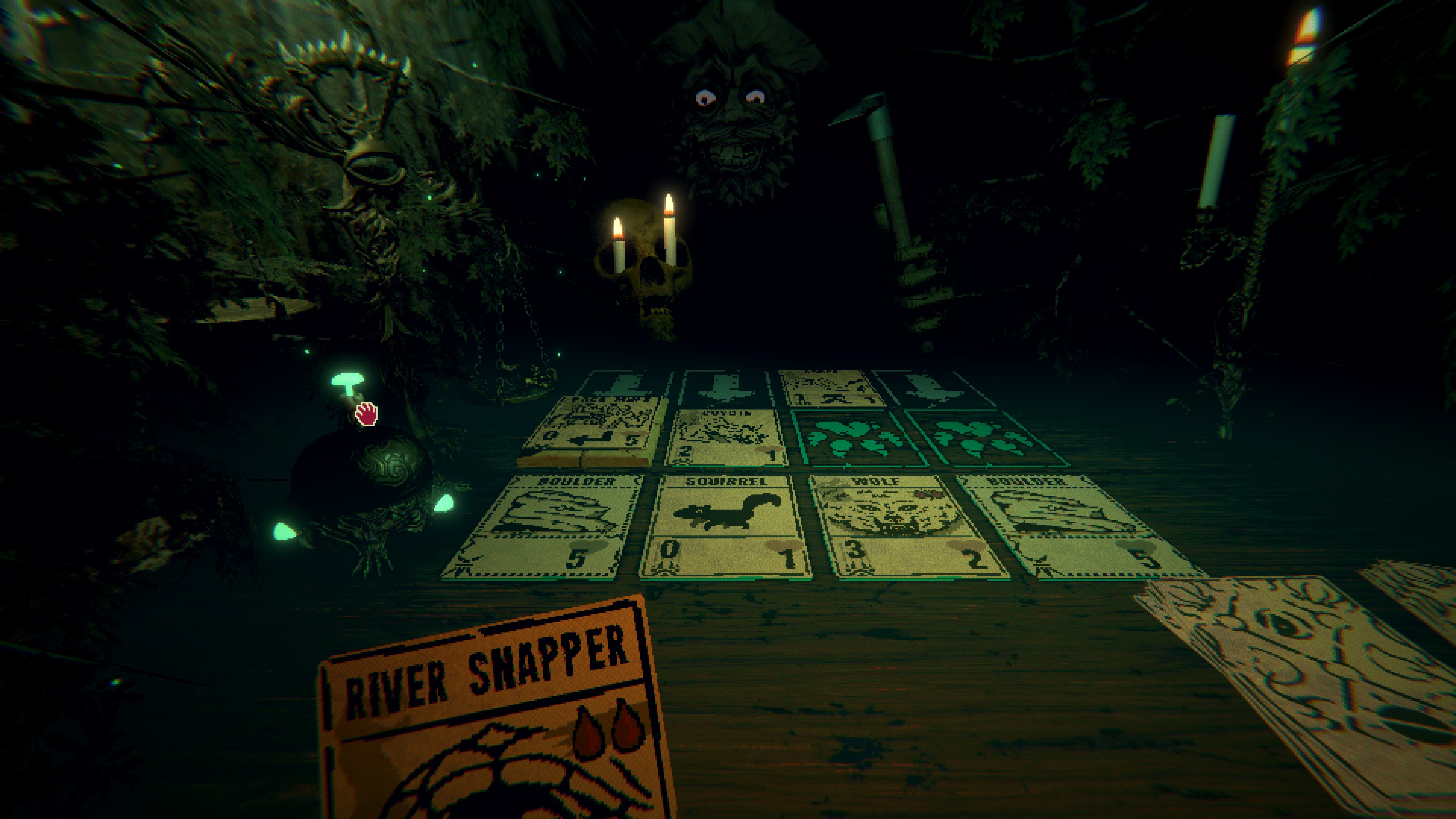
By linking the tabletop gameplay to the physical space of the cabin, Inscryption effectively erases the fourth wall. The player is not just playing a game; they are interacting with a haunted object. This has set a high bar for "meta-fiction" in gaming. Developers are now looking toward Inscryption as a case study in how to use technical limitations and UI elements to build tension.
The Psychological Weight of Play
The game forces the player to consider the ethics of the sacrifice mechanic. When a card "screams" as you sacrifice it, or when a creature you’ve grown attached to is discarded, the emotional toll is palpable. This shift from purely transactional mechanics (where cards are just numbers) to narrative-driven mechanics (where cards are entities) is a profound leap forward in interactive storytelling.
A Final Invitation
As you continue to sit at that table, staring into the blinking eyes of your tormentor, the line between excitement and fear blurs. Inscryption is a rare achievement because it makes the player complicit in its own cruelty. You are not just trying to win; you are trying to solve the mystery of your own captivity.
If you find your hands shaking, it is not from the cold of the cabin. It is the realization that you have become a part of the deck. Pull up your stool, take a deep breath, and prepare to draw another card. In the world of Inscryption, there is no escape—only the next hand. And honestly? You wouldn’t want it any other way.










No comments yet. Be the first to join the conversation!