Evan Lee Salim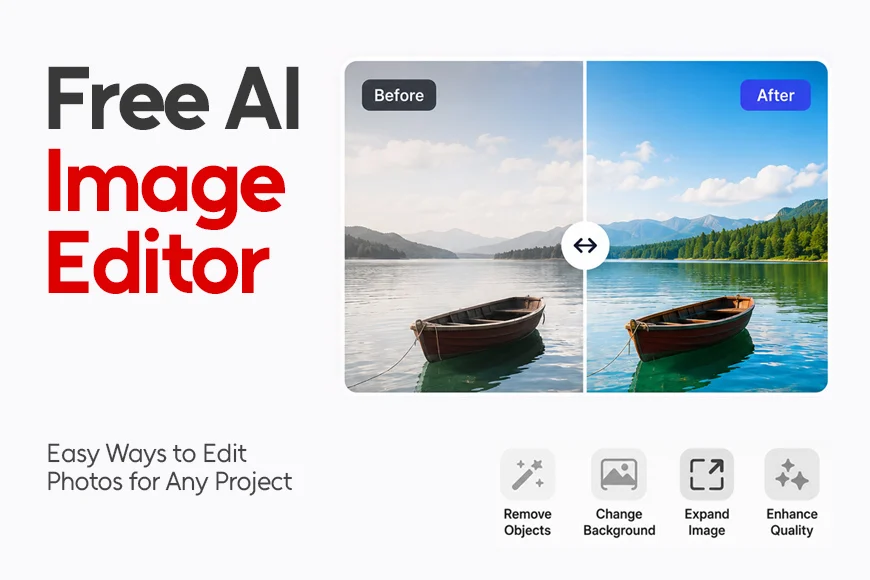
In the modern digital era, visual communication has become the primary language of the internet. Whether it is a vibrant YouTube thumbnail designed to capture clicks, a polished product shot for a fledgling e-commerce store, or a dynamic visual aid for a school presentation, high-quality imagery is no longer an optional luxury—it is a requirement. Historically, the barrier to entry for achieving professional-grade visuals was high, guarded by steep subscription costs for industry-standard software and a prohibitive learning curve that intimidated even the most enthusiastic beginners.
Today, that landscape has undergone a seismic shift. The rise of sophisticated, accessible, and often free AI-powered image editors has democratized visual design, allowing anyone with an internet connection to perform complex editing tasks in seconds rather than hours.
The Evolution of Image Editing: A Brief Chronology
The journey of photo editing has moved from the darkroom to the desktop, and finally, to the cloud-based intelligence we utilize today.
The Era of Manual Precision (1990s–2010s): For decades, the gold standard of image editing was professional-grade software like Adobe Photoshop. While incredibly powerful, these programs required intensive training. Users had to master complex concepts like masking, pathing, layers, and non-destructive editing. For the average user, these tools were often overkill, leading to a "complexity gap" where the effort required to make a simple edit outweighed the benefit.
The Rise of Mobile Apps (2010s–2020): With the explosion of social media, simple filter-based apps like Instagram and VSCO brought basic editing to the masses. However, these tools were limited to color grading and cropping, leaving the heavy lifting—such as object removal or composition changes—still firmly in the hands of professionals.
The AI Renaissance (2020–Present): The integration of Generative AI has fundamentally changed the paradigm. Instead of manually selecting pixels, users can now use natural language to describe their desired outcomes. This current stage, characterized by tools like the Free AI Image Editor from Creative Fabrica, represents the shift from "doing" the work to "directing" the AI to perform the work.
Breaking Down the Technology: How AI Simplifies Complexity
At the core of the current AI editing revolution is the concept of "Intelligent Intent." When a user uploads an image to a modern AI-powered browser tool, they are no longer interacting with pixels in a traditional sense; they are engaging with a neural network trained on millions of image patterns.

1. Contextual Object Removal
Traditional cloning tools required a steady hand and a keen eye for color matching. Today’s AI analyzes the surrounding texture, lighting, and perspective of a photo to "hallucinate" what should be behind an object that needs to be removed. Whether it is a stray person in the background of a vacation photo or a distracting shadow in a product shot, the AI performs a clean, context-aware fill in a single click.
2. Generative Background Swaps
One of the most transformative features available today is the ability to change backgrounds. By isolating the subject—a process that once took minutes of manual tracing—the AI allows users to replace the backdrop entirely. This has massive implications for small business owners who can now turn a photo taken on a kitchen table into a professional-looking studio shot.
3. Smart Expansion and Upscaling
One of the most frustrating challenges for content creators is finding the perfect image, only to realize it is the wrong aspect ratio or resolution. AI-driven "outpainting" or image expansion allows users to extend the edges of an image by generating new pixels that match the existing aesthetic. This ensures that a landscape photo can be resized for a vertical TikTok or a horizontal YouTube banner without distortion or cropping.
Supporting Data: Why Accessibility Matters
The demand for these tools is backed by a shift in consumer behavior. According to recent trends in the digital creative industry:
- Speed to Market: Content creators now produce 40% more visual assets than they did five years ago. AI tools are the primary driver of this increased output capacity.
- Cost Efficiency: Small businesses spend an average of $2,000 to $5,000 annually on design software and freelance editing services. Transitioning to integrated AI tools reduces this overhead by over 80%.
- User Adoption: Surveys indicate that 75% of non-professional creators cite "software complexity" as the number one reason they avoid editing photos. Browser-based AI editors have seen a 300% increase in active users since 2023, specifically because they require no installation or hardware investment.
Perspectives from the Industry
Experts in the design field are largely viewing this shift as a positive evolution rather than a threat.
"We are entering the era of the ‘Creative Director,’" says one industry analyst. "The AI isn’t replacing the human designer; it is removing the drudgery. When you don’t have to spend three hours manually masking out hair or adjusting individual color channels, you have more time to focus on the actual creative concept. The software becomes an extension of the creator’s vision rather than a technical barrier."
However, there is also a call for responsible usage. As these tools become more powerful, the ability to manipulate reality in a single click raises questions about image integrity. "The key," experts note, "is transparency. Whether for personal branding or marketing, AI should be used to polish and enhance, not to deceive."

Implications for Future Creators
The long-term implications of browser-based AI editing are profound. We are seeing the death of the "learning curve."
For the Student
School projects that once relied on low-quality, generic stock photos can now be customized with original, edited imagery. A student can take a standard photo of a historical site and, using AI, adapt it to a specific presentation theme without needing to learn complex software.
For the Entrepreneur
Small business owners, particularly those in the e-commerce space, are the biggest beneficiaries. High-quality imagery is directly linked to conversion rates. By using AI to clean up product images and create consistent branding, these businesses can compete with larger brands that have massive marketing budgets.
For the Casual User
For the average social media user, the benefit is simple: better memories. Old, blurry, or poorly lit photos can be restored to clarity. The "perfect" shot is no longer a matter of luck or expensive equipment; it is a matter of intelligent post-processing.
Conclusion: The Bottom Line
The shift toward AI-assisted editing is not just a technological trend; it is a fundamental change in how we relate to digital imagery. By removing the need for expensive, heavy software and the requirement for years of technical training, tools like the Creative Fabrica AI Image Editor have unlocked a new level of creative freedom.
In the final analysis, the goal of design is communication. Whether you are creating a professional marketing campaign or a personal social media post, the objective is to convey your message clearly and aesthetically. With AI acting as an invisible assistant, the barrier between an idea in your head and a polished final image has never been thinner. The future of design is fast, accessible, and, most importantly, open to everyone.

 Siti Muinah
 Asep Darmawan