Rifan Muazin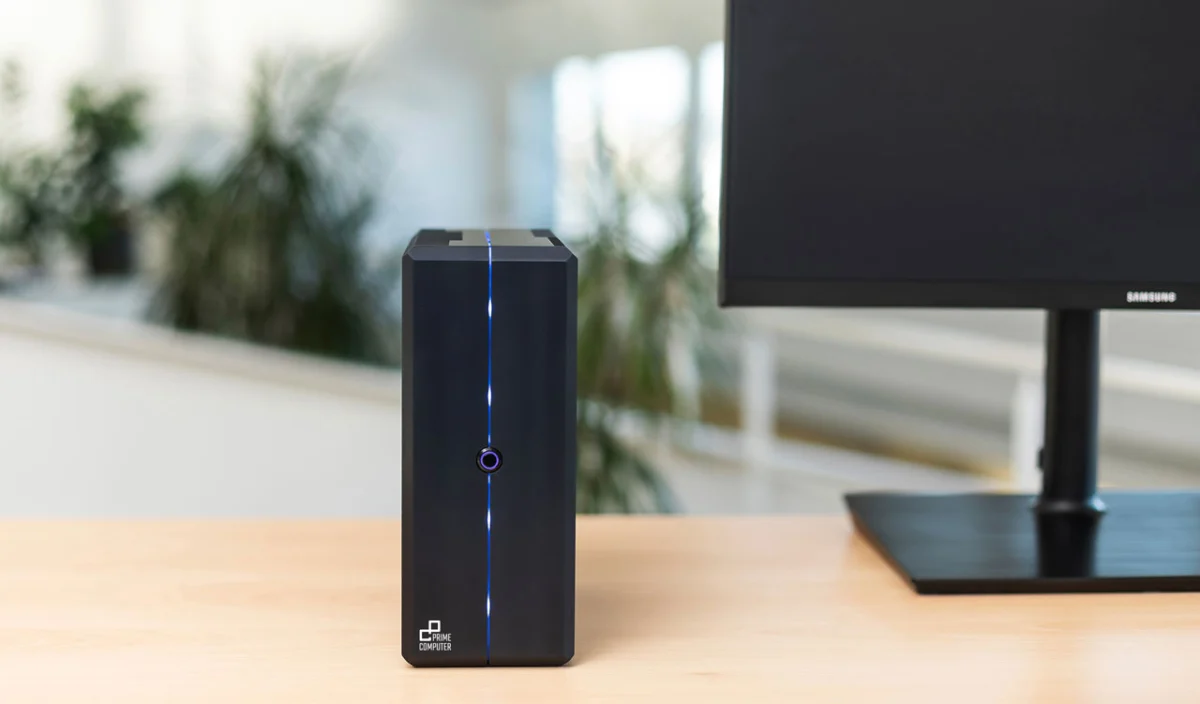
In an era where desktop computing is increasingly defined by the aggressive hum of cooling fans and the glowing aesthetic of RGB-laden towers, Swiss manufacturer Prime Computer has taken a strikingly different path. With the launch of the PrimeStation Pulsar, the company is not merely releasing a new PC; it is making a bold statement about the intersection of high-performance computing, environmental responsibility, and the virtue of silence.
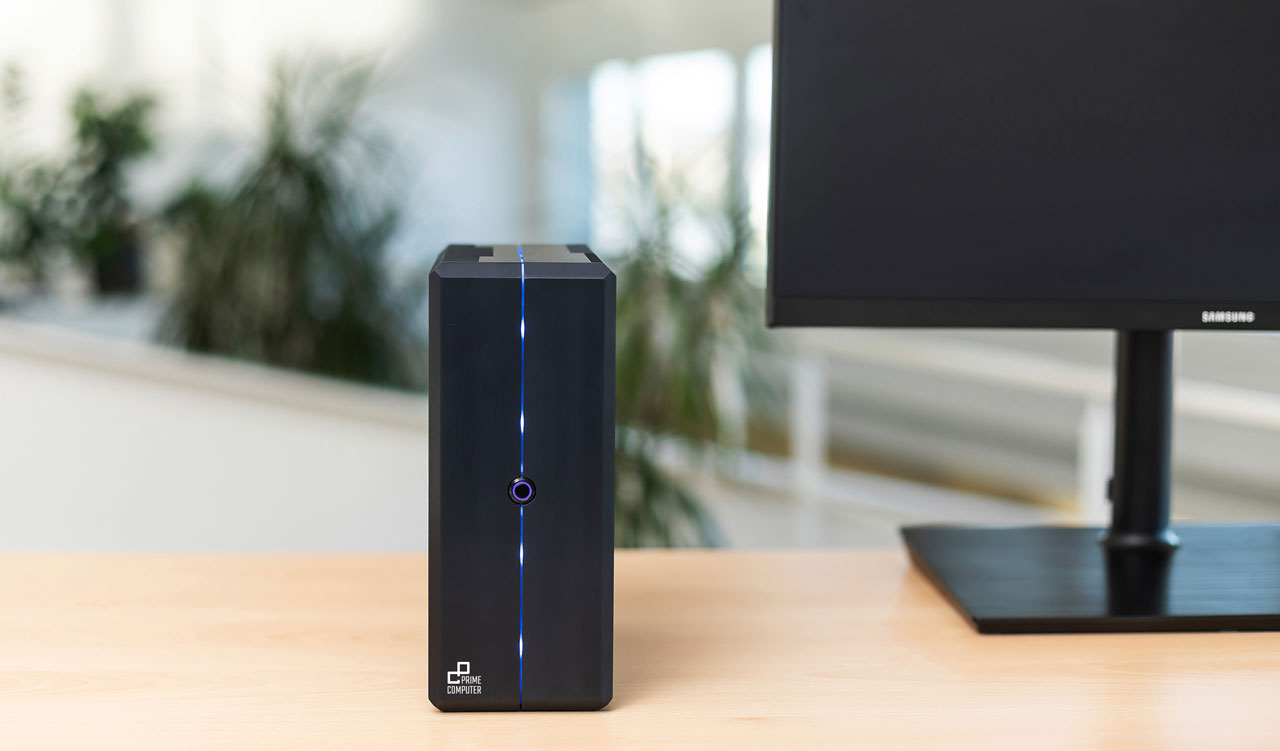
The PrimeStation Pulsar represents one of the most formidable fanless mini-PCs ever brought to market. By utilizing a bespoke aluminum chassis as a passive heatsink, the machine manages to house a high-wattage processor without a single moving part. This architecture, while technically demanding, offers a whisper-quiet experience that is increasingly rare in the workstation segment. Furthermore, Prime Computer’s commitment to 100% climate-neutral production adds a layer of ethical appeal to a device already distinguished by its engineering prowess.
Main Facts: The Engineering Behind the Silence
At the heart of the PrimeStation Pulsar lies the AMD Ryzen 7 Pro 5750G. This 65W Accelerated Processing Unit (APU) is a powerhouse of productivity, featuring 8 cores and 16 threads. For a fanless system, the inclusion of a 65W TDP chip is a significant feat of thermal management.
Thermal Management Through Design
The "hefty metal lump" that constitutes the Pulsar’s chassis serves a dual purpose: it provides the structural integrity expected of a professional workstation and acts as the primary thermal dissipation unit. By maximizing surface area through deep, finned exterior ridges, the aluminum housing draws heat away from the internal components, allowing the system to maintain stable performance without the reliance on traditional airflow.
Core Technical Specifications
The system is designed for flexibility, catering to a range of professional needs from data analysis to creative workflows. Its key features include:
- Processor: AMD Ryzen 7 Pro 5750G (3.8GHz base / 4.6GHz boost, 16MB L3 cache).
- Graphics: Integrated Radeon Vega 8 GPU cores running at up to 2.0GHz.
- Memory: Two DIMM slots supporting 8GB, 16GB, 32GB, or 64GB of DDR4-3200 RAM.
- Storage: Dual-drive capability via 1 x NVMe slot and 1 x 2.5-inch SATA III bay.
- Connectivity: 2.5Gbps Ethernet, Intel Wireless AX200 (Wi-Fi 6), and Bluetooth 5.2.
- I/O: HDMI 2.1, DP 1.4, 3 x USB 3.2 Type-A, 1 x USB 3.2 Type-C, 1 x USB 2.0, and comprehensive audio I/O.
Chronology: The Evolution of Fanless Computing
The journey to the Pulsar did not happen in a vacuum. For years, the "fanless PC" market was relegated to low-power, embedded systems or enthusiast-grade DIY builds that often required immense, custom-designed enclosures.

- Early Days: Initial passive systems were characterized by extremely low power consumption—often using Intel Atom or Celeron processors. They were excellent for digital signage but woefully inadequate for professional content creation.
- The Mid-2010s: As thermal efficiency improved, companies began experimenting with higher TDP chips. However, the cooling solutions remained either massive (like the Akasa Newton series) or unreliable under sustained load.
- The Modern Era: The arrival of the AMD Ryzen 5000-series APUs provided the perfect intersection of power and efficiency. Prime Computer leveraged this shift to develop the Pulsar, aiming to bridge the gap between "niche home-theater PC" and "professional office workstation."
- 2021 Launch: The official announcement of the Pulsar solidified Prime Computer’s position as a leader in sustainable, high-end passive systems, proving that a professional, 65W-capable machine could exist without a single spinning blade.
Supporting Data: Why the Ryzen 7 Pro 5750G?
The choice of the Ryzen 7 Pro 5750G is not arbitrary. Manufactured on TSMC’s 7nm FinFET process, the chip provides an industry-leading performance-per-watt ratio. In a fanless environment, efficiency is paramount—every watt of power consumption must eventually be dissipated as heat.
The 5750G’s architecture allows the Pulsar to operate within thermal limits while providing enough compute overhead to handle complex multitasking. The inclusion of the Radeon Vega GPU cores means that the system does not require a discrete graphics card—a component that would otherwise make passive cooling nearly impossible in such a compact footprint.
Physical Dimensions and Footprint
Despite its power, the Pulsar remains remarkably compact. With dimensions of 9.1cm (W) x 22.5cm (H) x 20.3cm (L) and a weight of approximately 4.3kg, it is a dense, premium piece of hardware. The weight, in particular, is a testament to the amount of aluminum used to ensure thermal conductivity, acting as a massive heat sink that prevents thermal throttling during extended rendering or processing tasks.
Official Responses and Sustainability Initiatives
Prime Computer has positioned the Pulsar not just as a tool for work, but as a component of a sustainable future. Their claim of being "100 per cent climate-neutral" is central to their branding. This is achieved through a combination of energy-efficient design and a rigorous lifecycle management policy.
The company emphasizes that their workstations are built to last longer than the industry standard. By removing the fan—the most common point of failure in any desktop PC—the Pulsar significantly reduces the risk of hardware degradation caused by dust accumulation and mechanical wear. Furthermore, the modularity of the RAM and storage ensures that the machine can be upgraded, extending its service life and preventing premature e-waste.
"The Pulsar is designed for the professional who values peace, focus, and environmental integrity," a representative noted during the product’s digital unveiling. The company’s focus is on "responsible performance," ensuring that the carbon footprint of the manufacturing process is offset, while the operational footprint is minimized through superior power management.
Implications: The Future of the Silent Workspace
The release of the PrimeStation Pulsar raises significant questions about the future of desktop design. Are we moving toward a future where the "hum" of the office is finally silenced?
The Niche vs. The Mainstream
The $2,179 price point positions the Pulsar firmly in the professional market. It is not designed to compete with budget gaming PCs or mass-market consumer desktops. Instead, it is aimed at environments where silence is a commodity—recording studios, quiet research laboratories, medical facilities, or high-end executive offices where the aesthetic and acoustic profile of the hardware matters as much as its output.
Comparison to DIY Alternatives
While enthusiasts might point to solutions like The Beast from MonsterLabo, which offers even more massive passive cooling potential for high-end gaming hardware, the Pulsar offers a "turn-key" solution. For a professional, the value of the Pulsar lies in its reliability, support, and the peace of mind that comes with a fully integrated, tested, and guaranteed silent workstation.
Environmental Impact and Industry Standards
Prime Computer’s approach sets a benchmark for the IT industry. As organizations face increasing pressure to report on Scope 3 emissions (the emissions produced in the value chain of their equipment), products like the Pulsar provide a viable path toward greener procurement. If a fanless workstation can perform as well as a traditional active-cooled machine while remaining climate-neutral, the justification for the status quo becomes increasingly thin.
Conclusion
The PrimeStation Pulsar is a testament to the fact that modern computing does not have to be noisy, intrusive, or environmentally taxing. By marrying the raw power of AMD’s 7nm APU technology with a sophisticated, passive thermal design, Prime Computer has created a workstation that is as refined as it is capable.
While the entry price reflects the premium materials and the specialized nature of the device, it fills a vital niche in the professional landscape. For those who demand high performance without the distraction of mechanical noise, and who place a premium on sustainability, the Pulsar is more than just a PC—it is a glimpse into a quieter, more responsible future for the modern workstation. Whether it will spark a wider trend toward fanless professional hardware remains to be seen, but for now, the Pulsar stands as a beacon of what is possible when engineering is guided by both innovation and environmental stewardship.

 Reynand Wu
 Pevita Pearce