

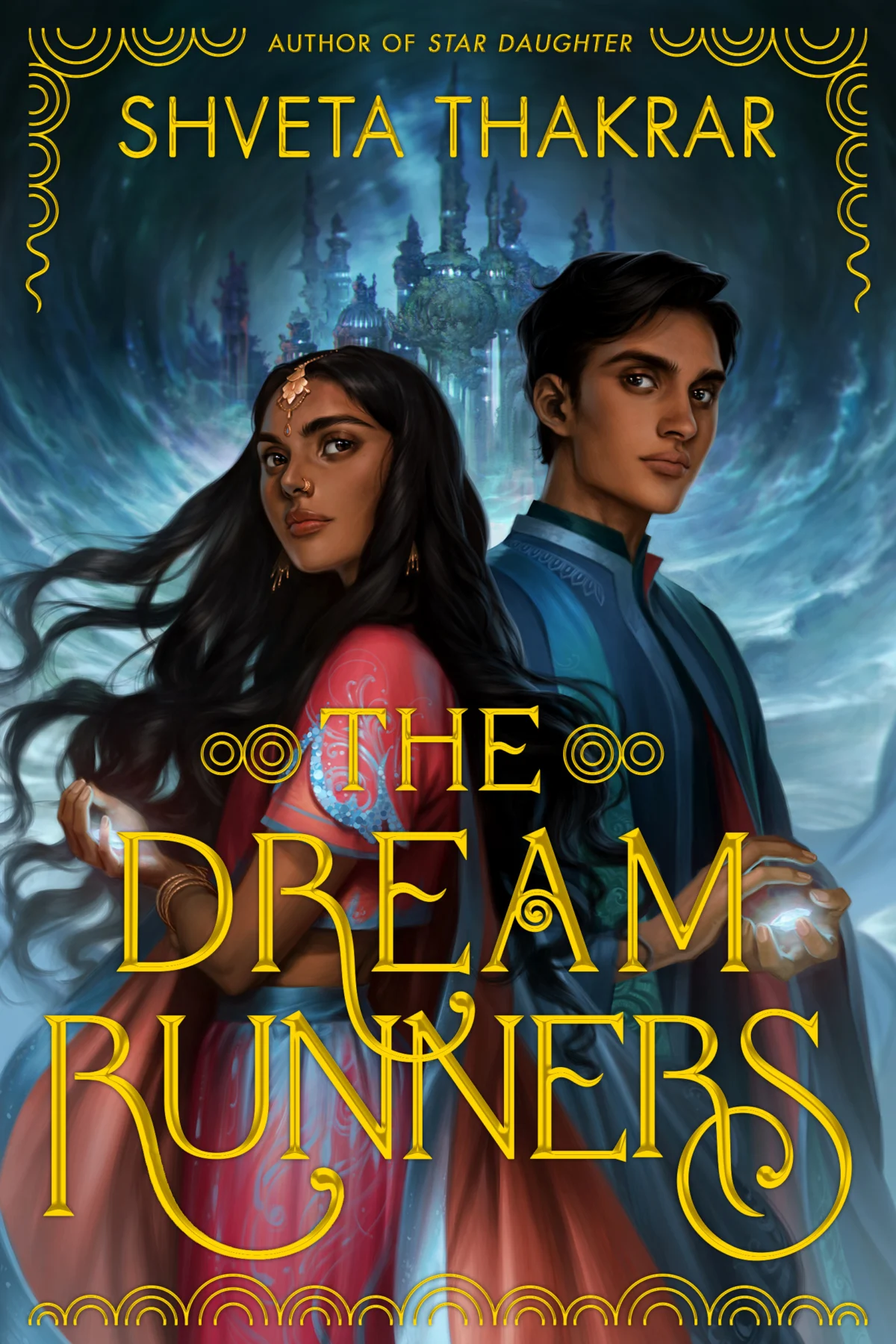
In the landscape of contemporary speculative fiction, the act of storytelling is often treated as a solitary endeavor. However, for author Shveta Thakrar, writing is a communal, ancestral, and deeply alchemical process. Through her acclaimed novels, including Star Daughter and The Dream Runners, Thakrar has carved out a unique space that bridges the gap between Western fantasy tropes and the vast, shimmering pantheon of Indian mythology. By doing so, she challenges the systemic biases that have long marginalized non-Western narratives in the global publishing market.
The Architecture of a Story: A Personal History
Thakrar’s journey began in a household where stories were as essential as the nourishment on the dinner table. Growing up as a child of two cultures, she found herself constantly oscillating between the Western fairytales she consumed in libraries and the rich, complex epics of her Gujarati heritage.
"I am made of stories," Thakrar notes, reflecting on her childhood. Her mother, a full-time physician who still managed to provide traditional home-cooked meals, instilled in her an appreciation for structure and cultural identity. For years, Thakrar’s internal monologue was shaped by the books she read, often adopting the third-person perspective of a narrator or the structured actions of a video game protagonist.
However, this internal world was not without its shadows. The pressure to conform to Western standards of "normalcy" led to a long period where she felt compelled to relegate her cultural identity to the background. In her early creative endeavors, she defaulted to "white" characters and Western-style fantasy settings, internalizing the colonial notion that her own heritage was merely "peripheral" or "niche."

Chronology: From Erasure to Empowerment
The turning point in Thakrar’s career arrived at age twenty-two, while standing in a public library. Holding a faerie novel in her hand, she was struck by a profound, agonizing realization: the stories she loved—the ones about people who looked like her, who shared her history and her mythos—were absent from the North American literary canon.
- Early Childhood: Immersion in both Western classics (Narnia, Snow White) and Indian lore (Mahabharata, Ramayana, Panchatantra).
- The Period of Conformity: Years spent writing stories that mirrored Western defaults, fearing that her own cultural stories would be deemed "unmarketable."
- The Awakening (Age 22): The pivotal moment of recognizing the systemic absence of South Asian mythic fiction in the mainstream market.
- The Act of Resistance: A conscious decision to write the books she desperately needed to see, regardless of the industry’s initial skepticism.
- Professional Breakthrough: The publication of Star Daughter and subsequent works, proving that there is a global appetite for diverse, myth-rich fantasy.
Supporting Data: The Colonial Bias in Publishing
The challenges Thakrar faced are not unique to her; they are symptomatic of a broader issue within the publishing industry. Historically, "myth" has been categorized in two conflicting ways: as a "sacred story" and as a "lie."
This linguistic contradiction mirrors the industry’s treatment of non-Western folklore. Imperialism has long dictated that European mythology serves as the "default" foundation for fantasy, while stories from the Global South are relegated to the status of "Other."
Market data and industry trends have often been weaponized against authors of color. Thakrar recounts being told, "You should just self-publish. No one would pay to read stories about people like you." This dismissal—the assertion that specific cultural experiences have no mainstream value—is a barrier that has silenced countless voices. Yet, Thakrar’s success serves as a direct rebuttal to this data. By refusing to conform, she has demonstrated that readers are not only capable of engaging with unfamiliar mythologies—they are starving for them.

The Ingredients of Mythic Fiction
Thakrar approaches her writing with the precision of a chef, treating her narratives as culinary creations. In her own words, a story requires:
- The Foundation: A blend of Indian folktales and Hindu myths, researched with the depth of an adult for "depth of flavor."
- The Atmosphere: Western fantasy tropes to provide a familiar texture for a broader audience.
- The Emotional Core: "Tears, aged in darkness," "concentrated imagination," and a "smidgen of pure spite" against those who demanded she make her stories smaller.
This process is not merely about writing; it is about reclaiming the "numinous." Thakrar argues that we have a fundamental human need to be connected to something larger than ourselves. When she writes about the scent of jasmine or the heartbeat of Bhoomi Devi, she is not just telling a story—she is anchoring her identity in a world that often tries to render it invisible.
Implications for the Future of Literature
The impact of Thakrar’s work extends far beyond the bookshelf. By successfully blending the "amazing epics of her desi upbringing" with the "sense of the numinous," she has created a blueprint for future generations of writers.
1. Broadening the Definition of Fantasy
Thakrar’s work forces a re-evaluation of what is considered "classical fantasy." If a reader can suspend their disbelief for selkies and elves, they can—and should—be able to do the same for gandharvas, nagas, and yakshas. Her work challenges the industry to move beyond the limited scope of European folklore.

2. The Role of the Storyteller as a Portal
Thakrar views the storyteller as a guide—or, in her words, a "naga" snuggled at the reader’s ear. By weaving threads of mythology into modern tapestries, she invites the reader into a liminal space. This does not require the reader to be an expert in Hindu theology; rather, it requires an openness to wonder. Her goal is to create a "mutual appreciation," where readers find themselves seen, welcomed, and perhaps a little more curious about the world than they were before they opened the book.
3. A Refusal to Silence
Perhaps the most significant implication of Thakrar’s career is her defiance. She explicitly rejects the narrative that she is the "wrong kind of minority." By continuing to write, she honors the child she once was—a child who needed to see that her brown skin was beautiful and that her stories were not "niche," but universal.
Conclusion: The Persistence of Magic
In the final analysis, Shveta Thakrar’s work is an act of profound courage. She has taken the "seven arrows" of dismissal and discrimination and turned them into a creative engine. Whether through the shimmering scales of a naga or the ethereal wings of a faerie, she reminds us that all our ancestors, regardless of their geography, stared at the stars and asked the same questions.
Her mission—to write, to revise, and to polish these stories—is an ongoing testament to the power of representation. For those who feel like "changelings" in a world not designed for them, Thakrar provides a sanctuary. She proves that when we write from the center of our spirit, we do not just create books; we create bridges. We create a reality where everyone, regardless of their background, can see themselves as the hero of their own myth.











No comments yet. Be the first to join the conversation!