Dwi Wanna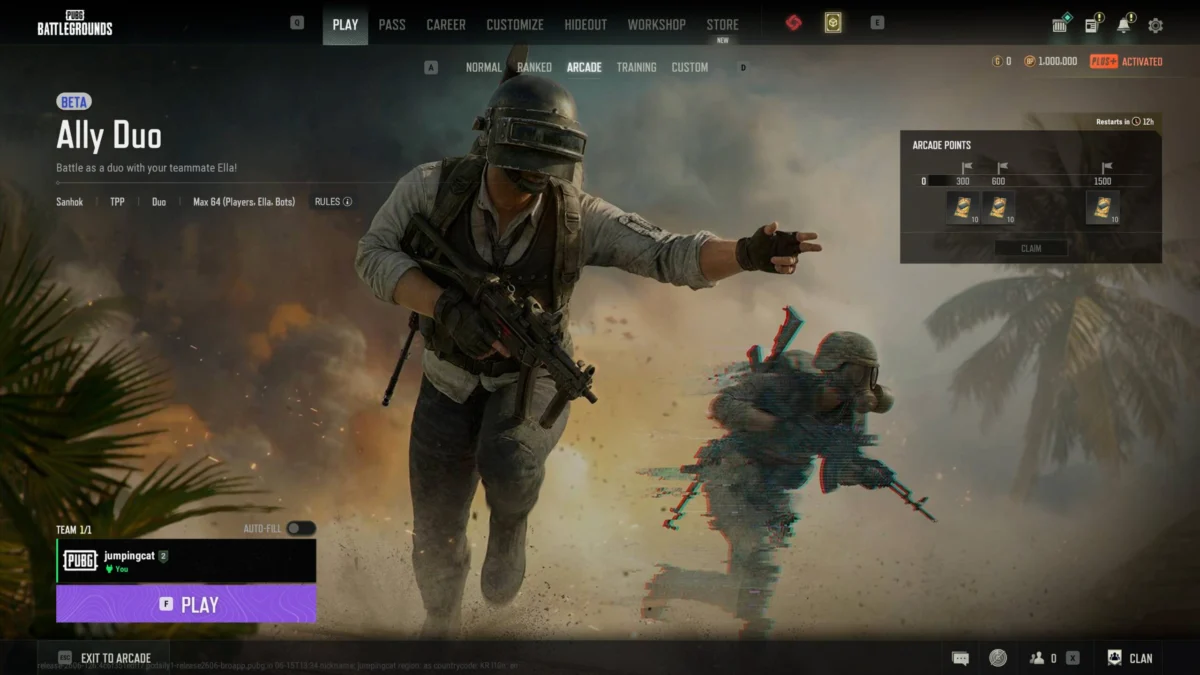
In a move that signals a paradigm shift for the battle royale genre, Krafton has officially launched the beta for "PUBG Ally," a new mode integrated into PUBG: Battlegrounds (famously known to its community as "Plunkbat"). This experimental feature introduces generative AI-powered teammates, offering players the chance to squad up with an autonomous entity capable of real-time communication, tactical decision-making, and simulated social interaction. As the industry grapples with the integration of Large Language Models (LLMs) into gaming, PUBG Ally stands as a high-profile test case for the future of digital companionship in high-stakes competitive environments.
The Mechanics of the Machine: How PUBG Ally Functions
At its core, PUBG Ally is a sophisticated fusion of traditional game logic and cutting-edge machine learning. Krafton, in collaboration with Nvidia, has architected a system that attempts to solve the "uncanny valley" of AI teammates—an area where developers have historically struggled to balance mechanical efficiency with human-like personality.
The architecture is split into two distinct tiers. The first is a robust, "traditional" behavior tree. This system handles the "hard" requirements of a battle royale: movement, pathfinding, precise aiming, and the split-second combat reflexes required to secure a win. By isolating these functions from the AI’s "brain," Krafton ensures that the teammate doesn’t sacrifice combat performance for the sake of conversation.
The second tier, and the source of the innovation, is powered by the Nvidia ACE (Avatar Cloud Engine) suite. This cognitive layer is responsible for the teammate’s ability to "perceive, plan, and take action." According to technical documentation provided by Nvidia, the system utilizes three specific models running locally on the user’s machine, requiring a GPU with at least 8GB of VRAM:
- Nvidia Parakeet: A speech-to-text model that interprets English voice commands in real-time.
- Nvidia Mistral-Nemo-Minitron: A 2-billion parameter Small Language Model (SLM) that acts as the "brain," analyzing situational context and generating conversational responses.
- Krafton’s In-House Text-to-Speech (TTS): A proprietary engine that converts the AI’s text-based thoughts into natural-sounding voice output.
By running these models locally via an in-game inferencing toolset, the developers have successfully minimized latency—a critical requirement for a game where a delay of a few milliseconds can be the difference between a "Chicken Dinner" and an early exit to the lobby.
A Chronology of Integration
The path to this moment has been paved by Krafton’s aggressive pivot toward AI-integrated technology. While the PUBG Ally beta represents the most public-facing implementation, it is merely the tip of the iceberg in a multi-year strategy:
- Early Research: Krafton began signaling its intent to invest heavily in deep learning as early as 2022, emphasizing the need for "virtual human" technology to enhance player immersion.
- Military Ties: Perhaps most controversially, the company announced a $1 billion investment into a South Korean defense firm specializing in unpiloted robot weapon systems. The stated goal was to leverage Krafton’s expertise in "large-scale game data and physics-based virtual worlds" to train defense systems. This move drew immediate scrutiny, highlighting the dual-use nature of modern gaming research.
- The Beta Launch: As of June 2024, the PUBG Ally Duo mode arrived in the Arcade. This limited-time window is designed specifically to gather telemetry and player sentiment, which Krafton claims will be the "north star" for their future AI development.
- The June 30th Deadline: The current beta period is set to conclude on June 30th, at which point the company will analyze the data to determine whether to scale the technology, refine the conversational models, or scrap the experiment entirely.
The Broader Implications: From NPCs to Co-Stars
The introduction of PUBG Ally forces a difficult conversation about the future of digital social spaces. For over a decade, PUBG has been a cornerstone of the "Let’s Play" and streaming culture, where the chemistry between players—often unfiltered, chaotic, and deeply human—has launched countless careers.
By inserting an LLM into that dynamic, Krafton is essentially attempting to synthesize "friendship." This raises significant questions for the gaming industry:
1. The Death of the "Pre-Recorded" Era
Veteran gamers may fondly recall the Quake 3 bots—simple, scripted entities that shouted canned insults. Today, we are moving toward a world of "haunted" NPCs. With Fortnite also experimenting with AI-powered characters (like their controversial Darth Vader chatbot), we are entering an era where NPCs will no longer be static set pieces. They will be co-stars. If an AI teammate can generate a hilarious, spontaneous quip during a firefight, it effectively becomes content. We may soon see a rise in "AI-Influencers" within gaming, where streamers pair themselves with specific, charismatic AI personas to cultivate a loyal, non-human fan base.
2. The Labor Question
The integration of generative AI into gaming is not occurring in a vacuum. It coincides with widespread industry layoffs and a growing tension between developers and voice acting unions. As Krafton pushes for "natural-sounding voice responses," one must ask what happens to the human talent that traditionally provided these performances. While the tech is currently marketed as a "teammate," it is fundamentally a cost-saving measure that replaces human interaction with a synthetic loop.
3. Ethical and Safety Concerns
The "sweary" nature of some current AI bots in games like Fortnite has already led to legal scrutiny regarding safety and appropriate content. When you give a machine the ability to "perceive" and "plan," you also grant it the capacity to act in ways that are unpredictable. Krafton’s reliance on Nvidia’s guardrails is a start, but as history has shown with LLMs, "jailbreaking" or bypassing safety filters is often a matter of when, not if.
The Industry Consensus: Is This the Future?
Opinion within the industry remains deeply divided. Proponents argue that AI teammates solve the "toxicity" problem; if a player has no one to queue with, or if they prefer to avoid the volatility of random human teammates, an AI offers a reliable, non-judgmental, and always-available partner.
However, critics, including many experts who have analyzed the current crop of LLM-voiced NPCs, remain skeptical. In a recent analysis of the sector, researchers labeled many current chatbot-NPC implementations as "horrible, boring, and cheap." The consensus among these experts is that while the technology is technically impressive, it often lacks the "soul"—or the subtle, unscripted serendipity—that makes human gaming social groups so compelling.
Conclusion: A High-Stakes Bet
PUBG Ally is more than just a novelty; it is a declaration of intent from one of the world’s largest publishers. By attempting to bridge the gap between high-performance tactical AI and cognitive, conversational agents, Krafton is betting that players want more than just a win—they want a companion.
Whether this experiment results in a more engaging, accessible battle royale experience or simply creates a sterile, uncanny digital environment remains to be seen. As the beta period winds down, the gaming world is watching closely. If Krafton succeeds, the "Winner Winner, Chicken Dinner" may soon be shared with a silicon-based squad member. If they fail, it may serve as a cautionary tale about the limits of engineering human personality. Either way, the definition of a "teammate" has been irrevocably altered.


 Asro
Asro
 Muslim