Nana
Nana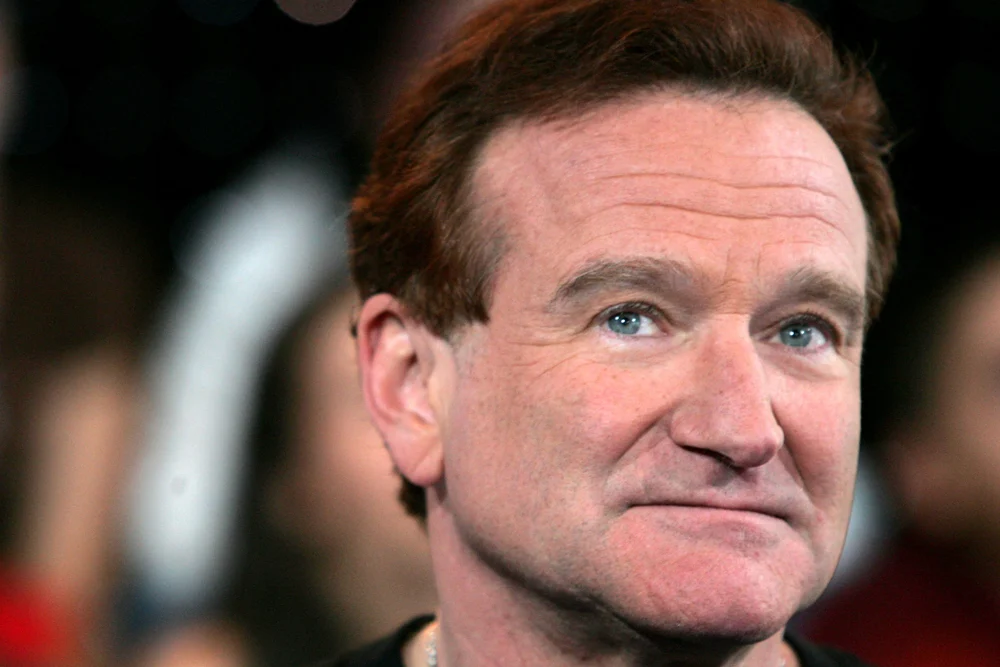
In an era where technology has outpaced ethical frameworks, the sanctity of a person’s identity—even after death—has become a battleground. Zelda Williams, the director and daughter of the late, legendary comedian Robin Williams, has once again been forced to confront the intrusive reality of generative artificial intelligence. On Monday, September 21, 2026, Williams issued a scathing condemnation of individuals using AI to fabricate "private" videos of her father, calling on fans and digital creators to cease the unauthorized production and circulation of augmented content.
This latest plea marks a significant escalation in a multi-year struggle to protect the memory and likeness of one of the 20th century’s most beloved performers. For the family of Robin Williams, the issue is not merely one of copyright or intellectual property; it is a profound matter of grief, privacy, and the fundamental rights of the deceased.
The Latest Incident: A "Robotic and Terrible" Fabrication
The catalyst for the most recent public outcry was a circulating clip, purportedly a "private video" of Robin Williams discussing conspiracy theories. The content, which spread rapidly across social media platforms, was flagged by Zelda Williams as a stark example of what she termed "delusional" content creation.
In a pointed statement posted to X (formerly Twitter), Williams dismantled the credibility of the video. "It is clearly AI, and not even particularly convincing AI," she wrote. "Anyone who claims to be a fan who believes it clearly listened to his movies on mute because that voice is robotic and terrible."
Beyond the technical failure of the deepfake, Williams addressed the ethical bankruptcy of the creators. "A human made a robot create it, and to you I say: leave him out of your delusional bullshit and let him rest. If you cannot make your case without making a dead man make it more convincing for you, then tell me: who’s the one manipulating the public thru media now?"
Her words reflect a growing fatigue with the "cesspool" of modern social media, where, as she noted, users are often "willingly being duped by bots." For Williams, the act of using her father’s voice to lend artificial weight to fringe theories is a form of puppetry that strips the actor of his legacy and agency.
A Chronology of a Relentless Battle
The struggle against the digital appropriation of Robin Williams’ persona has been a consistent burden for his family since his passing in 2014 at the age of 63. However, the rise of accessible, high-fidelity generative AI tools has transformed a sporadic annoyance into a daily crisis.
- 2014–2022: Following the actor’s death, the family focused on preserving his legacy through traditional means—managing his estate, supporting charitable causes, and keeping his filmography in the public consciousness.
- October 2025: Zelda Williams issued a public plea on Instagram, expressing deep frustration with the influx of AI videos being sent to her. She explicitly asked fans to stop sharing these creations, noting, "It’s a waste of time and energy, and believe me, it’s NOT what he’d want."
- August 2026: In a strategic shift, Zelda, alongside her siblings Zak and Cody, moved to take a more proactive, defensive stance. The siblings revived their father’s official Instagram account. The goal was twofold: to provide an authentic, curated space for his memory and to actively "fight back against rampant AI abuse of his voice and likeness."
- September 2026: The current conflict regarding the "conspiracy theory" deepfake highlights that the proactive measures taken by the estate are struggling to contain the sheer volume of illicit content being generated by the public.
The Technology of Disrespect: Understanding the AI Threat
The recreation of Robin Williams’ voice and likeness relies on sophisticated machine learning models known as Generative Adversarial Networks (GANs) and Large Language Models (LLMs). These tools are trained on vast datasets of a subject’s existing work—in this case, thousands of hours of Williams’ stand-up specials, film performances, and talk show appearances.
While these tools have legitimate applications in film restoration or accessibility software, they also provide the means for "Digital Necromancy." When a user prompts an AI to generate a video of a deceased celebrity, the software synthesizes facial expressions and vocal inflections to mimic the subject.
The problem, as experts in digital ethics point out, is the "Uncanny Valley" effect—the discomfort felt when a simulation is almost, but not quite, human. However, as Zelda Williams pointed out, even when the technology fails to be convincing, the intent to deceive remains. The creation of such content transforms the performer into an involuntary avatar for the creator’s own personal, political, or ideological agendas.
Implications for Estate Law and Human Rights
The plight of the Williams family is a microcosm of a much broader legal and moral dilemma facing Hollywood and the public at large. As of late 2026, legislation regarding "Right of Publicity" post-mortem varies wildly by jurisdiction. While some states have begun to implement laws protecting a person’s likeness after death, the global nature of the internet makes enforcement nearly impossible.
The Legal Void
Currently, most copyright laws protect the work—the actual footage or recording—but they do not always protect the persona or the "essence" of a person. When an AI generates a new, original video that was never filmed, it does not necessarily infringe upon the copyright of an existing film clip. This creates a legal loophole that developers and content creators are currently exploiting.
The Moral Weight
Industry leaders, including the Screen Actors Guild (SAG-AFTRA), have been in long-standing negotiations regarding the use of AI in media. The central argument is that performance is a human act. When an AI is trained on an actor’s life work without consent, it is essentially "stealing" the years of practice, craft, and soul that the actor poured into their career.
For a figure like Robin Williams, whose comedy was deeply rooted in his unique, spontaneous genius, the use of AI to make him "speak" words he never uttered is particularly offensive to those who understood the nuance of his art.
The Family’s Stance: "Have Some Shame"
Zelda Williams has been the most vocal family member in this fight, often bearing the brunt of the digital harassment. Her messages have shifted from polite requests to stern rebukes. In her recent statements, she highlights the emotional toll: the constant pinging of notifications, the intrusion of strangers into her grief, and the feeling of helplessness as her father is turned into a tool for misinformation.
Her message to the public is clear: "Just because he’s gone does not mean he’s now your puppet. Have some shame."
This is not a battle that can be won through technology alone. It requires a shift in social norms. As the internet becomes flooded with synthetic media, the responsibility falls on the consumer to verify, to reject, and to report.
The Future of the Digital Legacy
As we look toward the remainder of the decade, the case of Robin Williams will likely serve as a foundational study in the ethics of the digital afterlife. The entertainment industry is moving toward a future where "digital clones" of actors could theoretically star in new films, provided there is consent and compensation. However, the unauthorized, grassroots deepfake culture represented by the recent conspiracy theory video represents the dark underbelly of this evolution.
The Williams family’s decision to reclaim their father’s digital presence is a powerful act of defiance. By controlling the official channels, they are attempting to draw a line in the sand, distinguishing between genuine appreciation of his work and the parasitic nature of AI fabrication.
Ultimately, the request from Zelda Williams is a plea for humanity. It asks us to recognize that behind the screen, the pixels, and the voice-mimicry algorithms, there was a man, a life, and a family who continue to grieve. In a world of infinite digital possibility, the most precious commodity may soon become the right to be left alone—even after the final curtain falls.
As Zelda Williams continues her advocacy, she remains a sentinel, reminding a distracted public that just because we can do something with technology, it does not mean we should. Her struggle is a necessary reminder that while artificial intelligence can replicate a voice, it will never understand the weight of a legacy.

 Lina Hope
 Azzam Bilal Chamdy