Lina Irawan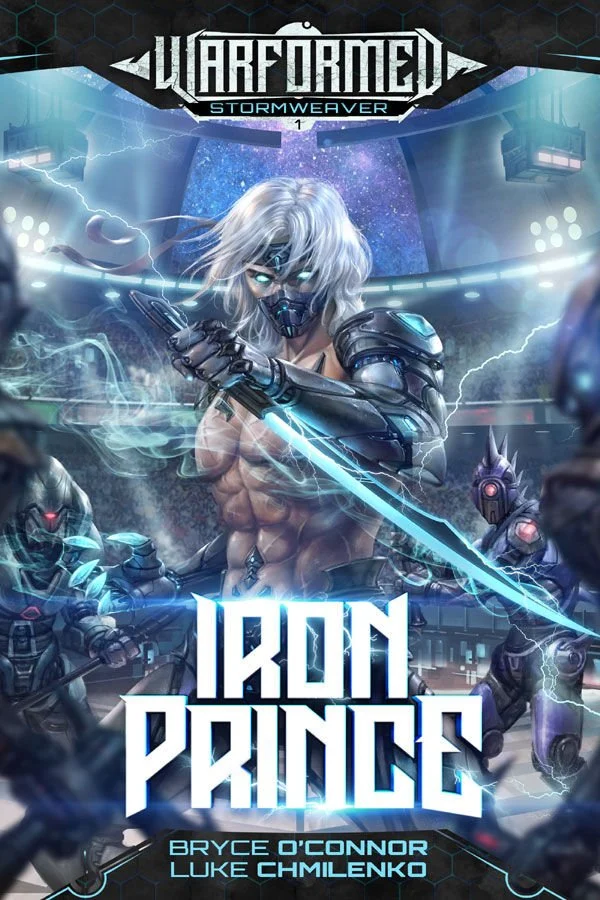
In the rapidly expanding landscape of contemporary science fiction, few titles have captured the imagination of the "progression fantasy" community as thoroughly as Warformed: Iron Prince. Authored by the collaborative duo Bryce O’Connor and Luke Chmilenko, the novel serves as a cornerstone for a subgenre that blends the high-stakes world-building of space opera with the addictive, granular advancement mechanics typically reserved for role-playing games and shounen battle manga. As the narrative charts the meteoric rise of Reidon "Rei" Ward, it invites readers into a future where human potential is measured not by birthright, but by the efficiency of one’s technological interface.
Main Facts: The Genesis of a New Power Fantasy
At its core, Warformed: Iron Prince is a story of radical transformation. The protagonist, Reidon Ward, begins his journey as an underdog of the highest order. Born sickly and physically fragile, Rei is a ward of the state, discarded by his biological parents and forced to survive in a society that values physical prowess above all else. His life takes a tectonic shift when he is selected for the Galens Institute, a premier military academy within the Collective.
The mechanism of this transformation is the Combat Assistance Device (CAD). In this universe, the CAD is an alien technology that serves as both a weapon and an exoskeleton, bridging the gap between human limitation and superhuman potential. Unlike his peers, who receive standardized, high-performance gear, Rei is granted a device with statistically "awful" specifications. However, the device possesses a unique, latent property: infinite growth potential.
This core narrative hook—the combination of an underdog protagonist and a "broken" power system—is what elevates Warformed beyond standard military sci-fi. It is a calculated power fantasy that relies on the "catharsis of effort," where the reader is promised that the protagonist’s early suffering will yield exponential dividends in the form of unstoppable power.
Chronology: The Arc of the Stormweaver
The narrative structure of Iron Prince follows a deliberate, almost rhythmic progression that mirrors the classic hero’s journey, albeit framed through the lens of modern gamified fiction.
The Foundation of Struggle
The initial chapters establish the stakes of Rei’s world. His medical condition—a life-altering bone disease—serves as the primary antagonist of his early life. The acquisition of his CAD is not merely a military enlistment; it is a medical miracle that grants him the health he was denied at birth. This early phase is defined by constant defeat. By establishing a baseline of failure, O’Connor and Chmilenko set a trajectory that makes his eventual ascent feel earned rather than granted.
The Galens Institute Trials
Once at the academy, the story pivots into the "academy arc" trope common in anime and young adult fiction. Alongside his steadfast friend, Viviana "Viv" Arada, Rei must navigate the brutal hierarchy of the school. The chronology here is defined by incremental, data-driven growth. Every loss Rei suffers provides his CAD with the combat data necessary to optimize his performance for the next encounter.
The Tournament Circuit
As the novel progresses, the focus shifts toward the tournament circuits—the primary source of entertainment and political currency in the Collective. This transition marks the shift from private training to public scrutiny. The audience, both within the book and in the real world, watches as Rei moves from a "weakling" to a contender, building momentum toward the climax of the first installment.
Supporting Data: The Mechanics of Progression
To understand why Warformed resonates so deeply with its readership, one must examine the mechanics of the CAD. The system functions similarly to the power-scaling found in Dragon Ball Z or Solo Leveling.
- Data-Driven Evolution: Rei’s CAD operates on a feedback loop. When he loses a fight, his device analyzes the enemy’s strengths and his own failures, effectively "patching" his weaknesses. This is not just physical training; it is a system-level upgrade.
- The Power Hierarchy: The authors provide a clear ladder of power. By introducing elite, veteran CAD users early, they establish a "power ceiling" that gives the reader a sense of the scale required to reach the top.
- The "Shounen" Influence: The novel utilizes classic archetypes: the wealthy, entitled rival; the genius prodigy; the supportive, loyal best friend; and the oppressive, tradition-bound institution. These archetypes serve as a "formula" that provides consistent reader satisfaction.
Official Responses and Literary Reception
Critical reception of Warformed: Iron Prince has been overwhelmingly positive within the progression fantasy community. Reviewers have praised the novel for its pacing and its ability to handle "crunchy" game-like mechanics without sacrificing the emotional core of the characters.
The "banter" between the core friend group is frequently cited as a highlight. Readers have noted that while the power scaling is the initial draw, the genuine, evolving relationships between characters like Rei and Viv keep the audience invested. The "rival-turned-ally" trope is handled with a level of nuance that prevents it from feeling hollow; specifically, the subplot involving a prodigy who begins to spar with Rei to accelerate his growth is seen as a high-water mark for character development within the genre.
However, some critics have voiced concerns regarding the sustainability of this model. The "power creep" inherent in shounen-style narratives often leads to a devaluation of supporting characters. If the protagonist continues to outpace everyone else, the secondary cast risks becoming relegated to "cheerleaders." Whether O’Connor and Chmilenko can maintain the balance between Rei’s exponential growth and the relevance of his peers remains the central question for the future of the series.
Implications: The Future of the Series and the Genre
The success of Warformed suggests a broader shift in the science fiction market. Readers are increasingly drawn to narratives that provide a sense of agency and measurable growth. The "progression" aspect acts as a promise: the time invested in reading will be rewarded with a satisfying payoff in power and status for the protagonist.
The Threat of the Unknown
Beyond the internal politics of the academy and the tournament, the authors have planted the seeds of a larger, existential threat: the alien creators of the CAD technology. This adds a layer of "intergalactic war" potential to the series. It suggests that the tournaments and the school rivalries are merely a "tutorial" phase for a much larger conflict.
Strategic Reading
One significant implication for the reader is the pacing of publication. Because this is a serialized, progression-heavy narrative, the delay between sequels can be a point of friction. Many readers have opted for a "wait-and-see" approach, preferring to binge-read multiple volumes to avoid the "forgetting curve" that plagues long-running series.
Final Verdict
Warformed: Iron Prince is, in essence, a love letter to the power-fantasy genre. It takes the tropes of the shounen battle manga—the underdog, the secret power, the tournament, and the power-ranking system—and injects them into a high-tech, gritty military setting. It is a testament to the fact that, regardless of the medium, the human desire to see a hero climb from the absolute bottom to the top remains one of the most compelling narratives in literature.
For those who enjoy the "catharsis of the climb," Iron Prince is not just a novel; it is a masterclass in the mechanics of the progression genre. Whether the series can avoid the common pitfalls of the genre—namely, the alienation of the supporting cast and the "overpowered protagonist" trap—will define its legacy in the annals of modern science fiction. As it stands, the rise of the Stormweaver has only just begun, and the trajectory suggests a climb that is far from over.


 Ammar Sabilarrohman
 Pevita Pearce