

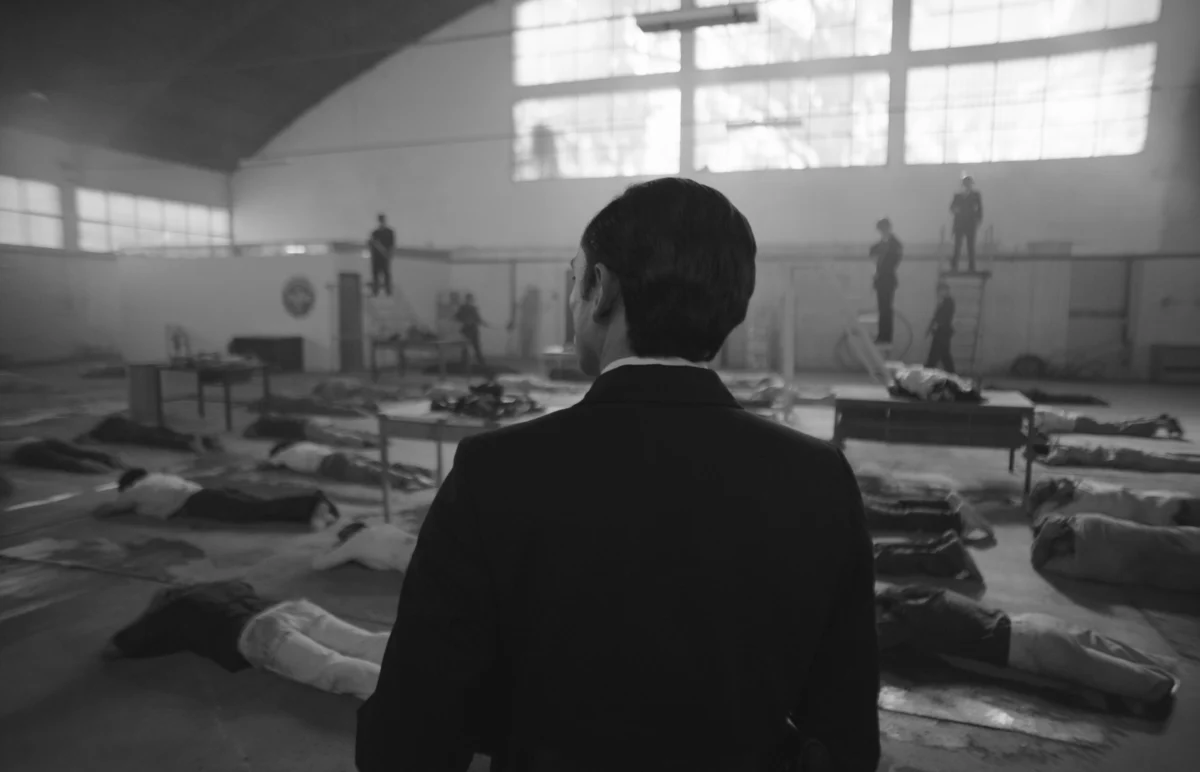
In the landscape of contemporary Latin American cinema, few debuts have generated as much immediate, visceral impact as Juan Pablo Sallato’s The Red Hangar (Hangar rojo). A searing, black-and-white fiction feature that navigates the claustrophobic corridors of history and conscience, the film has transitioned from a buzzy Berlinale discovery to an international powerhouse. Following a triumphant sweep at the Guadalajara Film Festival in April, the production has officially secured a North American home, signaling a significant shift in the distribution strategy for high-caliber, socially conscious Ibero-American cinema.
A Strategic Acquisition: Expanding Horizons
The most significant development in the film’s trajectory is its acquisition by U.S.-based distributor Pragda. This deal represents a landmark moment for the company, as it marks Pragda’s first-ever all-rights acquisition for the United States and Canada. Traditionally known for its role in the educational distribution sector, Pragda’s pivot toward a wider commercial release strategy underscores the perceived marketability and cultural urgency of The Red Hangar.
Pragda CEO Marta Sanchez expressed a clear rationale for the acquisition: "‘The Red Hangar’ represents exactly the kind of cinema we wanted to bring into our new line of business beyond the educational market. It is a socially conscious thriller that combines tension, a contemporary perspective, and an especially timely subject matter, along with exceptional quality." For Pragda, the film is not merely a piece of historical fiction; it is a product with the inherent "elements to connect directly with North American audiences."
This sentiment is shared by international sales agents Premium Films and MPM Premium, who have meticulously managed the film’s rollout. Natalia Isotta, head of Ibero-American sales and worldwide festivals at MPM Premium, noted that the speed of the deal was a testament to the film’s immediate grip. "When a client falls in love with a film within the first few minutes of viewing, all that remains is to trust their strategy and vision," Isotta stated while attending the Cannes Film Festival.
Chronology of a Critical Success
The journey of The Red Hangar has been defined by a rapid, upward trajectory through the world’s most prestigious festival circuits.
- The Berlin Launch: The film’s international profile was established during its world premiere at the Berlinale’s "Perspectives" sidebar. It was here that Premium Films, recognizing the narrative’s gravity and aesthetic strength, collaborated with subsidiary MPM Premium to secure rights.
- Malaga’s Recognition: Before the film reached North American shores, it garnered significant momentum at the Malaga Film Festival. It secured four major awards, including the coveted Audience Award. Crucially, lead actor Nicolás Zárate received the Silver Biznaga, a prestigious accolade honoring his restrained, haunting performance as Captain Jorge Silva.
- The Guadalajara Sweep: By April 2026, the film’s reputation reached a fever pitch at the Guadalajara Film Festival. Its performance there effectively solidified its status as a critical darling and a must-have acquisition for global distributors.
- The Global Footprint: Following the momentum of these festivals, the film has secured distribution across a wide geography. Beyond the U.S. and Canada, the drama has been sold to Festival Films (Spain), I Wonder (Italy), Weird Wave (Greece), Cinobo (Poland), and Storyboard Media (Chile), ensuring the film will reach diverse international audiences.
Historical Depth: Uncovering the "Red Hangar"
Set against the backdrop of the first three days of Chile’s 1973 military coup, The Red Hangar is an exercise in historical excavation. It pulls back the curtain on the chaotic, brutal transition of power that resulted in the overthrow of President Salvador Allende.
The film is adapted from Fernando Villagrán’s acclaimed book, Shoot the Flock. The narrative centers on Captain Jorge Silva, a former Air Force Intelligence chief who finds himself caught in a moral vice. Ordered by his superiors to transform the Air Force Academy into a detention and torture facility—the titular "Red Hangar"—Silva is forced to reconcile his professional duty with his humanity.
The film is particularly lauded for its focus on the "internal" opposition—Air Force officers and enlisted soldiers who resisted the coup from within their own ranks, only to face severe, often fatal, retribution from the institution they served. By eschewing the traditional "great man" theory of history, Sallato focuses on the granular, human cost of political violence, rendering the 1973 coup not as a distant geopolitical event, but as a series of intimate, devastating betrayals.
Production and Artistic Vision
The aesthetic choice to shoot the film in stark black and white has been central to its critical praise. Critics have highlighted the cinematography as a masterclass in tension, using high-contrast shadows to mirror the moral ambiguity of the characters.
The film is a collaborative triumph of international production. It is led by Villano Producciones (Chile) under the guidance of Juan Ignacio Sabatini, in a complex co-production involving:
- Brava Cine and HD Argentina (Argentina): Providing regional production support.
- Rain Dogs, Berta Films, and Caravan (Italy): Representing the European creative investment.
- TVN Italia: Further cementing the project’s European reach through institutional participation.
This multinational production structure reflects the universal nature of the themes explored in the film: state-sponsored violence, the ethics of resistance, and the burden of historical memory.
Implications: A New Era for Latin American Cinema
The acquisition of The Red Hangar by a U.S. distributor signals a growing appetite for sophisticated, mid-budget historical dramas from the Global South. For years, there has been a perception that international films require "crossover" elements to succeed in the North American market. The Red Hangar challenges this by proving that a specific, locally rooted story—told with immense technical proficiency and emotional depth—can transcend its borders.
As Natalia Isotta observed, the critical response has been overwhelmingly positive across Europe, Latin America, and Asia. This cross-continental success suggests that the film will likely become a benchmark for future Chilean productions seeking international distribution.
For Pragda, the success of this acquisition will serve as a bellwether for their expansion. By stepping out of the educational market and into the competitive arena of theatrical and VOD distribution, they are effectively betting that modern audiences are hungry for "socially conscious thrillers."
As the film continues its global run, its legacy appears secure. The Red Hangar is not just a film about the past; it is a mirror held up to the present. By focusing on the individuals who chose to resist, Sallato provides a timeless meditation on the role of the individual in the face of authoritarianism. As the film prepares for its North American debut, it carries the weight of a long-suppressed history, now finding a global audience eager to listen to the stories that were once kept in the shadows.











No comments yet. Be the first to join the conversation!