Lina Irawan
The ongoing debate surrounding digital rights management (DRM) software reached a new milestone recently as Square Enix and Crystal Dynamics moved to remove Denuvo Anti-Tamper technology from Shadow of the Tomb Raider. While Denuvo has long been a staple of the triple-A gaming industry—marketed as an essential shield against day-one piracy—the practical cost-benefit analysis for aging titles appears to be shifting. Following the removal of the software from Shadow of the Tomb Raider, independent benchmarking has provided empirical evidence that the anti-tamper solution imposes a measurable performance penalty on PC systems, reigniting discussions about the efficacy and fairness of such intrusive technologies.
The Chronology: From Launch Protection to Post-Launch Purge
When Shadow of the Tomb Raider debuted in 2018, it arrived with the industry-standard Denuvo protection suite. At the time, publishers viewed this as a critical investment. As previously reported by Bit-Tech, implementing Denuvo is not a one-time fee; it is a recurring financial commitment. Developers and publishers pay significant licensing fees to Denuvo’s parent company for the privilege of keeping their titles "secure" during the critical initial sales window.
However, the lifecycle of a game follows a predictable trajectory. The vast majority of revenue is generated in the first few months. As a game ages, the necessity for aggressive anti-piracy measures diminishes, while the cost of maintaining the license remains. Consequently, we are witnessing a trend where developers quietly excise Denuvo from their back catalogs.
The recent removal of Denuvo from Shadow of the Tomb Raider was first spotted by the community and subsequently verified by Dark Side of Gaming (DSOG). While the update was briefly rolled back on Steam—likely due to a deployment error or a shift in release strategy—the version stripped of the DRM remains accessible via the platform’s "beta" build repository. This provided a rare, controlled environment to compare the "protected" and "unprotected" states of the same game binary, offering the community the "truth" regarding performance impact that publishers have historically been reluctant to confirm.
The Benchmarking Data: Quantifying the Performance Tax
The central argument against Denuvo has always been its demand on system resources. Critics have long alleged that the software runs continuous, background checks to ensure the game’s integrity, which inevitably consumes CPU cycles. Publishers, conversely, have frequently denied that their chosen security software causes any significant degradation to frame rates.
To settle the dispute, DSOG conducted rigorous A/B testing, comparing the Denuvo-laden version against the recently released "clean" build. The tests were performed on a high-end PC system to minimize bottlenecking from other components. To ensure parity, tests were conducted at 1080p resolution across two presets: the "Highest" setting (excluding Ray Tracing and DLSS to isolate the engine’s raw performance) and the "Lowest" setting. DLSS was explicitly omitted from the methodology because recent patch notes indicated that the technology had undergone its own independent optimizations, which would have introduced unwanted variables into the experiment.
The Results: Where the CPU Feels the Strain
The findings were revealing. While the performance delta was less pronounced at the "Highest" preset—likely because the system was already hitting a graphical bottleneck—the "Lowest" settings told a different story. In the lower-intensity environment, the game recorded an average frame rate increase of 17fps upon the removal of Denuvo.
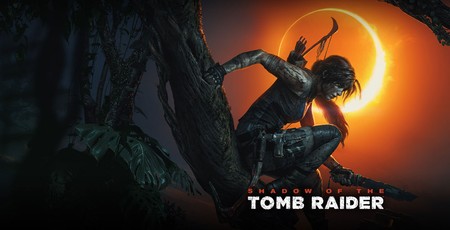
The most startling data point emerged when Hyper-Threading (HT) was disabled on the test system. In this configuration, the difference jumped to a staggering 30fps. This data strongly suggests that Denuvo’s background processes are not merely background noise; they are a tax on the CPU’s ability to draw frames. For gamers on mid-range or aging hardware—specifically those with lower core counts or processors that lack robust multi-threading capabilities—this "tax" is not a mere abstraction; it is the difference between a smooth, responsive experience and a stuttering, unplayable one.
Official Responses and Industry Silence
Historically, the relationship between publishers and the Denuvo Corporation has been one of defensive obfuscation. When confronted with user reports of stuttering, frame-time spikes, or general performance degradation, publishers have traditionally pointed toward driver issues, background operating system tasks, or hardware bottlenecks.
It is important to acknowledge that Denuvo is not the sole contributor to performance overhead. Other factors, such as Nvidia’s driver overhead, have been known to impact lower-power systems independently. However, the data gathered from the Shadow of the Tomb Raider tests provides a smoking gun that makes the "no impact" narrative increasingly difficult to defend.
Despite the mounting evidence, there has been a notable silence from the primary stakeholders. Neither Square Enix nor Crystal Dynamics has issued a formal statement explaining the performance gains seen in the post-Denuvo build. This silence is typical of the industry; by avoiding comment, publishers avoid admitting that their previous security measures had a negative impact on the end-user experience. Denuvo itself rarely comments on specific title implementations, maintaining that their software is optimized for minimal impact, while simultaneously refusing to open their source code to independent verification.
The Implications: A Shift in the PC Gaming Landscape
The implications of these findings extend far beyond a single Lara Croft adventure. We are looking at a broader shift in the digital distribution ecosystem.
The Preservationist Perspective
From a long-term game preservation standpoint, the removal of Denuvo is a victory. Denuvo requires a handshake with the developer’s servers to function. If a publisher goes bankrupt, or if the Denuvo servers are taken offline, any game protected by the technology becomes functionally dead software. By removing the DRM, publishers are essentially granting their games a longer shelf life, ensuring they remain playable for years to come without the need for constant connectivity to an authentication server.
The Ethical Conflict
The "Denuvo tax" highlights an uncomfortable ethical conflict in the modern games industry. When a player purchases a game, they are purchasing a product that they expect to run as efficiently as the hardware allows. If a third-party security suite—installed solely for the benefit of the publisher—degrades the performance of that product, does it constitute a breach of the implicit contract between the seller and the consumer?

The data from Shadow of the Tomb Raider suggests that the hardware you pay for is not always the hardware you get to use. When 17 to 30 frames per second are sacrificed to the altar of anti-piracy, the consumer is effectively paying for a premium experience and receiving a sub-optimal one.
The Future of PC Optimization
As PC hardware continues to evolve, developers are increasingly looking toward software-level optimizations to squeeze more performance out of existing silicon. If anti-tamper software is essentially "fighting" against the CPU’s ability to perform these tasks, the industry must ask whether the cost of piracy is truly worth the cost of performance.
The trend of removing Denuvo from older titles suggests that even publishers are beginning to realize that the "protection" phase of a game’s life is finite. If the industry continues to move toward a model of "security-as-a-service," we may see more publishers adopting a tiered approach: high-intensity protection at launch, followed by a gradual reduction of DRM as the game enters its "long tail" sales phase.
Conclusion
The Shadow of the Tomb Raider performance tests serve as a definitive case study in the hidden costs of modern game security. While the necessity of protecting intellectual property is a valid business concern for studios, the empirical data confirms that this protection comes at a price paid by the consumer—often those with the least powerful hardware.
As we move forward, the push for transparency in performance impact will likely intensify. Gamers are no longer satisfied with the "it’s just the game" explanation for poor optimization. With tools like the Steam beta branch allowing for direct comparisons, the days of publishers hiding behind vague denials are numbered. The removal of Denuvo from Shadow of the Tomb Raider isn’t just a technical update; it is an acknowledgement that when a game’s primary sales cycle concludes, the priority must shift from shielding the product to ensuring the best possible experience for the players who have kept the game alive.

 Ali Ikhwan
 Nana
Nana