Iffa Jayyana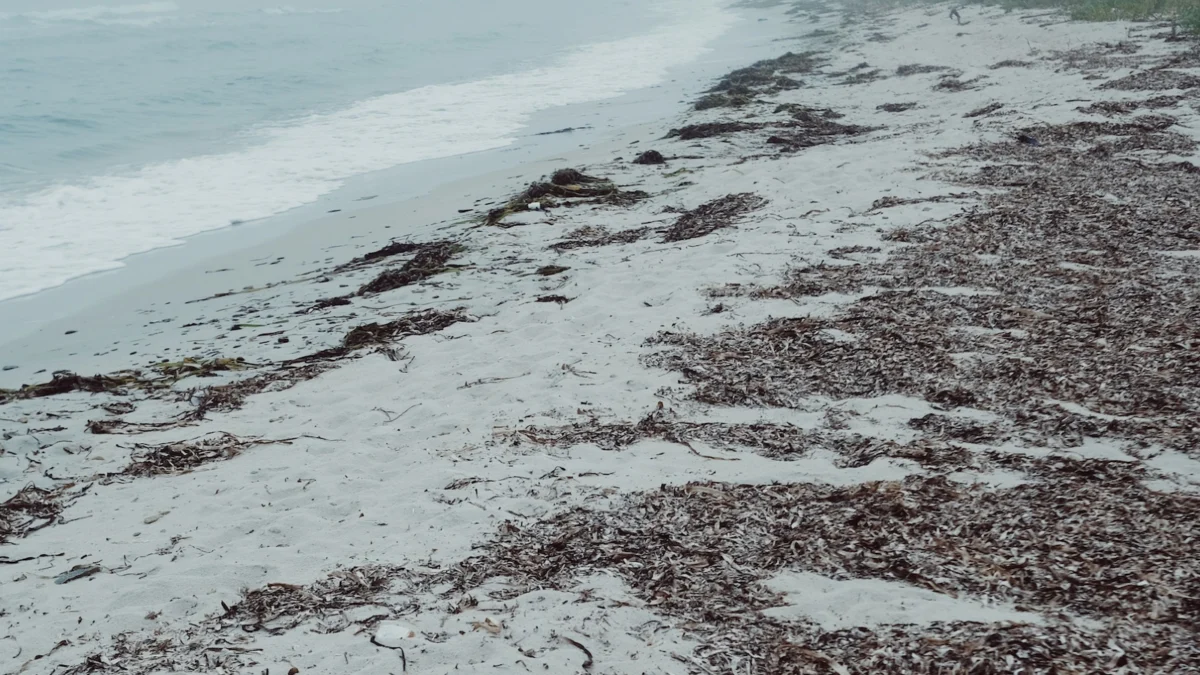
Coastal communities across Florida and the wider Caribbean are currently grappling with an unprecedented environmental phenomenon: the mass influx of Sargassum, a brown macroalgae that, while vital to open-ocean ecosystems, is wreaking havoc on shorelines. Researchers from the University of South Florida (USF) have issued a stark warning that the current accumulation is not merely a seasonal anomaly, but a long-term trend. As record-breaking mounds of the seaweed rot on beaches, experts are now cautioning that the phenomenon is likely to expand its reach, potentially impacting the Gulf Coasts of Texas and Louisiana in the coming months.
The Science of the "Great Atlantic Sargassum Belt"
Sargassum is a genus of large brown seaweed that floats in island-like masses in the open ocean. Unlike other seaweeds that attach to the seafloor, Sargassum spends its entire life cycle drifting on the surface of the sea. In the open ocean, these floating mats provide essential habitat for a variety of marine life, including sea turtles, fish, and shrimp.
However, the proliferation of what is now known as the "Great Atlantic Sargassum Belt"—a massive, continuous accumulation stretching thousands of miles from West Africa to the Gulf of Mexico—has reached levels that current oceanic and atmospheric models describe as "record-breaking." The USF Optical Oceanography Laboratory, which monitors these blooms via satellite imagery, has identified that the sheer volume of biomass currently circulating in the Atlantic is poised to redefine coastal management for the foreseeable future.
Chronology of the Crisis
The surge in Sargassum is not a new occurrence, but its scale has shifted dramatically over the past decade.
- Pre-2011: Sargassum was present in the Atlantic but remained largely contained within the Sargasso Sea, a region of the North Atlantic gyre.
- 2011–2018: Researchers began observing a shift in the distribution of the seaweed, with massive blooms appearing in the tropical Atlantic, leading to the first widespread coastal landings in the Caribbean and Florida.
- 2023–2024: The frequency and density of these blooms reached new heights. Scientific data confirmed that the "belt" was becoming more consistent, with year-round presence in the Atlantic rather than just seasonal pulses.
- 2026 Projections: The USF research team has released alarming projections for 2026, suggesting that the current growth patterns indicate a "record-breaking year" for Sargassum accumulation by the summer season.
This chronological progression suggests that the environmental drivers of this growth—likely a combination of increased nutrient runoff from major river systems like the Amazon and rising ocean temperatures—are intensifying rather than subsiding.
Supporting Data: Why is the Seaweed Increasing?
The dramatic rise in Sargassum biomass is intrinsically linked to global climate change and human-driven environmental factors.
Nutrient Loading
Agricultural runoff, particularly the flow of nitrogen and phosphorus from the Amazon River and other major global waterways, acts as a potent fertilizer for the seaweed. As these nutrients enter the Atlantic, they provide the necessary fuel for rapid, uncontrolled growth of Sargassum mats.
Thermal Anomalies
Ocean warming is the secondary catalyst. Sargassum thrives in warmer water temperatures. As global sea surface temperatures hit record highs, the "growing season" for this algae has effectively become a year-round event.
Satellite Monitoring
The USF Optical Oceanography Laboratory utilizes satellite data to track the movement of these mats. Their models indicate that the "Belt" is currently shifting in response to changing ocean currents, which explains why states previously less affected—such as Texas and Louisiana—are now being warned of potential landfall in the near future.
Public Health Implications: Beyond the Stench
The most immediate and noticeable impact of the Sargassum influx is the overwhelming "rotten egg" odor that permeates coastal towns. This smell is not merely a nuisance; it is a chemical byproduct of the decomposition process.
Hydrogen Sulphide and Air Quality
As Sargassum dies and begins to decay on the shore, it releases hydrogen sulphide (H₂S). In high concentrations, this gas is toxic and irritating. The Florida Department of Health has emphasized that while the seaweed itself is not harmful to human skin upon contact, the gas it emits can pose significant respiratory risks.
- Respiratory Sensitivity: Individuals with underlying conditions such as asthma, COPD, or other chronic respiratory issues are at an elevated risk. Prolonged exposure to the gas can lead to irritation of the eyes, throat, and nasal passages.
- The "Creature" Factor: While the algae itself is not toxic to touch, the dense mats often harbor small marine organisms, such as stinging hydroids or jellyfish larvae. These creatures can cause painful rashes, itching, and blisters for swimmers who come into contact with the debris.
Official Responses and Mitigation Strategies
Local governments in Florida have struggled to keep up with the sheer volume of the seaweed. Traditional cleanup methods, such as heavy machinery on beaches, are becoming increasingly difficult to manage due to the sheer tonnage of the debris.
The Cleanup Dilemma
Removing Sargassum presents a paradox. If it is left on the beach, it rots and emits toxic gas. If it is removed, the process can cause significant erosion, as the seaweed is often inextricably tangled with beach sand. Furthermore, removing the seaweed can destroy the natural habitats of coastal wildlife, such as nesting sea turtles.
Warnings for the Gulf Coast
The warning issued to Texas and Louisiana is a strategic effort to allow for proactive preparation. State agencies are being urged to:
- Develop Waste Management Plans: Preparing for the disposal of thousands of tons of organic waste.
- Public Communication: Educating the public on how to identify the signs of respiratory irritation related to H₂S.
- Environmental Monitoring: Establishing local water and air quality testing to ensure that the decomposition of the seaweed does not cause secondary water quality issues, such as nutrient loading or hypoxia in near-shore ecosystems.
Looking Ahead: The Future of Our Coastlines
As researchers look toward the summer of 2026, the prognosis is sobering. The "Great Atlantic Sargassum Belt" is a symptom of a larger, systemic shift in the Earth’s marine ecosystems.
The Ecological Outlook
The impact on tourism and local economies cannot be overstated. Beaches that were once prime destinations are often rendered unusable by the thick, foul-smelling mats. Local businesses, from hotels to beachside restaurants, are feeling the economic pressure of "blanketed" coastlines.
A Global Call to Action
The University of South Florida researchers stress that the solution to this problem is not merely local; it is international. Addressing the root causes—specifically the management of nitrogen and phosphorus runoff at the source—is the only viable long-term strategy. Until those systemic changes are enacted, coastal communities must brace for a "new normal."
The phenomenon serves as a stark reminder of the interconnectedness of our global environment. What begins as nutrient runoff in the tropical regions of the world eventually manifests as an olfactory and health crisis on the beaches of the American South. The 2026 forecast serves as both a scientific projection and a wake-up call for policy makers, environmentalists, and residents alike.
As we prepare for the potential record-breaking summer of 2026, the focus must shift from reactive cleanup to proactive, sustainable management of the world’s oceans. Only through rigorous scientific inquiry and international cooperation can the delicate balance of our coastal ecosystems be preserved against the encroaching tide of the Great Atlantic Sargassum Belt.


 Suro Senen
 Rifan Muazin