

TAIPEI – As Computex 2026 descends upon the Taipei Nangang Exhibition Center, the air is thick with the promise of a tectonic shift in personal computing. Nvidia, the Silicon Valley titan that has spent the last decade positioning itself as the architect of the AI era, has officially unveiled its most ambitious hardware and software roadmap to date.
The highlight of the keynote—a sprawling presentation that sought to redefine the relationship between creative professional and workstation—was the debut of the company’s first dedicated laptop-native chip architecture. Flanked by the announcement of the new "Nvidia RTX Spark" laptop series, the company claims it is doing nothing less than "reinventing the personal computer."
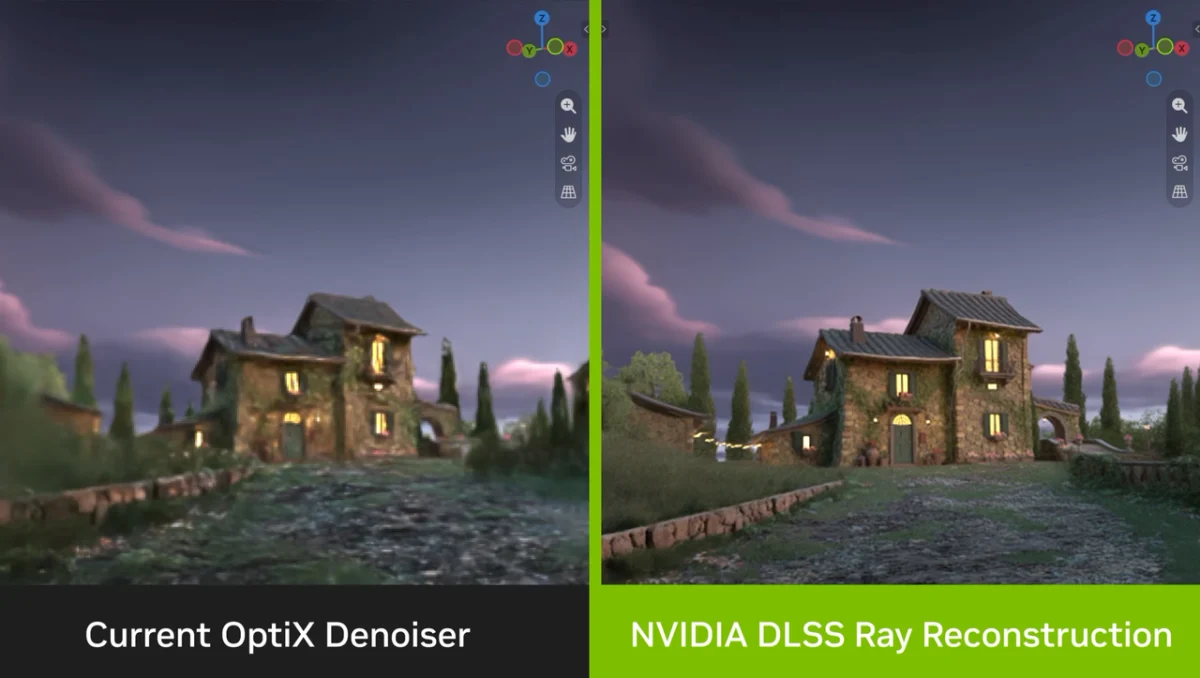
However, the hardware is only half the story. For the 3D industry, the true revelation lies in the integration of DLSS 4.5 Ray Reconstruction into Blender, the industry-standard, open-source 3D powerhouse. By bringing next-generation AI denoising to the Cycles renderer, Nvidia is addressing a pain point that has plagued 3D artists for years: the sluggish, stuttering viewport.
The Hardware Pivot: Introducing the RTX Spark
At the heart of the Computex announcement is the RTX Spark platform. Unlike previous generations that relied on adapted desktop architectures, the Spark series represents a bespoke approach to mobile computing. Nvidia is targeting the "creative prosumer" demographic, aiming to collapse the long-standing divide between high-performance Windows workstations and the sleek, reliable ecosystem of the Apple Mac.
The RTX Spark laptops are built on an architecture that prioritizes AI-driven power management. By utilizing neural processing units (NPUs) that operate in tandem with the GPU, the systems can dynamically allocate resources based on the specific application in use. Whether it is real-time ray tracing in viewport rendering or background denoising in a video export, the Spark series is designed to handle "compute-heavy" tasks without the typical thermal throttling that often hampers high-end mobile workstations.
"We aren’t just looking at clock speeds anymore," said an Nvidia spokesperson during the technical deep-dive. "We are looking at intent. The RTX Spark understands what the user is trying to accomplish in a 3D space and adjusts the rendering pipeline in real-time."
A Chronology of Innovation: The Path to Blender 5.3
The journey toward this integration has been a slow, deliberate march. The industry’s fascination with Nvidia’s Deep Learning Super Sampling (DLSS) began in the gaming sector, where AI-driven frame generation and upscaling became the standard for high-fidelity, high-framerate performance.
The Timeline of Integration:
- Late 2024: Industry rumors begin to circulate regarding Nvidia’s intent to bring AI-denoising tech out of the gaming silo and into professional creative suites.
- August 2025 (SIGGRAPH): A watershed moment for the 3D community. Nvidia offers a private, exclusive demo of DLSS denoiser for Blender’s Cycles renderer. The reaction, captured by influential figures like Andrew Price (Blender Guru), confirms that the technology makes viewport interaction feel as fluid as the real-time rasterization engine, EEVEE.
- Q1 2026: Nvidia announces a formal partnership with the Blender Foundation to optimize the Cycles engine for Tensor core acceleration.
- June 2026 (Computex): Official timeline confirmed. DLSS 4.5 Ray Reconstruction is slated for a full public release as part of the Blender 5.3 update, scheduled for November 10, 2026.
Understanding the Tech: Why DLSS 4.5 Matters
To understand why the integration of DLSS 4.5 into Blender is a monumental leap for the industry, one must understand the bottleneck of traditional 3D workflows. In the Cycles renderer, "denoising" is the process of cleaning up grainy, "noisy" images produced during the early stages of a render. Traditionally, this process is computationally expensive and slow.
DLSS (Deep Learning Super Sampling) uses a dedicated AI model to upscale lower-resolution inputs, effectively "guessing" what the final, high-resolution image should look like based on temporal data and motion vectors.
With DLSS 4.5 Ray Reconstruction, the technology goes a step further. It replaces traditional, hand-tuned denoisers with a sophisticated transformer model trained on massive datasets of ray-traced imagery. In a creative context, this means:
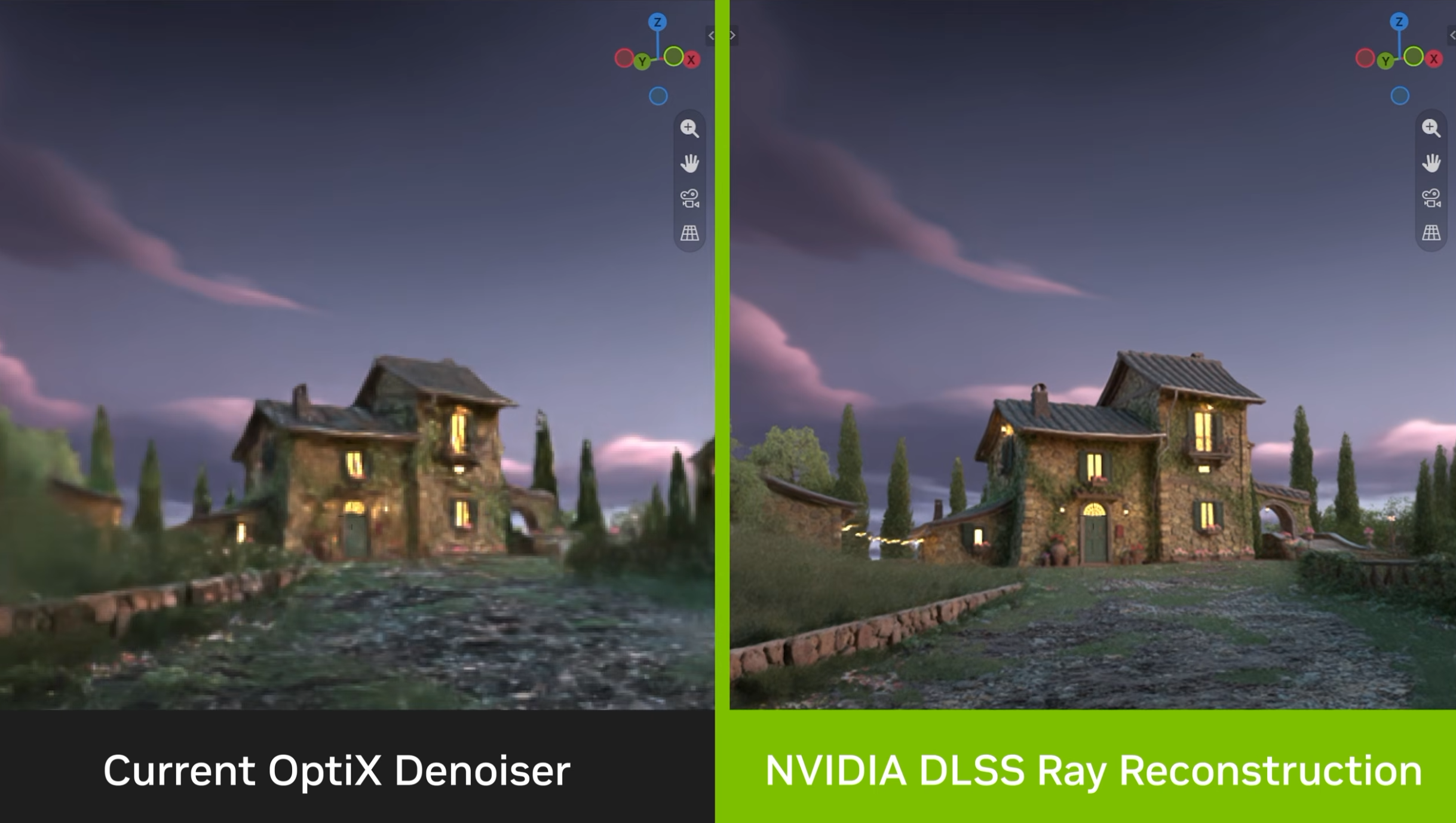
- Reduced Ghosting: Older denoisers often left "trails" behind moving objects in a 3D scene. The new model maintains temporal stability, ensuring that lighting and reflections remain consistent during animation playback.
- Near-Final Preview: Artists can now view their scenes with path-traced lighting at a fraction of the full render cost, allowing for faster iterative changes in lighting and material properties (lookdev).
- Performance Parity: By running the viewport at a lower resolution and letting the AI fill in the gaps, artists can maintain a high frame rate even in scenes with millions of polygons and complex global illumination.
Industry Implications: The "Mac vs. Windows" Debate
For years, the "Mac vs. Windows" debate in the creative industry has been polarized. Apple has focused on unified memory and power efficiency, while Windows machines—typically powered by Nvidia—have reigned supreme in sheer, raw rendering speed.
The RTX Spark, combined with the optimization of Blender 5.3, represents a strategic move by Nvidia to reclaim the "creative workstation" narrative. By making the Windows viewport experience feel as smooth and responsive as the interface of a high-end creative app on macOS, Nvidia is effectively removing the "frustration factor" that has driven many designers toward the Apple ecosystem.
"It’s not just about speed; it’s about the flow state," says one industry analyst. "If you are a 3D artist, every millisecond of lag in your viewport breaks your concentration. If Nvidia can provide a near-instant feedback loop, they will win the hearts and minds of the next generation of digital creators."
Official Perspectives and User Reception
The reaction from the Blender community has been one of cautious, yet profound, optimism. Since the SIGGRAPH 2025 teaser, the consensus has been that the inclusion of DLSS could effectively "democratize" high-end 3D work. Smaller studios with limited hardware budgets will be able to achieve results that were previously the domain of massive render farms.
Blender Guru’s social media post from last year summarized the feeling perfectly: "It made moving around the viewport feel as smooth as EEVEE! Crazy stuff."
Nvidia is positioning this as a cornerstone of its "Studio" initiative, a long-term commitment to providing software-defined performance enhancements for creative professionals. While the open-source community remains vigilant about the "closed" nature of some Nvidia proprietary drivers, the Blender Foundation’s collaboration suggests a pragmatic approach to performance that puts the user’s productivity above all else.
Looking Ahead: The November Milestone
As we look toward the November 10 release of Blender 5.3, the stakes for the creative software industry have been raised. Nvidia has set a new benchmark for what is expected of a professional workstation.
The integration of AI into the core rendering pipeline is no longer a futuristic concept—it is a production reality. For 3D artists, the coming autumn will likely mark a fundamental change in how they approach lighting, animation, and scene composition. If the RTX Spark hardware lives up to the promises made at Computex, the line between "preview" and "final render" may soon vanish entirely, allowing for a creative process that is as fluid as thought itself.
As the industry waits for November, one thing is certain: the era of waiting for your viewport to clear is coming to an end. The age of the AI-accelerated creative workflow has officially begun.









No comments yet. Be the first to join the conversation!