Rifan Muazin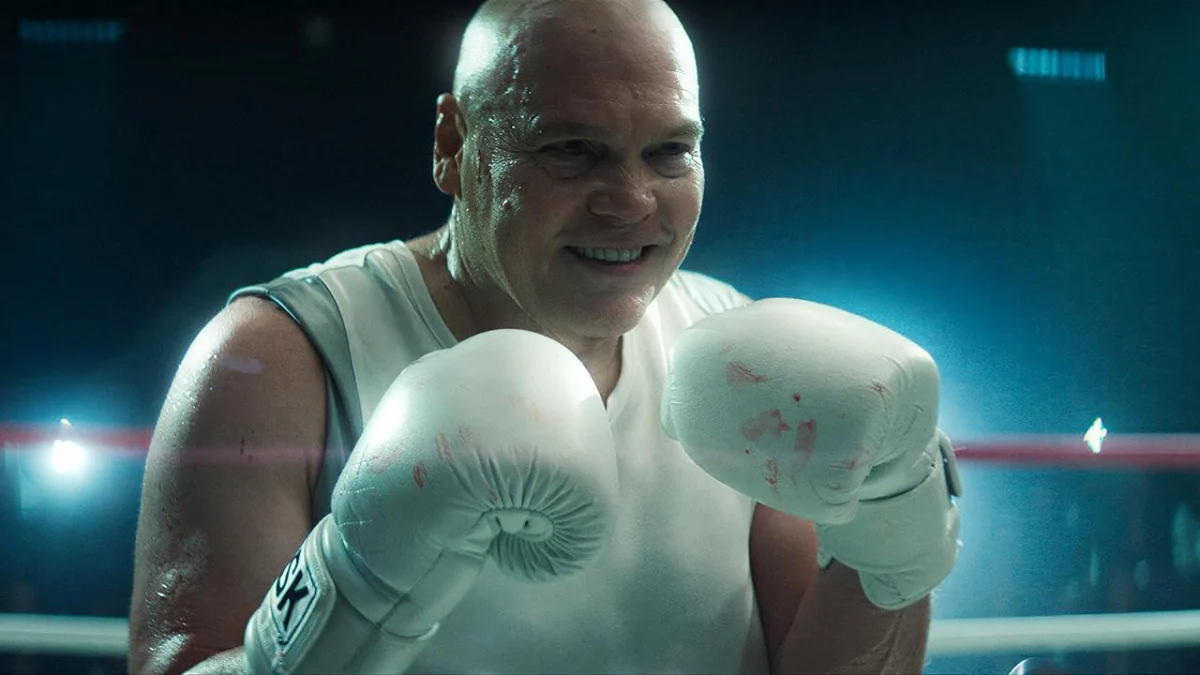
By Editorial Staff
The fourth episode of Daredevil: Born Again, aptly titled "Gloves Off," serves as a structural earthquake for the series. Following a steady build-up of political maneuvering and urban tension, this installment shatters the status quo, pushing the narrative into a high-stakes second half. With the Kingpin’s empire facing unprecedented internal and external pressure, the episode concludes with a violent twist that promises to redefine the trajectory of the entire Marvel Cinematic Universe’s gritty street-level saga.
The Anatomy of a Publicity Stunt: The Fogwell’s Incident
The titular "Gloves Off" refers to a high-profile exhibition boxing match hosted by Wilson Fisk at Fogwell’s Gym—a location steeped in the mythos of Matt Murdock’s past. While publicly marketed as a charitable endeavor, the event is revealed to be a thinly veiled, desperate trap.
As noted by the investigative podcast The City Without Fear, Fisk’s administration is struggling to maintain its stranglehold on the city. The boxing match serves as a lure, designed to bait "Dex" (Benjamin Poindexter/Bullseye) out of hiding. Fisk, whose arrogance often blinds him to the unpredictable nature of his former assassin, significantly underestimates the lethality of his prey.

The ensuing confrontation is a masterclass in chaotic storytelling. Despite Wilson’s strict orders for his wife, Vanessa, to remain safe, her decision to attend the match—armed and defiant—leads to a catastrophic outcome. In the ensuing firefight, a shard of glass, broken from a commemorative Fisk-branded sculpture, strikes Vanessa. While Wilson manages to deflect the projectile from himself using a decorative championship belt, the injury to his wife leaves her fate hanging in the balance, effectively serving as the episode’s "fridging" moment—a trope that the series navigates with complex, albeit controversial, character motivations.
Chronology of Chaos: From the Diner to the Gym
The episode’s pacing is meticulously crafted, beginning with a cold open that highlights the chilling normalcy of Dex’s current life. Set to the smooth strains of Billy Joel’s "New York State of Mind," the sequence depicts a man who has replaced his traditional chaos with a facade of domesticity. However, the veneer is paper-thin.
- The Diner Massacre: Dex’s call to a Task Force hotline, feigning fear about the arrival of "The Punisher," is a calculated performance. The resulting bloodbath, which utilizes common kitchen implements in a grotesque display of precision, reinforces Dex’s status as one of the MCU’s most dangerous threats. His parting message—painting a ketchup logo on the diner door—serves as a grim manifesto for the chaos to come.
- The Resistance’s Progress: While the villains clash, the resistance continues to consolidate. Karen Page successfully records testimony from survivors of The Northern Star, including Christofi Savva. These scenes provide much-needed emotional weight, grounding the series in the human cost of Fisk’s reign.
- The Departure of Jack: The exit of Jack, portrayed by Tony Dalton, serves as an emotional beat. His decision to leave New York to recover from his trauma is a sobering reminder that even those who aid the hero are broken by the conflict.
- The White Tiger’s Ascent: Angela continues her training, with Matt Murdock cautiously validating her role. Their interaction—specifically her retort to Matt regarding his own readiness at her age—highlights the moral ambiguity of the resistance’s recruitment tactics.
Supporting Data: Character Arcs and Narrative Choices
The decision to place Vanessa in the crosshairs of a potential lethal injury is a calculated narrative risk. Critics have long debated the "fridging" of female characters in comic book media, yet Born Again attempts to mitigate this by framing Vanessa not as a passive victim, but as an active, immoral participant in the Fisk regime.
Her evolution from the idealized love interest of the Netflix Daredevil era to a corrupt, vindictive "Queenpin" in Born Again is essential to understanding the tragedy of this episode. Unlike the comic book version of the character, whose corruption was a slow, multi-decade descent, Zurer’s portrayal has been one of proactive malice. By having her suffer the consequences of her allegiance, the writers ensure that her potential demise feels less like a narrative shortcut and more like the inevitable karmic conclusion to her choices.

Furthermore, the performances of Charlie Cox and Wilson Bethel continue to be the bedrock of the show. The confrontation in Dex’s apartment—the first true clash between the two since the series premiere—showcased the evolution of their combat styles. Cox, in particular, demonstrates a unique ability to convey profound grief and rage through physical movement, even while masked. His command for Dex to never speak of Foggy Nelson remains the most emotionally resonant moment of the season thus far.
Official Responses and Behind-the-Scenes Context
While no official statement has been released regarding the future of the Vanessa Fisk character, the narrative implications are clear. The production team behind Born Again has consistently aimed to move away from the procedural nature of the original series, opting instead for a serialized, high-stakes drama.
The plot point involving the U.S. Marshals—where the resistance fails to protect a witness—has drawn some criticism for its predictability. The decision to have Matt and Karen exchange a moment of vulnerability ("I love you") during the exposition of the failed protection plan was likely intended to offset the perceived logical gap in the security failure. It effectively highlights the pair’s deepening bond amidst the hopelessness of their situation.
Implications: The Kingpin’s Revenge
"Gloves Off" ends on a note of terrifying uncertainty. If Vanessa survives, her role in the power structure will be irrevocably altered. If she dies, the city of New York is about to witness the most dangerous version of Wilson Fisk yet.

Fisk has historically operated under a code of cold, calculated logic. However, the loss of his wife—his only true tether to humanity—strips away the "gloves," signaling that his future actions will likely be dictated by pure, unadulterated vengeance. For Matt Murdock, this means that the political game is over. The war for New York has transitioned from a battle for policy and public opinion into a scorched-earth crusade.
The back half of Born Again now faces the challenge of escalating these stakes without losing the character-driven nuance that has defined the season. With the resistance fractured, the witnesses compromised, and the Kingpin fully unhinged, the stage is set for a climax that will likely reshape the Marvel street-level landscape for years to come. The question remains: can Matt Murdock save a city that is being burned down by a man who has lost everything?
As we head into the final episodes, viewers should prepare for a shift in tone—one that leaves behind the shadows of the courtroom for the visceral, unfiltered reality of a city at war with its own King.

 Sagoh
Sagoh
 Ammar Sabilarrohman