Nana Wu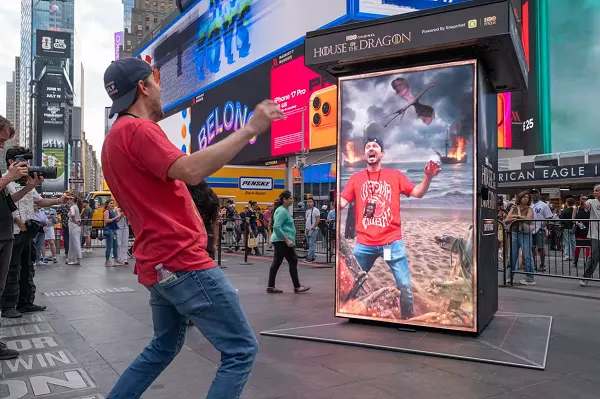
In a bold move to bridge the gap between digital engagement and the physical world, Snapchat has launched an ambitious augmented reality (AR) activation in the heart of New York City’s Times Square. As of June 18, the platform has transformed one of the world’s most iconic advertising hubs into an interactive, four-sided AR playground. By allowing passersby to project themselves directly onto massive, high-definition billboards, Snap is attempting to redefine what an "ad impression" looks like in the modern age.
This initiative is more than just a marketing stunt; it is a critical pivot for a company navigating a complex financial landscape. With user growth plateauing in key markets and pressure mounting to monetize its proprietary AR technology, Snap is betting that the future of its business lies not just inside its own app, but in its ability to serve as the technological backbone for the physical world’s digital transformation.
The Mechanics of the Activation: A New Frontier in Out-of-Home Advertising
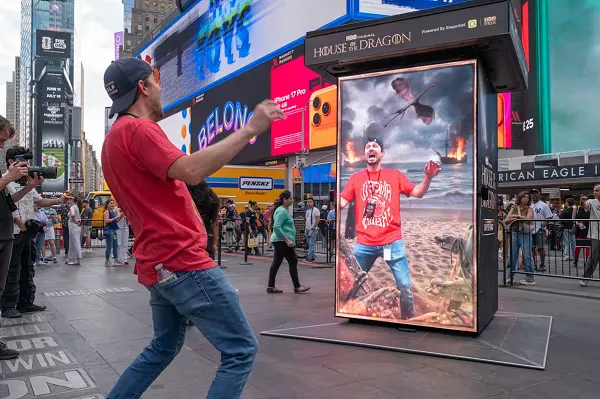
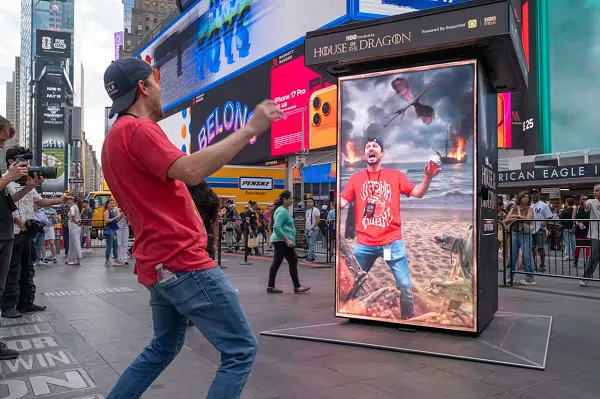
The Times Square experience, dubbed the "Crowd Created AR activation," functions through a physical booth that utilizes sophisticated spatial computing to capture participants. Once inside, users are rendered into an AR environment that is instantly broadcast across massive, surrounding digital billboards.
The launch featured a partnership with HBO Max, centered on the hit series House of the Dragon. Participants were invited to insert themselves into a simulated, high-stakes battle sequence from the show, effectively turning the public square into a theatrical stage. This installation features the world’s first "four-sided AR Mirror," a technological marvel that ensures a seamless, 360-degree integration of the user’s likeness into the digital content.
This marks a significant escalation in scale for Snap. While the company has long experimented with AR filters and lenses, this project represents the first time the platform has projected live, crowd-sourced content onto large-format, high-traffic urban displays in such a synchronized manner.
A History of Immersion: The Path to Times Square
Snapchat’s journey toward this level of large-scale, real-world integration did not happen overnight. The company has spent years conditioning its user base—and its corporate partners—to view the Snapchat camera as a tool that extends beyond the smartphone screen.
Milestones in Snap’s IRL Expansion:
- The Jumbotron Era: Snapchat began integrating its technology into professional sports, allowing fans at stadiums to see themselves on the "Jumbotron" with real-time, event-specific AR filters. This normalized the concept of public, screen-based AR interaction.
- Retail and Commerce: Recognizing the potential for "try-before-you-buy" experiences, Snap piloted in-store AR activations. These allowed shoppers to overlay clothing, makeup, and furniture into their physical environment, creating a frictionless path to purchase.
- Cultural Preservation and Art: Snap’s involvement with institutions like the Palace of Versailles demonstrated the platform’s ability to use AR for educational and artistic storytelling, moving the technology away from simple "face-swapping" gimmicks toward meaningful, location-based experiences.
Each of these iterations served as a proof-of-concept, gradually building the technical infrastructure required to manage high-latency, high-traffic, large-format AR displays.
Supporting Data: The Financial Imperative
The urgency behind these initiatives is grounded in recent financial disclosures. As of the first quarter of 2026, Snapchat reported lower-than-expected revenue and a contraction in user activity across its most lucrative markets in North America and Europe.
Market Challenges:
- Declining Engagement: Competitive pressure from platforms like TikTok and the maturation of the social media market have made it increasingly difficult for Snap to retain daily active users (DAUs).
- Rising R&D Costs: The company is currently engaged in massive capital expenditure, investing heavily in its "Spectacles" AR glasses and the underlying artificial intelligence models that power its Lenses.
- Ad Saturation: The platform has reached a ceiling regarding the number of ads it can insert into its app without degrading the user experience. By moving to the "physical screen" (billboards, retail, stadiums), Snap is effectively creating new "ad inventory" that exists outside the confines of the app.
These figures illustrate a clear trajectory: Snap must diversify its revenue streams. The Times Square activation serves as a "hero" project, designed to attract high-end brand partners who are willing to pay a premium for exclusive, tech-forward, and physically engaging campaigns.
Official Responses and Strategic Vision
Snap Inc. has framed this initiative as a demonstration of the "utility" of its tools. In official communications, the company highlighted that the goal is to "showcase the value of its digital tools and interactive AR experiences" to both the public and potential advertisers.
"This new IRL advertising format is the first Snapchat AR experience to project visitors live onto Times Square billboards," a company representative stated. The message is clear: Snap is no longer just a social network; it is a software and hardware company capable of powering the "spatial web."
While the company has remained tight-lipped regarding specific revenue projections for these outdoor activations, the shift suggests a transition toward a "Service-as-a-Software" model. By providing the API and the AR engine for third-party activations, Snap can generate revenue regardless of whether the user is browsing the Snapchat app or simply walking through a shopping mall.
Implications: The Future of the "Spatial Web"
The success of the Times Square project carries profound implications for the future of both advertising and the technology industry at large.
1. The Death of the Passive Ad
For decades, billboards and digital signage were passive—consumers looked at them, but they did not influence them. Snap’s model turns the audience into the protagonist. This level of engagement is highly attractive to brands, as it creates "shareable moments" that extend the life of an ad campaign far beyond the physical location, as participants post their Times Square appearances to social media.
2. A Pivot to Third-Party Infrastructure
Perhaps the most significant long-term implication is the possibility that Snap’s future lies outside its own app. If usage within Snapchat continues to decline, the company could transition into a primary provider of AR engines for the industry. Imagine a world where Snap provides the AR software that powers the interfaces for Apple’s Vision Pro or Meta’s upcoming smart glasses.
3. The Challenges of Mainstream AR
Despite the success of the Times Square event, significant hurdles remain. Integrating high-fidelity AR into the real world requires extreme precision, low latency, and robust hardware. Furthermore, privacy concerns regarding facial recognition and real-time data capture will likely face increased scrutiny from regulators as these systems become more prevalent in public spaces.
4. The Sustainability of the Model
Is a "four-sided AR Mirror" a scalable product? While it provides excellent branding, it is labor-intensive and costly to install. For this model to become a standard revenue pillar, Snap must find ways to make its technology "plug-and-play" for billboard operators and retail managers worldwide.
Conclusion: A Turning Point for Snap
Snapchat stands at a crossroads. Its history as a mobile-first social app is being challenged by changing user habits and a saturated digital advertising market. However, its core asset—a highly sophisticated, proprietary AR engine—remains one of the most valuable pieces of intellectual property in the tech sector.
The Times Square activation is a loud, bright, and undeniable statement of intent. It signals that Snap is no longer content to live behind the glass of a smartphone. By venturing into the physical world, the company is attempting to prove that its technology is not merely a social feature, but a fundamental layer of reality. Whether this pivot will be enough to offset the decline in core app usage remains an open question, but one thing is certain: the future of advertising will be interactive, immersive, and increasingly difficult to ignore.


 Neng Nana
 Siti Muinah