Neng Nana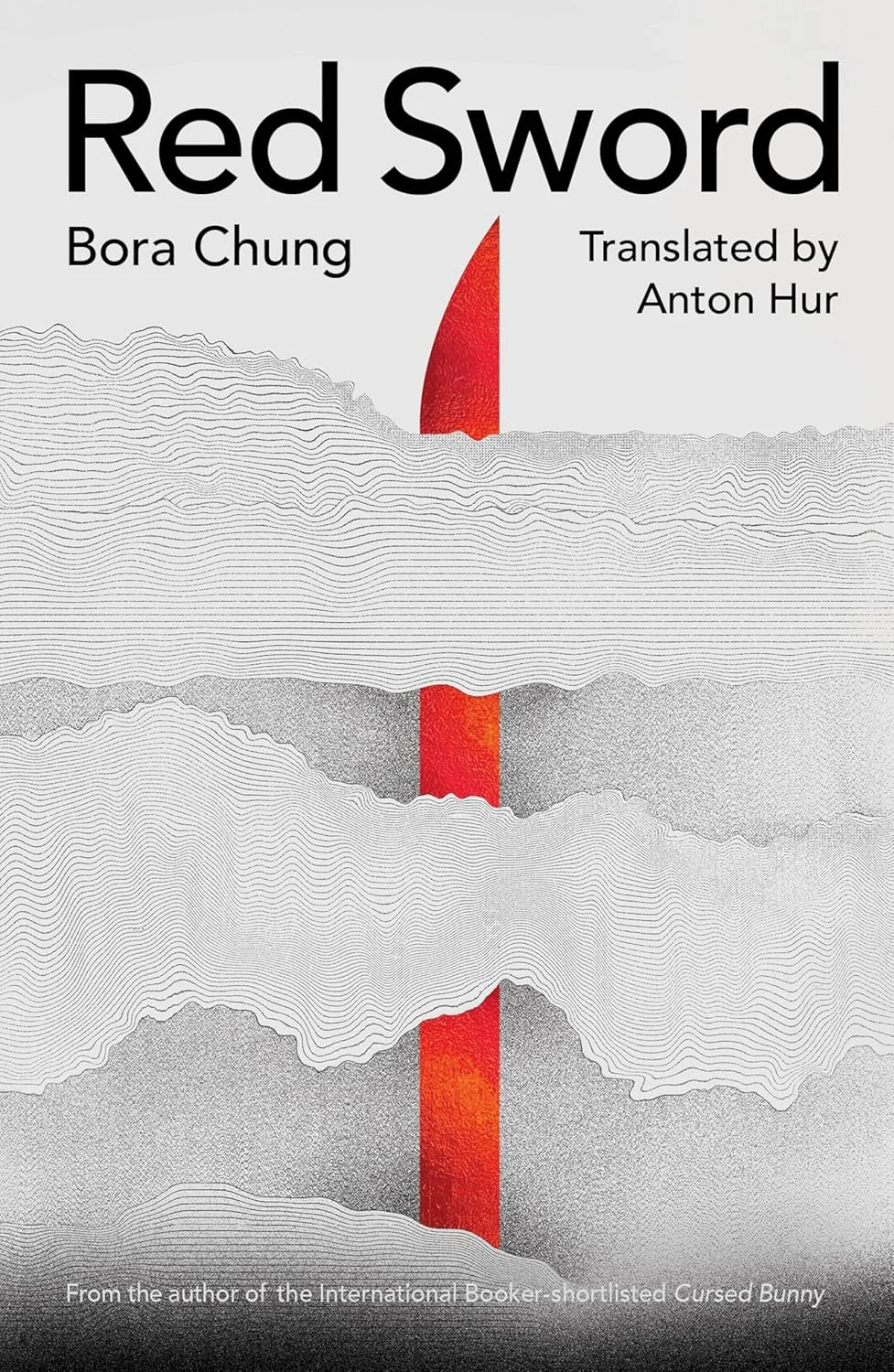
In the landscape of contemporary speculative fiction, few authors possess the visceral, haunting clarity of Bora Chung. Known for her razor-sharp short stories that dissect the anxieties of modern existence, Chung’s latest literary endeavor, Red Sword—translated into English by the acclaimed Anton Hur—marks a significant departure into the realm of epic, existential science fiction. It is a novel that demands patience, rewarding the reader not with traditional exposition, but with a sensory immersion into a war that feels both alien and agonizingly familiar.
The Premise: A War Without Context
Red Sword begins in a state of disorientation. The reader is thrust into a world where information is sparse and the stakes are immediate. We follow an unnamed female protagonist, a prisoner of an interstellar force known as the "Imperials." She finds herself stranded on a stark, monochromatic planet, fighting for survival against mysterious "white monsters."
The brilliance of Chung’s narrative lies in its refusal to provide the reader with a safety net. There is no comprehensive world-building manual provided in the opening chapters; instead, the reader experiences the world exactly as the protagonist does: through the limited, terrifying lens of a survivor. She fights repeatedly, yet the context—the "why" and the "who"—remains elusive, creating a pervasive sense of dread. For some, this lack of clarity might be a hurdle, but for those who persist, the emotional resonance of being a prisoner forced to wage a captor’s war settles deep into the psyche.
Chronology of a Relentless Conflict
The story unfolds through a series of brutal cycles. The protagonist and her fellow captives, who speak different languages and hail from disparate pasts, are deployed into the white fog of an unnamed planet.
- The Initial Encounter: The story opens with the protagonist and her partner, a young man, stepping onto the white planet. The landscape is a void of gray and white, an ethereal terrain where terrain features are swallowed by fog. The immediate tragedy of her partner being sliced in half by the "white monsters"—beings who bleed white and utilize white armor—sets the tone for the survival horror that follows.
- The Cycle of Captivity: The narrative establishes a punishing rhythm: the protagonist fights the white monsters on behalf of the Imperials, only to be imprisoned by the Imperials themselves when her utility wanes. She is then cast back into the wilds to continue the cycle.
- The Emergence of Identity: It is within this crucible that she adopts the moniker "Red Sword." The name is derived from the very object she carries—a velvet-sheathed blade that the Imperials disregard, viewing it as primitive compared to their sophisticated firearms. This sword, adorned with mirrors and butterfly charms, becomes the centerpiece of her identity, a relic of humanity in a world of clinical, sterile violence.
Supporting Data: Visuals and Symbolism
While the novel eschews traditional world-building, Chung replaces it with a vivid, almost painterly use of color. The starkness of the "white" planet acts as a canvas for the brutal, saturated images Chung deploys to anchor the reader.
The Aesthetic of Resistance
Chung utilizes color not merely for visual flair, but as a socio-political statement. The "Indigo Skirt" and "Light Green Skirt"—the names given to the women fighting alongside the protagonist—are more than just descriptors. They represent a reclamation of gender roles. In a scene that serves as a rebuke to patriarchal expectations, the characters transform their vibrant skirts from symbols of domesticity into flags of liberation, using them to rescue those trapped by the monsters.
This subversion is further punctuated by dialogue that cuts to the bone. When a male soldier questions the practicality of wearing skirts to war, "Light Green Skirt" offers a biting retort: "You men were supposed to do the war, and we’re supposed to open our legs to you and die later." This is not just a fantasy novel; it is a critique of the historical expendability of women in the machinery of conflict.
The Role of Isfobeddin
A pivotal figure is the character Isfobeddin, whose name evokes the English word "forbidden." Her ability to traverse the boundaries between the prisoner holding cells and the Imperial quarters suggests a deeper, more systemic truth. She acts as a conduit for the novel’s existential horror, delivering the chilling revelation: "We’re all dead. You, me, everyone here, we’re already dead."
Official and Historical Context: The Echoes of Empire
Bora Chung has stated that the inspiration for Red Sword stems from the historical plight of Korean soldiers who were forced to fight and die in conflicts against Russia on behalf of the Qing Dynasty. This historical grounding provides a haunting subtext to the sci-fi elements.
For international readers—particularly those from post-colonial backgrounds—the resonance is unmistakable. The story mirrors the experiences of soldiers from colonized nations who were deployed by empires to fight in World Wars under the hollow promise of independence. The "freedom" offered by the Imperials in the novel is the ultimate seduction—a "wisp of light" that the prisoners fix their gaze upon, even as they realize that the greed of colonization never actually serves those who do the dying.
Implications: Memory, Empathy, and the Future of Science Fiction
Red Sword raises profound questions about the nature of the self. If one is transported across galaxies to a planet where the cycle of death and rebirth is seemingly constant, what remains of the "real" you? The novel suggests that the desire to colonize—to impose control over a landscape—is a futile endeavor that strips away the very humanity it claims to protect.
The Translation Factor
Anton Hur’s translation is instrumental in maintaining the "austere prose" that defines Chung’s style. Even as the novel begins to offer answers in its latter half, the language remains lean and evocative. There is no unnecessary flourishing; the prose is as sharp and direct as the Red Sword itself.
Why This Matters
As a piece of speculative literature, Red Sword is a challenging, necessary read. It moves away from the technocratic obsession of Western science fiction, focusing instead on:
- Empathy as Rebellion: In a world governed by cold, Imperial logic, the affection between the prisoners becomes a radical act of defiance.
- The Futility of War: By centering the story on the prisoner’s perspective, Chung effectively illustrates the waste of human life in the service of expansionist agendas.
- Language and Memory: The novel explores how language barriers and the erasure of history contribute to the dehumanization of soldiers, making their struggle for identity even more poignant.
Conclusion
Bora Chung’s Red Sword is a testament to the power of the subjective experience. It is a novel that requires the reader to surrender their need for objective truth and instead embrace the visceral reality of the characters’ trauma and triumph. It is not an "easy" book, nor is it intended to be. It is a searing, visually spectacular exploration of what it means to be a pawn in a game you never signed up for, and the enduring, fragile hope that keeps us fighting for a home we might never see again.
Whether one views it through the lens of Korean history, post-colonial discourse, or pure, high-stakes science fiction, Red Sword stands as a monumental work—a reminder that while empires may fall and worlds may be conquered, the stories of those who fought in the shadows are the only ones that truly endure.


 Dwi Wanna
 Siti Muinah