Dwi Wanna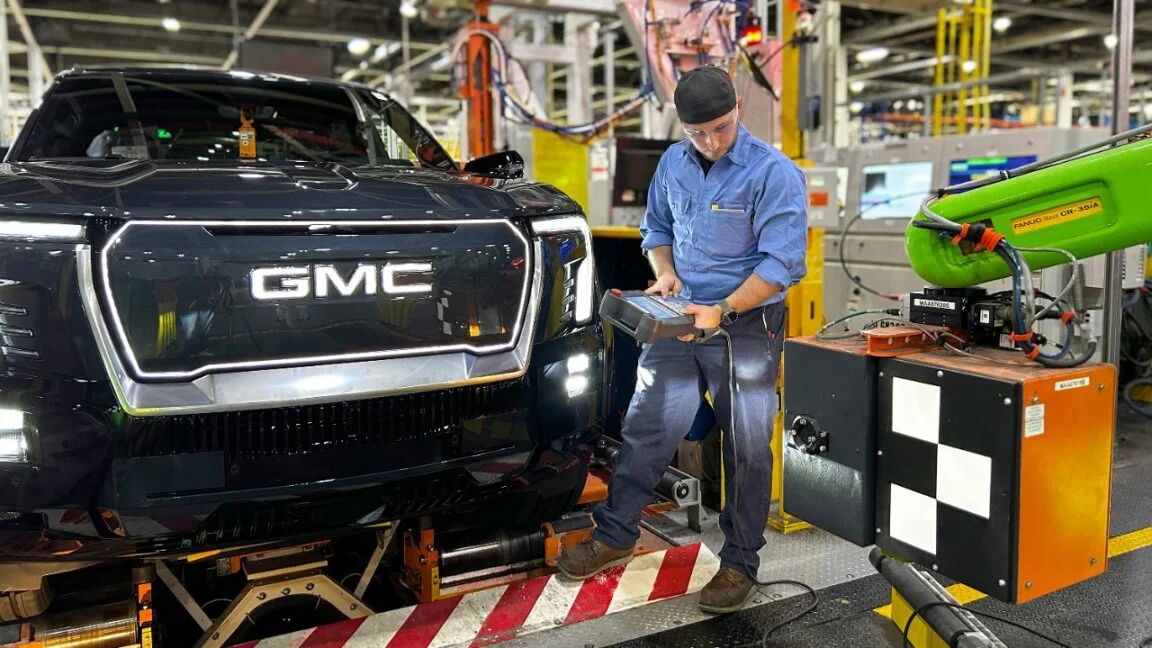
The landscape of American manufacturing is undergoing a seismic shift, one defined by the cold precision of steel limbs and the growing unease of the human workforce. At General Motors’ flagship "Factory Zero" in Detroit—the crown jewel of the company’s electric vehicle (EV) strategy—the arrival of 50 new industrial robot arms from Japanese manufacturer FANUC has become a lightning rod for a brewing labor conflict.
While the machines are designed to streamline the assembly of next-generation EVs, their installation has been met not with applause, but with sharp condemnation from the United Auto Workers (UAW). The tension is exacerbated by a stark human reality: 1,300 workers, who were told their layoffs in March were merely "temporary," remain on the sidelines. As the factory floor becomes increasingly automated, the UAW is raising the alarm on what it views as an existential threat to the livelihoods of thousands of American families.
The Chronology of Displacement: From Efficiency to Indefinite Stasis
The current impasse at Factory Zero did not emerge overnight; it is the culmination of a broader strategy of aggressive cost-cutting and technological pivot.
October 2025: The First Wave
The instability at the Detroit-Hamtramck facility—rebranded as Factory Zero—began in earnest in late 2025. Facing shifting market demand for EVs and the high capital expenditure required for electrification, GM executed a permanent layoff of 1,200 employees. At the time, the company cited a need to "right-size" operations to align with long-term production goals.
March 2026: The "Temporary" Promise
In March, the workforce was dealt another blow when an additional 1,300 employees were placed on what management termed "temporary layoffs." The justification was a production schedule adjustment, leading workers and union representatives to believe that a return to the assembly line was a matter of months, not years.
June 2026: The Robotic Arrival
By mid-June 2026, the silence of the laid-off workers was broken by the sounds of construction and installation. Reports from Crain’s Detroit Business confirmed that GM had begun integrating 50 FANUC robotic arms into the assembly process. These machines, capable of high-speed, repetitive tasks such as component attachment, arrived while the human workers they could have potentially worked alongside—or replaced—remained without a paycheck.
Supporting Data: The Industrial Arms Race
The shift at Factory Zero is not an isolated incident; it is part of a broader, industry-wide race toward "lights-out" manufacturing. Automakers are locked in a global competition to lower the per-unit cost of EVs, which remain more expensive to produce than their internal combustion counterparts.
The Landscape of Automation
- Stellantis and Ford: Both industry giants have accelerated the deployment of robotic systems. Ford, in particular, has leaned heavily into automated welding and assembly processes in its Louisville facilities to maintain margins.
- The Humanoid Frontier: The horizon of automation is moving beyond stationary arms. Hyundai Motor Company has signaled its intent to integrate Boston Dynamics’ "Atlas" humanoid robots into its Georgia-based EV plant by 2028. These machines are designed to mimic human dexterity, potentially performing tasks that were previously deemed too complex for traditional automation.
This trend is backed by massive capital investment. Analysts estimate that the global automotive robotics market is projected to grow by double digits annually through 2030, as companies seek to eliminate the unpredictability of human labor costs.
Official Responses: A Tale of Two Summits
The ideological divide between corporate leadership and organized labor was laid bare during a single week in June 2026, when Detroit hosted two radically different visions for the future of work.
The Reindustrialize Summit: The Case for Superhuman Efficiency
At the Reindustrialize Summit, venture capitalists and startup founders painted a picture of a "new industrial renaissance." Proponents argued that automation is the only way for the United States to remain competitive against international manufacturing hubs. They spoke of "empowering the industrial base with superhuman manufacturing," framing robots not as replacements, but as tools that elevate the quality and consistency of American-made products. To these stakeholders, the deployment of 50 robot arms is a necessary step to keep GM viable in a global EV market dominated by aggressive price competition.
The UAW Constitutional Convention: The Warning of Inequality
Conversely, the UAW Constitutional Convention served as a platform for resistance. UAW President Shawn Fain delivered a scathing critique of the current trajectory, framing the rise of AI and humanoid robotics as an urgent threat to worker wages and the social contract.
"We are not opposed to progress," Fain noted during his address, "but we are opposed to progress that prioritizes shareholder wealth over the dignity of the people who actually build the cars." Fain warned that mass automation, if left unchecked, would only widen the chasm of wealth inequality, leaving a hollowed-out middle class in the wake of corporate "efficiency."
The Human Cost: A Voice from the Floor
For those on the outside looking in, the debate is not academic—it is deeply personal. Andrew Bergman, a member of UAW Local 22 and a veteran of the Factory Zero assembly line, was among those affected by the March layoffs.
"Technological development has the capability of making work safer for the working class and enabling workers to have a shorter work week without losing pay," Bergman stated in an interview with The Detroit News. "But in the bosses’ and billionaires’ hands, it’s used to pad profits and lay off workers."
Bergman’s sentiment reflects a growing feeling of betrayal within the rank-and-file. The union argues that if GM has the capital to invest in 50 state-of-the-art FANUC robots, it has the capacity to bring its human workforce back to the factory floor. James Cotton, president of UAW Local 22, has been explicit in his demands: the company should be prioritizing the rehiring of the 1,300 "temporarily" laid-off workers before pouring resources into further automation.
Implications: The Existential Fight for the Future
The situation at Factory Zero is a microcosm of a much larger, global struggle. As we approach the 2030s, the automotive sector is facing a "trilemma": how to balance the transition to electric vehicles, the necessity of maintaining profit margins, and the maintenance of a stable, middle-class workforce.
The Long-Term Economic Impact
If companies like GM continue to favor automation over human labor during periods of transition, the long-term impact on the Midwest could be devastating. The "Rust Belt" has spent decades attempting to pivot from legacy manufacturing to high-tech industry. If the high-tech industry of the future—EV production—is designed to be largely devoid of human workers, the economic foundation of cities like Detroit will be fundamentally eroded.
The Regulatory and Policy Challenge
The UAW’s pushback is likely to trigger a new wave of policy debates regarding the taxation of robots and the implementation of "automation displacement" protections. If the productivity gains from robots accrue exclusively to shareholders, it may fall to the federal government to ensure that the social costs of unemployment are addressed through training, severance, or corporate social responsibility mandates.
The Technological Paradox
Ultimately, the industry faces a paradox. While automation promises higher precision and lower costs, it also risks alienating the very consumer base that manufacturers rely on. If the American autoworker is replaced by a robot, who will be left with the purchasing power to buy the electric vehicles coming off those assembly lines?
As GM continues to calibrate its robots and the UAW continues to picket for their members’ livelihoods, the factory floor at Factory Zero stands as the front line of a battle that will define the 21st-century economy. The question is no longer just about how to build the best car, but about what kind of society we are building in the process.

 Laily UPN
 Azzam Bilal Chamdy