Suro Senen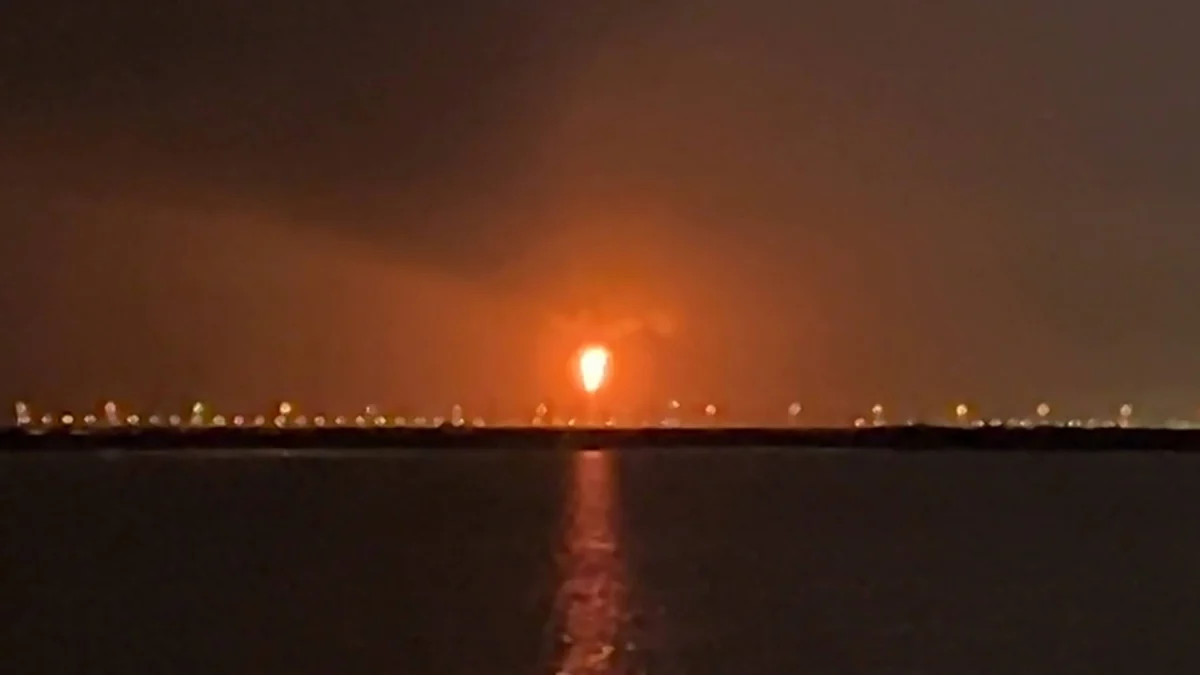
DOHA — A catastrophic industrial accident has sent shockwaves through the global energy sector, as a powerful explosion at a gas processing plant within Qatar’s sprawling Ras Laffan industrial complex claimed the lives of 13 workers and left dozens more injured. The disaster, which occurred on Sunday evening, marks one of the deadliest incidents in the international gas industry in over two decades, raising urgent questions regarding safety protocols and operational stability in a region already strained by the volatility of the ongoing Iran war.
Qatar’s Minister of State for Energy Affairs, Saad al-Kaabi, confirmed the casualties during a press briefing on Monday. The victims, identified as nationals of India and Pakistan, were reportedly working at the Barzan local gas processing facility when the explosion occurred.
While the loss of life has been the primary focus of the national response, energy markets have been closely monitoring the status of Qatar’s Liquefied Natural Gas (LNG) infrastructure. Minister al-Kaabi moved quickly to reassure global markets that the broader Ras Laffan export hub remains functional and that the disaster, while tragic, does not threaten the nation’s total export capacity.
The Chronology of the Disaster
The Barzan gas facility, a cornerstone of Qatar’s domestic energy strategy, has been at the center of operational turbulence for several months. According to officials, the plant had been entirely offline since December 2025 to undergo extensive, urgent maintenance requirements necessitated by the broader security challenges in the Gulf.
After months of silence, the facility was brought back online only 48 hours before the accident.
- December 2025: Barzan processing facility enters a state of complete production shutdown for scheduled and urgent maintenance.
- March 2026 (Early): Ras Laffan complex sustains collateral damage from an Iranian missile and drone strike, which damaged two primary production trains and forced a 17% reduction in overall national output.
- Friday, [Month/Date]: The Barzan facility completes its maintenance cycle and officially restarts operations.
- Sunday Evening: A "technical accident" triggers a violent explosion at the site, resulting in 13 fatalities and 66 reported injuries.
- Monday Morning: Minister Saad al-Kaabi confirms the incident is not related to hostile action and announces the initiation of a comprehensive investigation.
Supporting Data: A Rare and Devastating Event
The scale of the Barzan explosion invites grim comparisons to historical industrial disasters. Industry analysts point to the 2004 explosion at the Skikda LNG complex in Algeria—which resulted in 27 deaths—as the last incident of comparable magnitude.
At the Barzan site, the 66 individuals who sustained injuries were immediately transported to regional medical facilities. Minister al-Kaabi noted that while the medical response was massive, none of the survivors are currently in life-threatening condition.
The economic and structural impact is being measured against the backdrop of the facility’s specific role. Unlike the massive export-oriented LNG trains, the Barzan plant is primarily responsible for supplying pipeline gas for local industries and power generation, though it also produces liquefied petroleum gas (LPG) and associated condensates for export.
Operational Context
- Total Ras Laffan Capacity: 77 million metric tons per annum (pre-March 2026).
- Impact of March Iranian Strike: 17% reduction in capacity; repair timeline estimated at 3–5 years.
- Current Status: Export-grade LNG trains remain unaffected; Barzan operations are currently suspended pending the investigation.
Official Responses and Safety Assurances
In the immediate aftermath, the Qatari government and QatarEnergy have sought to draw a clear line between the "technical accident" at Barzan and the geopolitical tensions currently gripping the region.
Minister al-Kaabi was unequivocal in his public statement: "QatarEnergy LNG facilities, Ras Laffan port, and other logistical operations in Ras Laffan remain unaffected as a result of this explosion and fire, and that will not affect in any way our export capabilities."
The Minister emphasized that the investigation is focused on identifying the technical root cause of the failure. He explicitly stated that there is no evidence of sabotage, and the incident poses no environmental risk to the surrounding area or the Gulf waters.
"We have launched a full, transparent investigation into the cause of the accident," Kaabi stated. "This is a moment of deep national mourning. Our priority is the safety of our workforce and the support of the families of the deceased."
Implications: The High Cost of Gulf Energy Production
The disaster at Ras Laffan serves as a stark reminder of the operational risks inherent in managing critical infrastructure during wartime conditions. Since the onset of the Iran war, the Gulf region has become a high-risk zone for energy production.
The Security-Operational Nexus
Qatar’s energy infrastructure has been a frequent target during the ongoing conflict. With the nation hosting a major U.S. military base, it has been subjected to recurring Iranian missile and drone attacks. These security threats have already trapped roughly 20% of global LNG supply in the Gulf, contributing to significant price fluctuations in European and Asian markets.
During the height of the security threats in March 2026, QatarEnergy was forced to evacuate nearly 10,000 workers from offshore rigs and onshore processing plants. While that mass evacuation resulted in no injuries, the current tragedy highlights the secondary dangers of operating in a high-pressure environment where maintenance, supply chains, and staffing are all impacted by geopolitical volatility.
Infrastructure Fatigue
The "technical accident" at Barzan also highlights the challenge of maintaining aging or stressed infrastructure under the pressure of war. When facilities are forced to shut down for months—as was the case with Barzan from December 2025 to March 2026—the re-commissioning process is inherently dangerous. Pressure testing, valve integrity, and the stabilization of volatile gas mixtures require precision that can be compromised by the psychological and logistical strain of war.
Global Market Outlook
Energy analysts remain cautious. While Qatar has successfully insulated its LNG export trains from this specific disaster, the vulnerability of the region remains high. The fact that the damage from the March missile strikes will take between three to five years to repair already had the market on edge; the addition of a deadly accident at a key domestic gas supplier adds a layer of uncertainty to Qatar’s domestic power security.
As global demand for natural gas remains robust, particularly as an alternative to coal and oil, Qatar’s role as a primary supplier is indispensable. However, the events at Ras Laffan serve as a grim indicator that the "energy transition" and global fuel security are currently being managed on a razor’s edge.
Conclusion
The 13 lives lost at the Barzan facility are a tragic cost of the industrial operations that power the modern world. For the families of the deceased, the focus remains on the repatriation of their loved ones and the pursuit of justice through the promised investigation. For the state of Qatar and the global energy market, the incident necessitates a hard look at safety, maintenance, and the delicate balance of operating critical infrastructure in the shadow of war.
As the investigation moves forward, the international community will look for transparency. Whether the accident was the result of human error, equipment failure, or the systemic stresses of operating in a combat zone, the tragedy at Ras Laffan will undoubtedly alter the safety landscape for energy producers in the Gulf for years to come.


 Neng Nana
 Asro
Asro