Ali Ikhwan
In an era where language learning tools are often relegated to dry, academic textbooks, a creative new initiative is bridging the gap between narrative fiction and educational utility. Frank and the Obaasan, a serialized Japanese language reader, has emerged as a unique, lighthearted, and highly effective resource for beginner students. By blending the surreal premise of an extraterrestrial crash-landing in rural Japan with the structured, systematic approach of a language-learning curriculum, the project is changing how students interact with the Japanese language.
The story follows Frank, a genuine extraterrestrial who, while on an intergalactic espionage mission, finds his spacecraft destroyed and his supplies depleted. Stranded in the Japanese prefecture of Fukui, Frank must navigate the nuances of human interaction, local cuisine, and the complex grammar of the Japanese language. His guide and foil in this alien-out-of-water tale is Obaasan, a quintessential, no-nonsense Japanese grandmother whose patience for Frank’s intergalactic confusion is as vast as his lack of cultural awareness.

The Genesis of an Extraterrestrial Curriculum
The project was born out of a realization that adult learners, while highly motivated, often struggle with the "boredom barrier." Traditional materials often focus on rigid, repetitive dialogues about grocery shopping or asking for directions. Frank and the Obaasan introduces a high-stakes, comedic narrative that keeps the reader engaged.
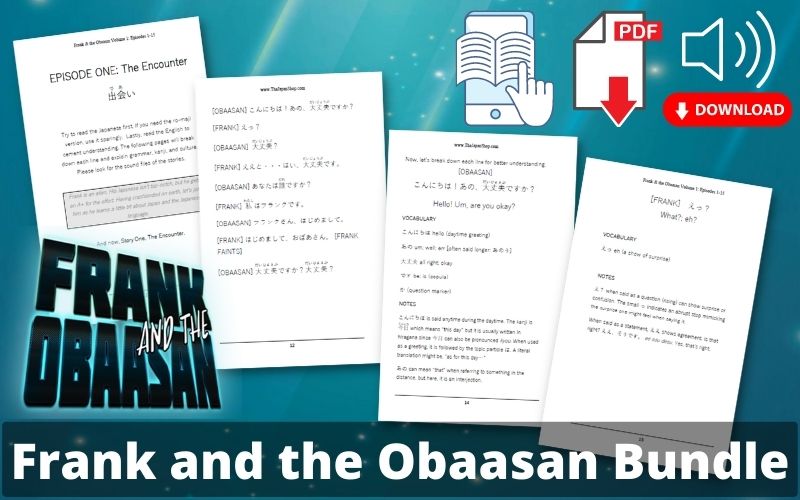
The material is specifically designed for beginner to upper-beginner students who have mastered hiragana and are beginning to explore basic grammar and kanji. Each chapter serves as a bite-sized, digestible segment of the larger story, ensuring that learners do not feel overwhelmed by the volume of new information. The structure includes the raw Japanese text, an English translation, and a detailed line-by-line breakdown that covers grammar points, kanji usage, and cultural context.
A Chronology of Frank’s Earthly Education
The narrative is currently divided into five distinct episodes, each serving as a milestone in Frank’s assimilation into Japanese society:
- Episode One: The Encounter. Frank crash-lands and is discovered by Obaasan. The dialogue focuses on basic greetings and the fundamental "Are you okay?" (大丈夫ですか?). The scene establishes the comedic tone as Frank attempts to introduce himself while suffering from the shock of his descent.
- Episode Two: Water, the Best Thing in the Universe. Nursing Frank back to health, Obaasan introduces him to the most basic of earthly necessities: water (mizu). Frank’s discovery of the drink serves as a clever vehicle for teaching nouns and basic object-oriented grammar.
- Episode Three: Sushi is Not Human. Frank’s misunderstanding of Japanese culture reaches a peak when he mistakes a piece of sushi for a sentient being. The resulting dialogue is both hilarious and instructive, utilizing basic sentence structures to clarify identity and existence.
- Episode Four: Sushi is Something to Eat. Following the confusion of the previous episode, Obaasan attempts to teach Frank the difference between a "friend" and "food." This episode introduces more complex verb tenses and the concept of polite instruction.
- Episode Five: Frank is Not from America. In a climactic shift, Frank is introduced to a neighbor, Mrs. Yamada. The dialogue turns to gossip, where the ladies mistakenly assume Frank is American. Frank’s reveal of his extraterrestrial status serves as a humorous end to this arc, testing the reader’s comprehension of descriptive and declarative sentences.
Supporting Data: Why Narrative Learning Works
Educational psychology has long touted the benefits of "comprehensible input" and narrative-based learning. According to researchers, when students engage with a story, their cognitive load is managed by the emotional investment in the plot.
In Frank and the Obaasan, the repetition of key phrases—such as the various ways to ask about one’s health or status—is embedded within the dialogue. Unlike traditional drills, which are often isolated, the repetition here is organic. The reader encounters the same vocabulary and grammatical structures across multiple contexts, reinforcing memory through association rather than rote memorization.
Furthermore, the integration of the "Makoto+ Sentence Explorer" adds a layer of modern, data-driven support. By providing users with a tool to look up specific sentences and vocabulary from the stories, the platform ensures that the student is never left guessing about the mechanics of the language. This hybrid of creative storytelling and technical support is a hallmark of the Makoto+ ecosystem.
Perspectives and Accessibility
The creators of this project have taken a multi-tiered approach to distribution, ensuring that the resource is accessible regardless of a student’s budget. The first five episodes are currently offered for free, serving as a "proof of concept" for the curriculum.
For those seeking to dive deeper, there are several pathways:
- The Shogun Membership: A comprehensive, all-access route via Makoto+, which includes all episodes, audio integration, and full access to the Sentence Explorer.
- The Digital Bundle: A collection of educational materials specifically curated for beginners, known as the Beri- Beri- Shoshinsha bundle.
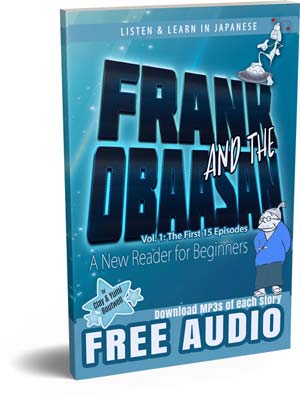
- The Standalone Reader: A focused, cost-effective digital purchase of the two-book Frank and the Obaasan series, which guarantees free access to future volumes.
This flexible pricing model reflects a pedagogical philosophy that prioritizes accessibility and user success. By removing the financial barriers to entry, the developers allow students to "test-drive" the narrative style before committing to the full curriculum.
Implications for Language Pedagogy
The success of Frank and the Obaasan suggests a broader shift in the digital language-learning market. As competition increases among apps and platforms, the differentiator is increasingly becoming the quality of the content.
"We wanted to create something that a student would actually look forward to reading," says the development team. The implication here is that the future of language learning lies in the "edutainment" space—where the quality of the writing matters as much as the accuracy of the grammar.
By grounding the language in a consistent, recurring cast of characters, the project builds a sense of continuity. Students are not just learning Japanese; they are following a story. This creates a psychological "hook" that encourages the learner to return to the material day after day. As Frank continues his journey, the reader’s proficiency grows alongside his, turning the act of learning into a shared experience.

In conclusion, Frank and the Obaasan is more than just a language reader. It is an innovative, narrative-driven framework that successfully addresses the common pitfalls of beginner-level instruction. By combining the humor of science fiction with the rigors of linguistic study, it provides a compelling, effective, and uniquely enjoyable path to fluency. Whether you are in it for the aliens, the fermented soybeans, or the mastery of hiragana, the series offers a solid foundation for any student looking to elevate their Japanese proficiency.


 Neng Nana
 Asro
Asro