Dwi Wanna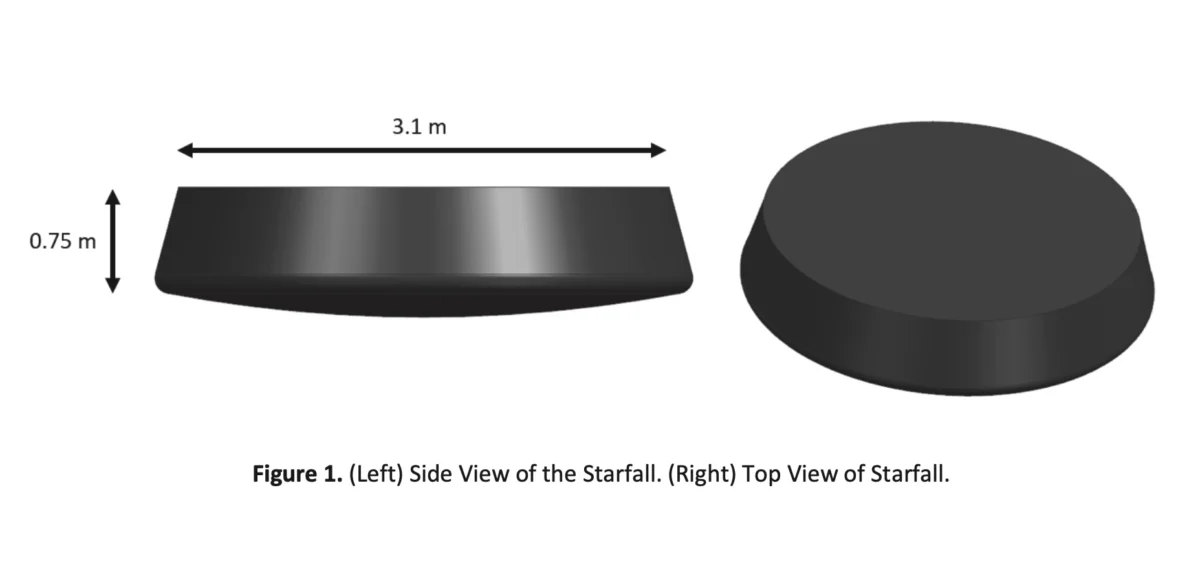
In a significant regulatory milestone for space-based logistics, the Federal Aviation Administration (FAA) has officially cleared the environmental path for SpaceX to conduct two reentry demonstrations of its newly unveiled "Starfall" vehicle. This compact, disc-shaped spacecraft represents a strategic pivot for Elon Musk’s aerospace giant, moving beyond the high-profile human-rated missions of the Crew Dragon toward a specialized, cargo-only delivery platform.
The FAA’s approval marks the transition of Starfall from a conceptual design to an active test program. While the agency’s environmental review did not specify whether these two demonstrations would occur during a single launch mission or be split across two, the regulatory green light signals that SpaceX is now prepared to test the vehicle’s ability to survive the brutal thermal and aerodynamic stresses of atmospheric reentry.
The Engineering Specs of the Starfall Platform
At its core, Starfall is a minimalist marvel of engineering, designed to fulfill a niche that neither the massive Starship nor the multi-purpose Crew Dragon currently occupies. The vehicle features a distinct cylindrical, disc-like profile, measuring 10.2 feet (3.1 meters) in diameter and standing a mere 2.5 feet (0.75 meters) tall.
Despite its diminutive size, the vehicle is built for utility. It boasts a dry weight of approximately 4,600 pounds (2.1 metric tons) and possesses the structural capacity to carry up to 2,200 pounds (1 metric ton) of cargo. This results in a fully loaded mass of roughly 6,800 pounds (3.1 metric tons). Unlike the Crew Dragon, which is outfitted with life support systems, complex docking mechanisms, and human-rated escape thrusters, Starfall is stripped of these weight-heavy systems, focusing entirely on payload capacity and structural integrity.
Crucially, Starfall is not an autonomous spacecraft in the traditional sense; it lacks the propulsion systems necessary for self-initiated de-orbiting. Instead, the vehicle is designed to be released from its launch vehicle—either the workhorse Falcon 9 or the heavy-lift Starship—which serves as the "delivery truck" to guide the cargo unit into the atmosphere. Once separated from the carrier, Starfall utilizes a dedicated set of compressed nitrogen gas thrusters to orient its heat shield, ensuring that it enters the atmosphere at the precise angle required to protect its internal cargo.
Chronology of the Starfall Development Program
The genesis of the Starfall project follows years of iterative development by SpaceX in the field of orbital logistics.
- Early Conceptualization: Following the successful deployment of the Starlink constellation, SpaceX began exploring methods to retrieve payloads from orbit more efficiently.
- Military Engagement: The project gained momentum as the U.S. Department of Defense (DoD) expressed interest in "Point-to-Point" (P2P) delivery. This initiated the collaboration between the Pentagon and SpaceX regarding the logistics of moving critical equipment globally in under an hour.
- FAA Environmental Review: Throughout 2025 and into mid-2026, SpaceX engaged with federal regulators to ensure that the reentry of these vehicles would meet safety and environmental standards.
- The Approval (2026): The recent FAA approval allows SpaceX to move forward with the initial two flight demonstrations.
- Future Operations: Pending the success of these trials, SpaceX is expected to integrate Starfall into its broader commercial and military logistics offerings.
Supporting Data: Comparative Logistics
To understand why Starfall is a strategic necessity for SpaceX, one must look at the current limitations of orbital cargo transport.
| Feature | Crew Dragon | Starship (Cargo) | Starfall |
|---|---|---|---|
| Primary Use | Human Spaceflight | Heavy Cargo/Interplanetary | Rapid Logistics/Small Cargo |
| Autonomy | High (Self-orbiting) | High (Self-orbiting) | Low (Dependent) |
| Payload Capacity | ~3,300 kg | ~100+ metric tons | ~1,000 kg |
| Operational Goal | ISS Rotation | Moon/Mars/Heavy LEO | Rapid Earth-to-Earth |
The disparity between these platforms is intentional. While Starship is an architectural giant—standing nearly 20 stories tall—it requires massive infrastructure and prepared landing sites. For the military or private industry, launching a 30-foot-wide vehicle to deliver a single pallet of specialized equipment is financially and logistically prohibitive. Starfall offers a surgical alternative: it can be "dropped" from a carrier vehicle, providing a cost-effective, precise, and modular way to transport urgent materials anywhere on the planet.
Official Responses and Regulatory Outlook
The FAA’s assessment process focused heavily on the recovery phase of the operation. In its official documentation, the agency noted that SpaceX intends to recover the vehicle components—including the parachutes and the heat shield—"to the maximum extent practicable."

This language underscores the importance of the circular economy in modern aerospace. By recovering the heat shield, SpaceX intends to gather data on material degradation, allowing them to refine the Starfall design for repeated use. The FAA’s focus on the recovery process ensures that, in the event of an off-target landing or a mid-air failure, the environmental impact is contained and the hardware is accounted for.
While SpaceX has remained relatively quiet regarding specific mission dates, their spokesperson noted in recent briefings that the first demo mission will likely involve a short-duration flight in low-Earth orbit. Subsequent tests may explore suborbital trajectories, mimicking the real-world conditions of a point-to-point delivery mission.
Strategic Implications: The Military and Beyond
The implications of the Starfall program extend far beyond simple cargo delivery; they represent a fundamental shift in geopolitical logistics. The U.S. military’s interest in "Rocket Cargo" is driven by the need to respond to humanitarian crises or urgent operational requirements in remote theaters of war.
If a conflict or disaster occurs in a region without a functioning airport or port, the traditional supply chain can take days or weeks to establish. A vehicle like Starfall, deployed from a Starship or Falcon 9, could theoretically deposit critical medical supplies, server hardware, or specialized parts into a pre-designated recovery zone within 60 minutes of launch.
This sector is becoming increasingly competitive. The Pentagon has already signed development agreements with heavyweights like Blue Origin, Rocket Lab, and Anduril. These companies are all racing to build their own versions of rapid, orbital-to-ground delivery vehicles. However, SpaceX holds a distinct "first-mover" advantage. By leveraging the flight-proven hardware of the Falcon 9 and the massive scale of the Starship, SpaceX is not just building a delivery vehicle—they are building the entire logistics network.
The Competitive Landscape
The involvement of companies like Rocket Lab and Blue Origin indicates that the space industry views "space-to-Earth" logistics as the next major market frontier. Rocket Lab, with its experience in the Electron launch vehicle, has long teased the idea of small-scale reentries. Anduril, known for its focus on autonomous defense technologies, brings the software-defined warfare perspective to the table.
Despite the crowded field, the FAA’s approval of the Starfall demonstration is a clear signal that SpaceX is the frontrunner. As the company continues its experimental flight tests of the larger Starship, the Starfall vehicle serves as a pragmatic, immediate application of existing orbital technology.
Conclusion: A New Era of Global Reach
The Starfall program is indicative of a broader trend in the private space sector: the normalization of space as an extension of the terrestrial supply chain. While space exploration was once defined by the "space race" and scientific discovery, the next era will be defined by utility, speed, and the ability to project capabilities across the globe in real-time.
As SpaceX prepares for these two initial demonstrations, the eyes of the defense and commercial logistics sectors will be firmly fixed on the recovery of that disc-shaped vehicle. If the heat shields hold and the parachutes deploy as intended, the vision of a truly global, rapid-response logistics network will move from the drawing board to the atmosphere. Starfall may be small, but its impact on how humanity manages global operations could be monumental.


 Siti Muinah
 Layla Zulfa