Sagoh
Sagoh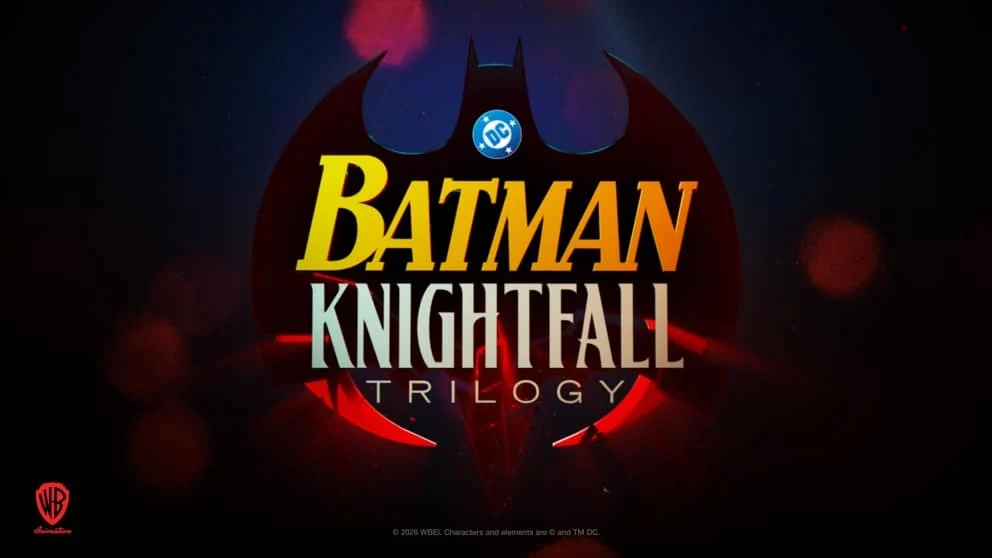
In a cinematic announcement that has sent shockwaves through the comic book community, DC, Warner Bros. Animation, and Warner Bros. Home Entertainment have officially unveiled the trailer for Batman: Knightfall. This ambitious three-part animated movie event promises to adapt one of the most transformative narratives in the history of the Dark Knight. By bringing the legendary 1990s comic book saga to life with a modern sensibility, the studio is aiming to redefine how audiences perceive Bruce Wayne’s most grueling physical and psychological trial.
The Main Facts: A Landmark Adaptation
Batman: Knightfall is not merely a single film, but a sprawling, three-part epic designed to capture the sheer scale of the source material. The project marks a significant departure from standard standalone animated features, opting instead for a serialized format that allows for the necessary character development required to do justice to the source material’s dense narrative.
The first installment, Batman: Knightfall Part 1: Knightfall, recently made its high-profile debut at the 2026 Annecy International Animation Film Festival, where it was met with significant critical acclaim. The release is slated for a wide distribution later this year, promising to bring the visceral intensity of Gotham’s darkest hour to home screens worldwide.
The production boasts a powerhouse cast. Anson Mount, known for his commanding presence in Star Trek: Strange New Worlds and Hell on Wheels, takes on the dual mantle of Bruce Wayne and Batman. He is joined by Michael Mando—famed for his chilling portrayal of Vaas Montenegro in Far Cry—as the terrifying, venom-fueled antagonist Bane. Rounding out the primary cast is Pablo Schreiber, who steps into the complex shoes of Jean-Paul Valley, the man destined to become Azrael and eventually the successor to the cowl.
The Chronology: From 1993 Pages to 2026 Screens
To understand the magnitude of this project, one must look at the historical significance of the original Knightfall saga. Published between 1993 and 1994, the story was a monumental crossover event in the DC Universe, orchestrated by a legendary team of writers and artists, including Doug Moench, Chuck Dixon, Alan Grant, Dennis O’Neil, Peter David, and Jo Duffy, with iconic visuals provided by Jim Aparo, Graham Nolan, Norm Breyfogle, and Jim Balent.
The premise of the original story remains one of the most effective psychological thrillers in comic history. Bane, a mysterious and tactical genius from the island of Santa Prisca, orchestrates an elaborate plot to systematically exhaust Batman by unleashing the entirety of Arkham Asylum’s inmates onto the streets of Gotham. By the time Batman confronts Bane, he is a shadow of his former self—sleep-deprived, physically battered, and mentally fractured.
The adaptation follows this trajectory faithfully. The film’s narrative arc serves as a direct mirror to the comic:
- The Gauntlet: The initial phase, where Gotham descends into chaos, forcing Bruce Wayne to operate with zero downtime.
- The Breaking: The climactic confrontation that forever altered the status quo of the DC Universe.
- The Aftermath: The descent of Gotham into the hands of a more violent, unstable protector, as Jean-Paul Valley assumes the role of Batman.
Supporting Data: The Creative Engine
The production of Batman: Knightfall is anchored by a veteran team at Warner Bros. Animation. Jeff Wamester, who has built a strong reputation within the DC animated multiverse, occupies the director’s chair. His direction is paired with a screenplay by Jeremy Adams, a writer noted for his ability to balance high-octane action with the internal emotional turmoil of DC’s most iconic heroes.
The production hierarchy is as follows:
- Supervising Producer: Rick Morales
- Producers: Jim Krieg and Kimberly S. Moreau
- Executive Producers: Sam Register and Michael Uslan
The involvement of Michael Uslan—the executive producer who has been a constant creative force behind every major Batman film since Tim Burton’s 1989 feature—lends the project a sense of historical continuity and prestige. This team is tasked with condensing dozens of issues of comic book history into a cohesive, fast-paced trilogy that maintains the "weight" of the original source material.
Official Responses and Industry Reception
The reception at the Annecy International Animation Film Festival was a bellwether for the project’s success. Industry insiders and critics noted that the animation style in the trailer—which emphasizes shadow, high-contrast lighting, and a grounded, gritty aesthetic—feels perfectly suited to the "Knightfall" era of the 90s.
"Bringing the Knightfall arc to animation is a challenge we have looked forward to for years," stated a representative from Warner Bros. Home Entertainment during the festival. "The story of Bruce Wayne’s breaking point isn’t just about a physical fight; it’s about the erosion of a man’s mission. Anson Mount’s voice work brings a gravitas to Bruce that we feel audiences will find deeply compelling."
Fans have particularly praised the casting of Michael Mando as Bane. Unlike previous animated versions of the character that leaned heavily into the "dumb brute" trope, Mando’s performance is reportedly focused on the intellectual threat Bane poses. By framing Bane as a tactical mastermind, the film restores the character to his original comic book roots.
Implications: A New Era for DC Animation
The decision to adapt Knightfall as a three-part event signals a strategic pivot for DC. In an era dominated by cinematic universes and streaming services, the studio is betting on "event television" as a way to maintain engagement with its legacy fan base while attracting new viewers.
1. The Serialization of Lore
By splitting the story, DC avoids the "rushed" feeling that often plagues feature-length adaptations of long-form comic arcs. This provides the breathing room to showcase the moral struggle of Jean-Paul Valley—a character whose journey from a manipulated assassin to a brutal Batman is often lost in shorter adaptations.
2. The Legacy of the 90s
The inclusion of original creators in the promotional materials highlights a deliberate effort to honor the "Golden Age" of the 90s comic book industry. By recognizing the contributions of artists like Norm Breyfogle and Jim Aparo, Warner Bros. is validating the importance of comic book history in modern media production.
3. The Future of the "Bat-Verse"
If Batman: Knightfall succeeds, it sets a precedent for how other massive crossover events—such as No Man’s Land or The Death of Superman—could be adapted in the future. The project essentially acts as a litmus test for the viability of long-form, mature-themed animation that targets an adult audience rather than a strictly family-oriented demographic.
Conclusion: A Test of Resilience
As the release date approaches, the anticipation continues to mount. Batman: Knightfall is more than just a fight between a man in a bat suit and a monster in a mask; it is a profound exploration of identity and the price of heroism. As the trailer suggests, when the mask is taken off—whether by force or by necessity—the true measure of the man underneath is revealed.
With a talented cast, a seasoned creative team, and a source material that remains the gold standard for Batman storytelling, Batman: Knightfall is poised to be the definitive animated experience of the year. Gotham is falling, and for the first time in a long time, the Caped Crusader may not be enough to save it. Fans should prepare for a trilogy that will, much like its protagonist, leave an indelible mark on the landscape of superhero entertainment.

 Ammar Sabilarrohman