Ali Ikhwan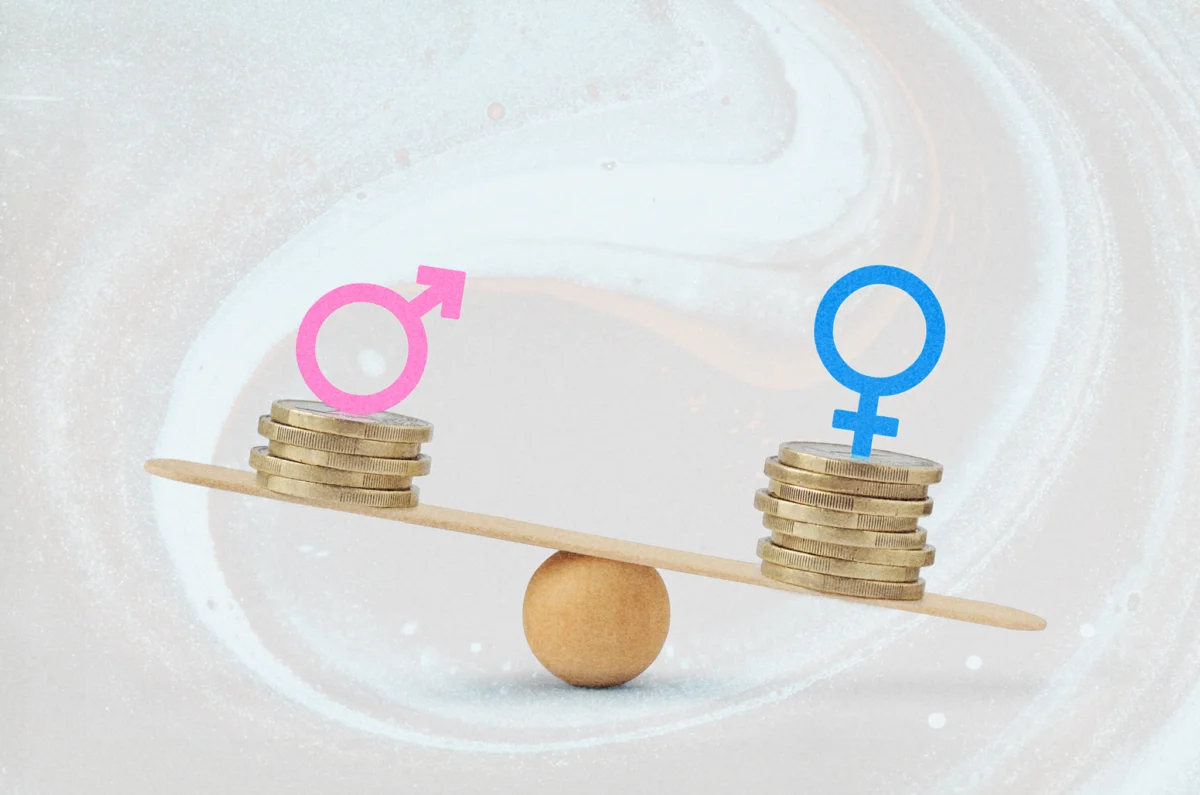
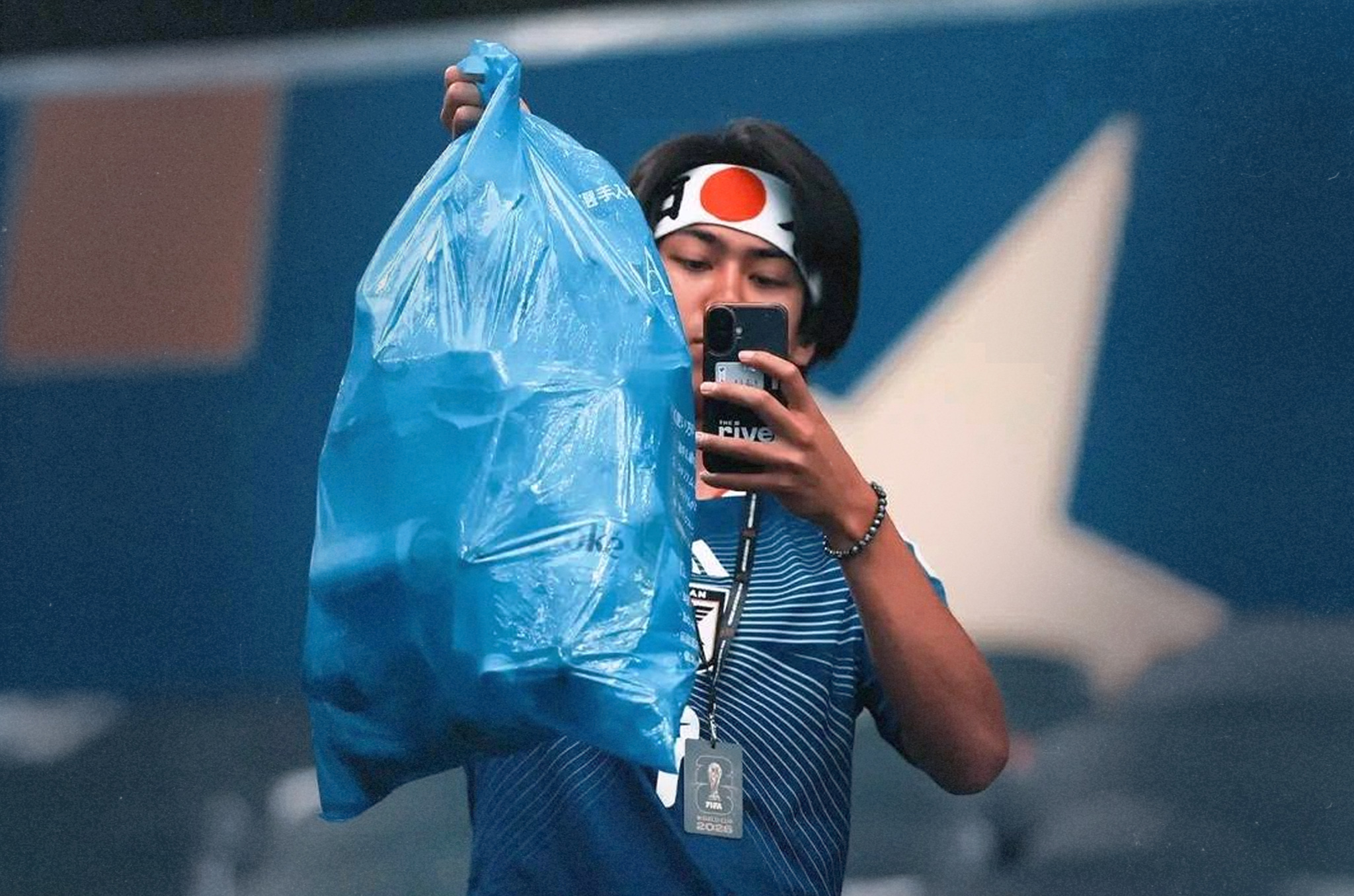
For years, the image of Japanese football fans at the FIFA World Cup has been a staple of international sports coverage. Armed with signature blue trash bags, these supporters remain in the stands long after the final whistle, meticulously scouring the aisles for discarded bottles, wrappers, and debris. This ritual, deeply rooted in the cultural ethos of souji (cleaning) and omotenashi (hospitality), has garnered global admiration, transforming Japanese fans into ambassadors of civic virtue.
However, during the 2026 World Cup—hosted across the United States, Canada, and Mexico—this pristine international image encountered a jarring reality check at home. Following Japan’s hard-fought 2–2 draw against the Netherlands in Dallas, images of male Japanese fans cleaning the stadium went viral. Yet, instead of receiving the customary universal applause, the imagery ignited a firestorm of domestic criticism, exposing a profound divide between Japan’s public performance of morality and the private realities of its household labor.
The Viral Catalyst: A Spoof That Struck a Nerve
The backlash originated from a biting piece of AI-generated satire that mimicked the aesthetic of the Tokyo Metro’s famous “manner posters.” These iconic public service announcements, which typically advise commuters on etiquette, were subverted to deliver a scathing critique of modern gender roles.
The viral image featured a man wearing the blue jersey of the Japanese national team, lounging on a comfortable sofa while scrolling through his phone. Beside him sat a overflowing basket of laundry, while in the background, his wife stood alone at the kitchen sink, washing dishes. The text overlay was short, sharp, and unmistakably directed: “Please do it at home.”
The post, shared on X (formerly Twitter), garnered millions of views and over 60,000 likes in a matter of days. It served as a lightning rod for latent frustrations among women across Japan, challenging the hypocrisy of men who are lauded on the global stage for picking up trash in a foreign stadium while failing to contribute to the basic maintenance of their own homes.
Chronology: From Pride to Protest
- Pre-2026: The Japanese fans’ tradition of cleaning stadiums becomes a source of immense national pride, consistently featured in international media as a testament to Japanese cultural etiquette.
- June 2026 (Dallas, USA): Japan draws 2–2 with the Netherlands. Images of Japanese men cleaning the stadium are uploaded to social media.
- June 16, 2026: A viral AI-generated parody post surfaces, juxtaposing stadium heroism with domestic inaction.
- Late June 2026: The hashtag #DoItAtHome (#家でやれ) trends, as social media users engage in a heated debate about the "double standard" of civic duty.
- Present: The incident sparks a broader, national conversation regarding the gendered division of labor and the limitations of "cultural exports" in a modernizing society.
Supporting Data: The Stark Reality of Unpaid Labor
The viral response was not merely an emotional reaction; it was backed by sobering statistics. The "stadium versus home" debate highlighted a persistent, well-documented issue: the massive disparity in unpaid labor between Japanese men and women.
According to data from the Organisation for Economic Co-operation and Development (OECD), the situation remains critical. The average Japanese man spends a mere 47 minutes per day on unpaid work—a category encompassing cooking, cleaning, laundry, and childcare. In stark contrast, Japanese women spend an average of 3.3 hours daily on the same tasks.
The data becomes even more pronounced when focusing on families with young children in dual-income households. Government surveys suggest that in these environments, women are often shouldering more than seven hours of domestic labor per day, while their male counterparts contribute less than two. This gap is among the widest in the developed world, placing Japan consistently near the bottom of global gender equality rankings in terms of domestic responsibility.
The Psychological Divide: Why the Stadium Matters
Sociologists point out that the stadium cleaning ritual is a "low-stakes" contribution. It is public, temporary, and highly visible. It allows for a sense of moral accomplishment without the long-term commitment required by domestic life.
"There is a psychological comfort in performing ‘good’ in a temporary, global space," says one social commentator. "It allows for a narrative of Japanese superiority without the friction of personal sacrifice. When a man picks up a bottle at a stadium, he is a hero. When he picks up a sponge at the kitchen sink, he is simply performing his duty—a duty that many still view as ‘women’s work’."
This sentiment was echoed by thousands of online commenters. One user wrote, "There is likely a man among those stadium cleaners who left his wife at home to manage childcare and chores alone so he could fly to the World Cup. He is cleaning for the world, but not for his family."
Official Responses and Changing Attitudes
The Tokyo Metropolitan Government, recognizing the demographic crisis facing Japan—characterized by a plummeting birth rate and an aging population—has attempted to incentivize more equitable labor distribution. Recent surveys commissioned by the city show a marginal, albeit hopeful, shift.
Paternity leave uptake has increased significantly in the last three years, and there is a noticeable rise in the use of automated appliances and outsourced housekeeping services. The government’s "Team Kaji-Ikuji" (Team Housework and Child-rearing) initiative encourages men to take a more active role in the household, framing it not just as a matter of fairness, but as a prerequisite for the survival of the Japanese family unit.
However, the survey also reveals a significant "perception gap." While many men report that they believe they are doing their "fair share," their partners report a vastly different experience. This disconnect suggests that even when men do pitch in, the mental load—the planning, scheduling, and management of the home—remains almost exclusively on the shoulders of women.
Implications: A Necessary Cultural Reckoning
The controversy of the 2026 World Cup serves as a mirror for a nation in transition. Japan stands at a crossroads where the preservation of its traditional cultural identity clashes with the requirements of a modern, egalitarian society.
The "do it at home" movement is not an attack on the tradition of stadium cleaning; rather, it is a call for consistency. Supporters of the movement argue that if Japan wishes to export its values of respect, cleanliness, and responsibility to the world, those values must first be cultivated within the private sphere.
For many, the stadium cleaning ritual has become a "performance of virtue." By shifting the focus from the grand gestures made in the eyes of the global community to the small, unglamorous chores of domestic life, the debate is forcing a overdue reassessment of what it means to be a "good citizen" in contemporary Japan.
As the tournament concluded and the international press packed their bags, the conversation in Japan remained. The blue trash bags, once a symbol of uncomplicated national pride, have now become a symbol of a deeper, more complex struggle for equality. The message from the Japanese public is clear: international acclaim is no longer enough to mask the domestic work left undone.
Conclusion
The 2026 World Cup may be remembered for the goals scored and the matches won, but for Japan, it will likely be remembered for the moment the spotlight turned inward. The viral discourse sparked by the stadium cleaners has proven that in an interconnected, digital world, the disconnect between public image and private conduct is becoming increasingly difficult to sustain.
Moving forward, the challenge for Japanese society will be to bridge this divide. True civic pride, as the online critics have so eloquently argued, is not defined by how one treats a rented seat in a stadium, but by how one treats the home they share and the people within it. Whether this viral moment leads to long-term systemic change in household dynamics remains to be seen, but the conversation has officially begun—and it is one that will not be swept under the rug.


 Neng Nana
 Asro
Asro