

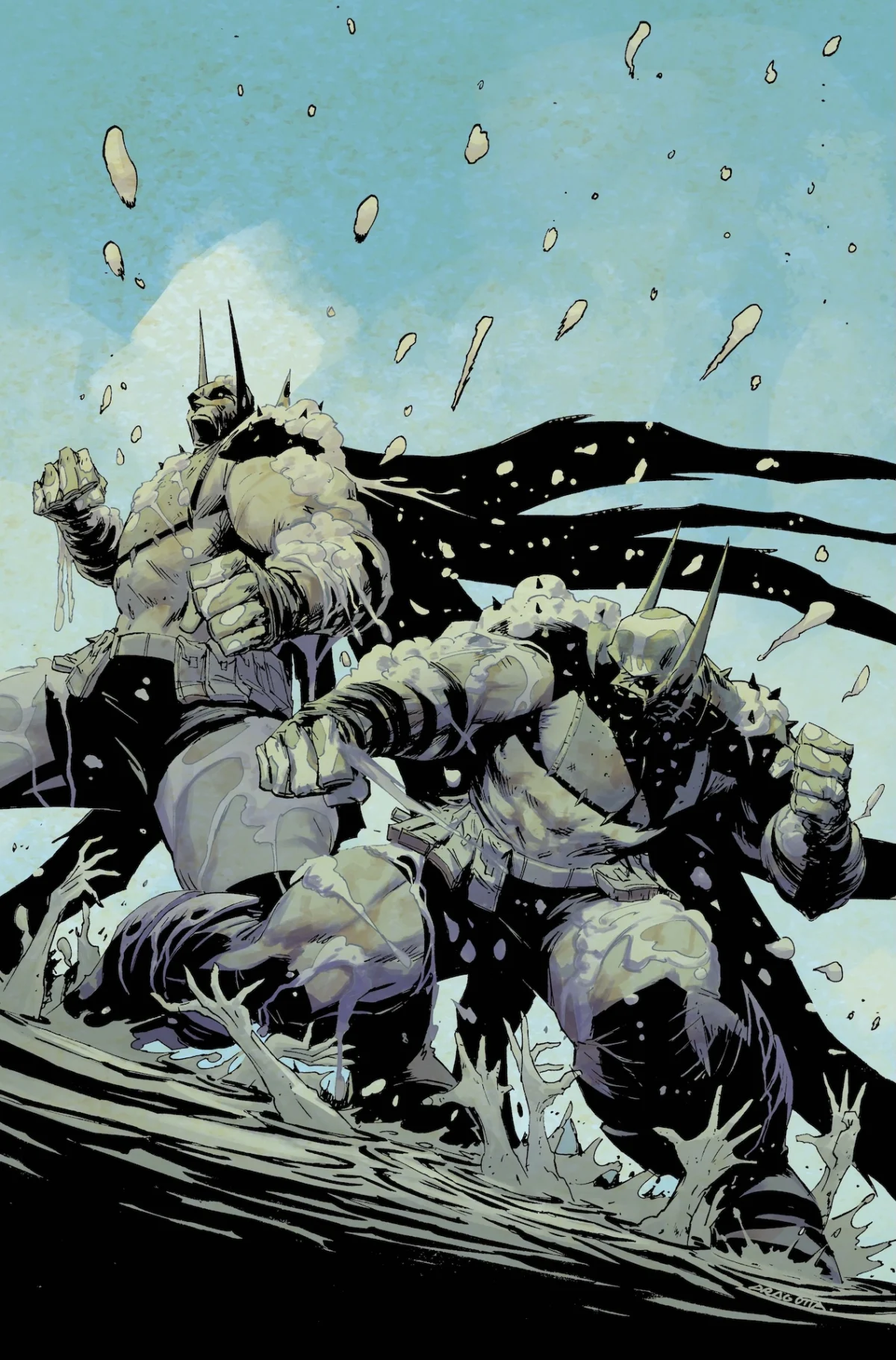
The Absolute Universe continues to redefine the foundational pillars of DC Comics’ most iconic archetypes. Following the gritty, visceral re-imaginings of the Joker, Killer Croc, and Mr. Freeze, artist Nick Dragotta has turned his formidable creative lens toward one of Batman’s most tragic and morphic antagonists: Clayface. The newly unveiled design sheets for Absolute Batman #23, shared via social media, offer a glimpse into a character evolution that leans heavily into body horror, existential dread, and a haunting, sculptural aesthetic that promises to push the Dark Knight to his psychological limits.
The Anatomy of Horror: A New Design Paradigm
Nick Dragotta’s tenure on the Absolute Batman series has been characterized by a departure from traditional superhero tropes, favoring instead a grounded, often brutalist approach to character design. His work on the Absolute incarnations of Catwoman, the Penguin, and Two-Face has consistently emphasized a "less is more" philosophy, stripping away the camp of the Silver Age in favor of a lean, high-stakes intensity.
The design sheet for the new Clayface, however, represents a shift in narrative tone. Rather than a chaotic, amorphous blob of sentient mud, Dragotta’s Clayface is depicted with a structural intentionality that feels almost artisanal—or, more accurately, macabre. The design notes accompanying the reveal suggest that the character’s form is not merely a biological accident but a deliberate, tragic manifestation of suffering. The most chilling detail, explicitly noted in the design documents, is: "His trapped souls sculpt him."

This singular phrase transforms Clayface from a standard villain into a supernatural vessel. It implies that the creature is a composite entity, a living monument to those it has consumed. The visual representation reflects this; the clay appears to be molded around the desperate, protruding shapes of human visages, creating a textural experience that is as unsettling as it is beautiful. This is not a villain who simply fights Batman; this is a villain who carries the weight of his victims literally within his own body.
Chronology of a Redesign: From Solicitations to Terror
The path to this reveal has been meticulously paced by DC Comics. As the Absolute Universe expands, the creative team has been careful to introduce each "Absolute" villain as a reflection of the harsher, more desperate world this version of Batman inhabits.
- September 2025: The first major ripples of the Absolute aesthetic hit the public with the reveal of the Absolute Joker, alongside updated, terrifying looks for Killer Croc and Mr. Freeze. These designs set a precedent: the Absolute villains are not just criminals; they are embodiments of the city’s inherent rot.
- October 2025: New York Comic Con brings the unveiling of Absolute Catwoman. Dragotta’s design introduces a sleek, functional, and utilitarian approach to the character, signaling that "Absolute" designs prioritize practical threat over theatricality.
- March 2026: The reveal of the Penguin and Two-Face designs further cements the tone of the series. These characters are defined by their scars—literal and figurative—linking them to the same dark evolution that created the world’s current version of Bane.
- May 2026: The full solicitation for August 2026 releases is published. Among the highlights is Absolute Batman #23, featuring a cover that depicts a brutal, muddy clash between two Batmen. The reveal of the Clayface design sheet follows immediately, confirming that the "mud" on the cover is, in fact, the antagonist himself.
Supporting Data: The Convergence of Narrative and Visuals
To understand the significance of this design, one must look at the solicitation text provided by DC Comics for Absolute Batman #23. The text describes a "climactic showdown" where Batman is forced to confront not only an "unyielding enemy" but also the decay within his own ranks.

The inclusion of the phrase "more than one dead character signals a call for help" suggests that Clayface’s ability to "sculpt" himself using trapped souls is not merely aesthetic—it is a functional mechanic of his terror. If Clayface is comprised of the souls of the departed, then every blow Batman lands against him is a desecration. This creates an immediate moral dilemma for the hero: how do you defeat an enemy who is, in essence, a graveyard of the people you are sworn to protect?
Furthermore, the dual-Batman imagery on the cover of issue #23 invites speculation. Is this an act of shape-shifting mimicry by Clayface, or is it a symbolic representation of the psychological schism within the Dark Knight? In the Absolute universe, where "friends become enemies," the line between the hero and the horror is perpetually thinning.
Official Perspectives and Creative Intent
While DC Comics has kept the specific plot details of Absolute Batman #23 under tight embargo, the choice of Nick Dragotta as the architect of these designs speaks volumes. Dragotta’s style is known for its kinetic energy and raw, visceral power. By choosing to move away from the "mud-monster" aesthetic and toward a "sculpted horror" look, the creative team is signaling a desire to elevate Clayface from a physical threat to an emotional one.

In previous iterations, Clayface was often relegated to a powerhouse or a master of disguise. Here, he serves as a manifestation of the Absolute Universe’s central theme: the high cost of legacy. If the souls of his victims are what give him shape, then Clayface is the physical embodiment of the city’s failure. He is the accumulated grief of Gotham, given sentience and weaponized against its protector.
Implications for the Absolute Universe
The introduction of this version of Clayface has profound implications for the trajectory of the Absolute storyline.
1. The Psychological Toll
Batman’s greatest strength is his tactical mind. When faced with an enemy that is fundamentally psychological—a creature that forces him to fight the physical remnants of those he has lost—his tactical advantages are neutralized. The "breaking point" mentioned in the solicitation suggests that this conflict will not be won through strength alone, but through a reckoning with the trauma that defines this Batman.

2. Redefining the Rogue’s Gallery
By giving the villains such distinct, horror-infused aesthetics, DC is effectively creating a new "canon" of fear. These are not the whimsical villains of the past; they are manifestations of the dark corners of the modern psyche. The success of these designs hinges on their ability to make the familiar feel alien. In the case of Clayface, the shift from a generic mud-man to a figure sculpted by souls is a masterstroke of character design that instantly elevates the stakes of his conflict with Batman.
3. A Call to Action for the Reader
The anticipation surrounding Absolute Batman #23 is at an all-time high. The combination of the mysterious cover, the hint of shifting identities, and the genuinely unsettling design of Clayface has created a narrative gravity that is hard to ignore. Readers are not just waiting for a fight; they are waiting for a catharsis. They want to see how this version of Batman, who is already pushed to the brink, handles an adversary that represents the literal embodiment of his own failures.
Conclusion: The Shape of Things to Come
As we approach the release of Absolute Batman #23 in August 2026, the discourse surrounding the book is a testament to the power of high-concept character design. Nick Dragotta has managed to breathe new life into a classic villain, transforming him into something that is simultaneously ancient and terrifyingly new.

The "trapped souls" concept is particularly evocative. It suggests a narrative depth that goes beyond the pages of a standard comic book, touching on themes of memory, guilt, and the permanence of loss. As Batman steps into the mud to confront his latest enemy, he isn’t just fighting for the safety of Gotham; he is fighting for the integrity of his own identity.
The Absolute Universe continues to prove that it is not afraid to break its toys to see what’s inside. If Clayface is any indication, the pieces found within are far more dangerous—and far more haunting—than anyone could have anticipated. Whether Batman emerges from this battle as the hero we know, or as something tempered by the same clay that defines his enemy, remains to be seen. One thing is certain: the landscape of Gotham has been permanently altered by the sculptor of souls.









No comments yet. Be the first to join the conversation!