Nila Kartika Wati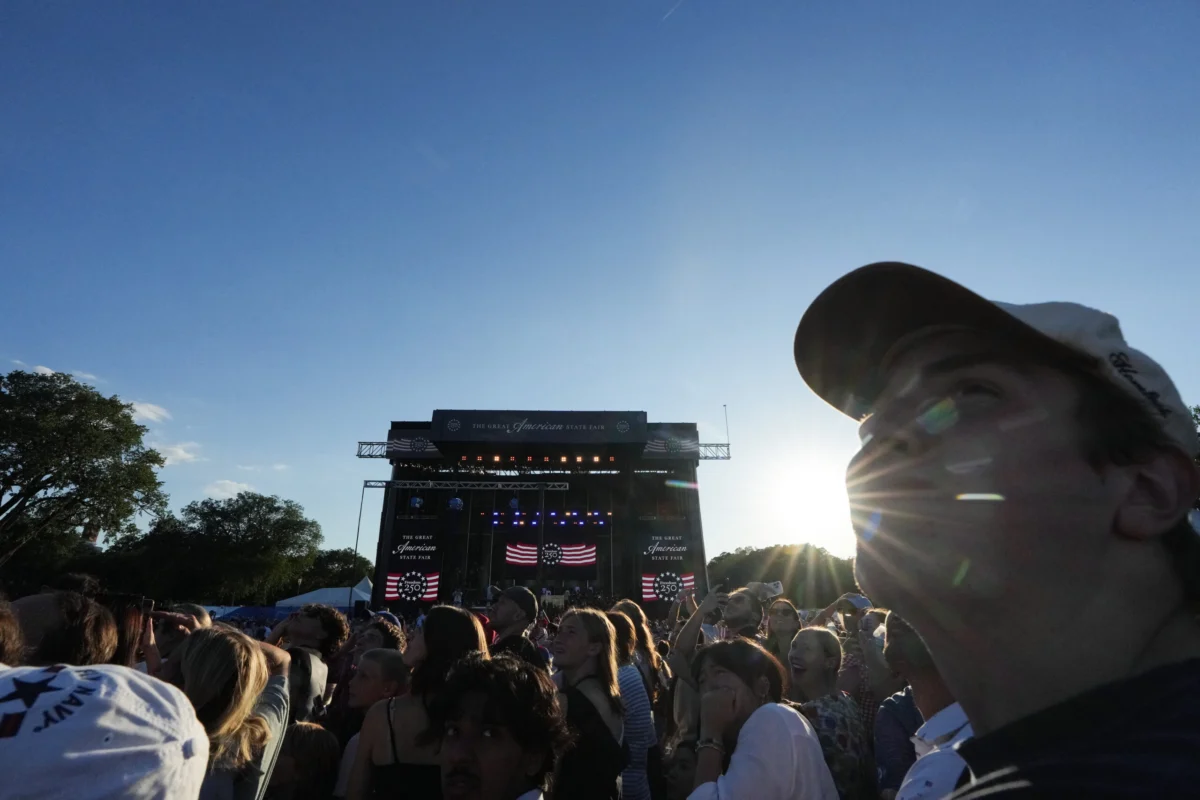
In the complex intersection of American politics and pop culture, few friction points are as persistent as the unauthorized use of music at political rallies. While artists and their estates frequently issue cease-and-desist warnings or public rebukes following the unauthorized use of their catalogs by political figures, the estate of the late Leonard Cohen took a rare and preemptive stand this week.
Ahead of the "Freedom 250" Great American State Fair kickoff, a high-profile event headlined by Donald Trump on the National Mall, the Leonard Cohen estate issued a stern, forward-looking statement: "Hallelujah"—Cohen’s most iconic and deeply spiritual composition—was not to be played, and the estate did not authorize or endorse its inclusion in the proceedings. Despite this explicit "prebuttal," the song was performed regardless, marking a recurring point of contention between the Cohen estate and the former president’s campaign apparatus.
A History of Unauthorized Anthems
The phenomenon of artists objecting to the use of their music at political rallies is a well-documented tension in modern campaign cycles. From Neil Young and The Rolling Stones to Tom Petty and Bruce Springsteen, a long list of musicians have publicly distanced themselves from Donald Trump’s platform.
However, the case of "Hallelujah" is distinct due to the song’s profound cultural and religious resonance. Originally released on the 1984 album Various Positions, the song has evolved into a secular hymn of sorts. Its melancholic melody and cryptic, biblical lyrics are often perceived as transcending political boundaries. Yet, for the Cohen estate, the song’s usage is a matter of both intellectual property control and, arguably, moral alignment.
The estate’s preemptive strike on Wednesday morning underscored the growing frustration among rights holders who feel their works are being co-opted for political optics without consent. By issuing a statement before the event began, the estate sought to create a clear record of dissent, aiming to preemptively decouple the song’s legacy from the specific political messaging of the Freedom 250 event.
Chronology of a Disputed Performance
The sequence of events on Wednesday highlighted a clear disregard for the estate’s stated position.
Early Morning, June 24: The Leonard Cohen estate releases a formal statement: "The Leonard Cohen Estate has learned that the song ‘Hallelujah’ is to be performed at a Donald Trump rally on June 24. This use is not authorized, and the Estate does not support or approve of this or any similar usage."
Pre-Rally Hours: Despite the public rebuke, the event proceeded as scheduled on the National Mall. In the hour preceding Donald Trump’s keynote address, the song was performed by Christopher Macchio and Master Gunnery Sgt. Kevin Bennear. The performance was treated as a musical centerpiece of the rally’s pre-show programming.
Post-Performance: A spokesperson for Freedom 250, the group organizing the Great American State Fair, failed to provide an immediate comment regarding why the song was used despite the estate’s explicit instructions to the contrary.
This sequence mirrors the events of 2020, during the final night of the Republican National Convention. At that time, the Cohen estate confirmed they had explicitly denied a request from the Republican National Committee to feature the song. That request was ignored, and the song was performed from the White House balcony—again, by Christopher Macchio. The repetition of this scenario suggests an entrenched pattern, where the desire for a specific aesthetic or emotional resonance at a rally overrides the legal and moral objections of the original creators.
The Freedom 250 Controversy: A Backdrop of Cancellations
The unauthorized use of "Hallelujah" was merely one chapter in a larger saga surrounding the Freedom 250 event. The Great American State Fair was initially marketed as a non-partisan celebration meant to host events leading up to the nation’s 250th anniversary. However, the event’s association with Donald Trump triggered a wave of attrition among the initial talent roster.
Artists including Morris Day, Young MC, and The Commodores withdrew from the lineup after realizing the degree to which the event was linked to the former president’s political machinery. For many of these artists, the "non-partisan" label provided by the organizers was insufficient to mask the event’s actual function as a rally.
Following these high-profile cancellations, the event was reconfigured. Trump, opting to utilize the momentum, declared he would hold a rally on the Mall, effectively absorbing the event into his own campaign apparatus. This pivot serves as a microcosm of the current political environment, where traditional event planning is increasingly subsumed by the "rally-first" strategy of the Trump campaign. Other performers, such as the "President’s Own" United States Marine Band and Alexis Wilkins, remained on the program, highlighting a stark divide between those willing to perform in a overtly political setting and those who view such appearances as damaging to their brand or personal principles.
Legal and Ethical Implications: Where Rights Meet Reality
The ongoing friction between the Cohen estate and Trump’s campaign raises significant questions regarding copyright law and the nature of public performances.
The Licensing Paradox
Most large-scale public venues, including the National Mall, operate under blanket performance licenses with organizations like ASCAP, BMI, and SESAC. These licenses allow organizers to play a vast library of music. However, legal experts note that such licenses do not always grant the right to associate a song with a specific political candidate or cause, particularly if the artist has a "right of publicity" claim or can prove the usage creates a false impression of endorsement.
The Moral Rights Perspective
While the US copyright system is heavily focused on economic rights, many artists and estates operate under the principle of "moral rights"—the idea that an author has the right to protect the integrity of their work from being used in ways that contradict their values. Leonard Cohen, a man of deep contemplation and poetic nuance, has been widely characterized by those close to him as someone who would likely have taken issue with his work being used as a backdrop for partisan political conflict.
The Fallout for Performers
For singers like Christopher Macchio, who has now twice performed the song at Trump-linked events despite estate objections, the situation presents a precarious professional path. While they may be hired to deliver a performance, they effectively become the face of the controversy, placing themselves at the center of a legal and cultural skirmish that often eclipses their musical contribution.
The Road Ahead: July 4 and Beyond
As the Trump campaign looks toward future events, including a planned rally on July 4, the "Hallelujah" incident serves as a warning of the friction yet to come. The campaign has demonstrated a willingness to prioritize the immediate emotional impact of a song—particularly one as globally recognized as "Hallelujah"—over the objections of the artists who created it.
For the Leonard Cohen estate, and for the broader music industry, the incident highlights the difficulty of enforcing boundaries in a digital, viral age. Even when a message is delivered clearly and well in advance, the sheer scale of a political rally allows for the "fait accompli"—the performance happens, the sound fills the air, and the political point is made, regardless of the legal or ethical objections of those who own the work.
As we move toward future election cycles, the question remains: will we see a shift in how political campaigns handle music rights, or will the "play it anyway" strategy become a normalized aspect of the campaign trail? For now, the echo of "Hallelujah" on the National Mall stands as a testament to the enduring tension between artistic expression and the raw power of political stagecraft.

 Suro Senen
 Nana
Nana