Basiran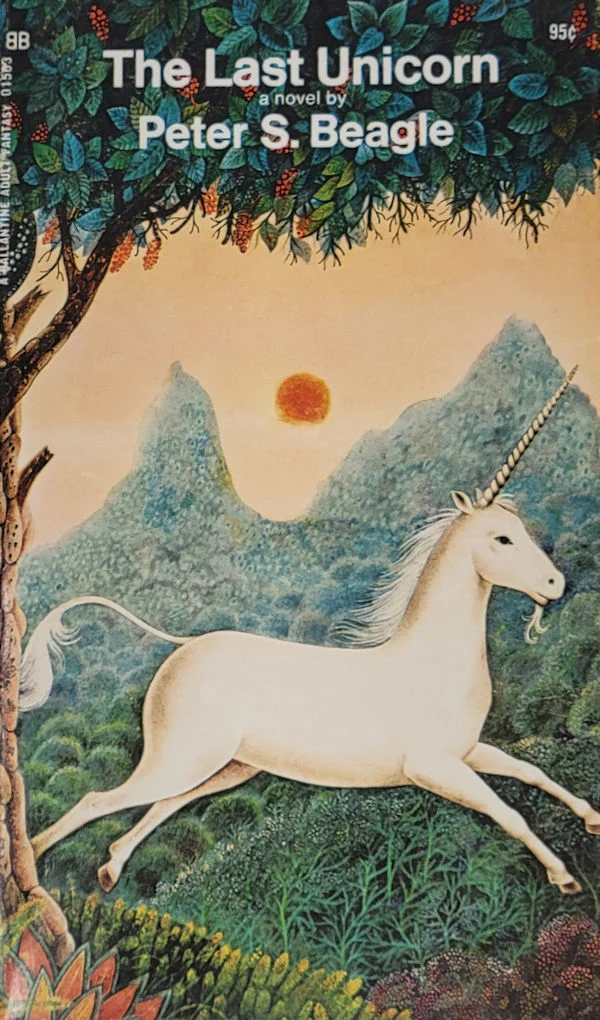
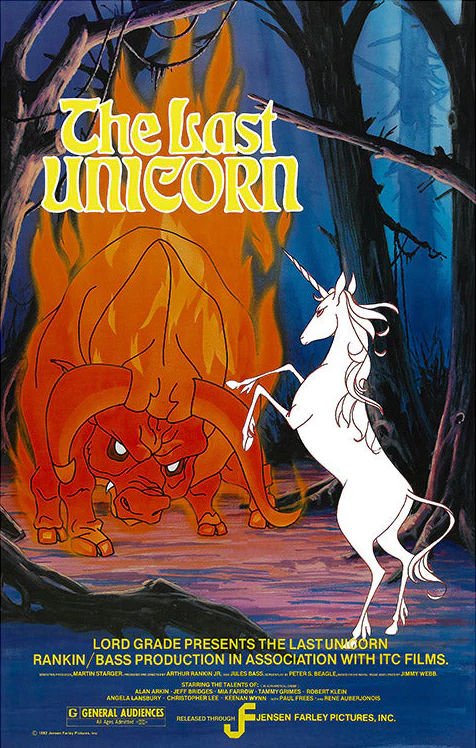
For many, the first encounter with Peter S. Beagle’s The Last Unicorn occurs in childhood, often through the lens of the 1982 animated adaptation—a film that, while iconic, often leaves viewers with fragmented, surreal memories of red bulls and shifting landscapes. Yet, to revisit the source material as an adult is to undergo a fundamental shift in perception. Like Beowulf or the works of Jane Austen, Beagle’s prose is deceptive; it requires a certain maturity to fully ingest its elegance and the profound philosophical weight hidden beneath its fairytale veneer.
To read The Last Unicorn today is to recognize it not merely as a staple of the fantasy genre, but as a seminal work of literature that explores the universal human condition. It is a narrative that transcends the boundaries of its genre, speaking to the hopes, fears, and inescapable frailty that define us all.
The Chronology of a Classic
First published in 1968, The Last Unicorn arrived at a time when the fantasy genre was still finding its modern footing. While J.R.R. Tolkien had established the blueprint for high fantasy with The Lord of the Rings, Beagle chose a different path. He opted for a more intimate, lyrical, and melancholic approach, focusing less on the grand clash of armies and more on the internal architecture of his characters’ souls.
The story follows a unicorn who, upon discovering she may be the last of her kind, ventures out of her protected lilac wood to uncover the fate of her kin. Along the way, she is joined by Schmendrick, a bumbling magician, and Molly Grue, a woman who has lived a life of quiet, unfulfilled longing. Their journey leads them to the court of King Haggard, a man whose obsession with possession has drained the color and life from his kingdom.
The Anatomy of Despair: Character Archetypes
Beagle’s genius lies in his ability to craft characters who represent the divergent ways mortals grapple with the scarcity of time.
Schmendrick and the Futility of Potential
Schmendrick the Magician serves as the embodiment of stagnation. Possessing immense, untapped magical ability, he is nonetheless plagued by his own incompetence. As he is told in the text, his power is "working backward," and he is doomed to wander the earth, eternally inefficient. Schmendrick represents the tragedy of the unactualized life—the individual who has all the time in the world but lacks the clarity of purpose to turn that time into meaning.
Molly Grue and the Scourge of Regret
If Schmendrick represents the fear of a wasted future, Molly Grue represents the crushing weight of a wasted past. Her confrontation with the unicorn is one of the most heart-wrenching passages in fantasy literature. When she demands to know where the unicorn was when she was young, she is voicing the universal anxiety that life’s opportunities are finite. Her "desert eyes and yellowing heart" are the manifestations of a woman who feels that happiness has passed her by, leaving her to grapple with the bitter realization that some arrivals are simply too late.
The Dichotomy of Desire: King Haggard vs. Prince Lir
Beagle further explores the human condition through the stark contrast between King Haggard and his adopted son, Prince Lir.
Haggard is a cautionary tale of the consumerist spirit. He seeks to possess the unicorns—to capture beauty and keep it locked away. Yet, in his pursuit of ownership, he finds only despondency and paranoia. He is a man who understands the price of everything and the value of nothing.
In contrast, Prince Lir learns that true power is not found in accumulation, but in service. Through his love for Lady Amalthea, he discovers that the "sweetness of the way the world goes together" is worth protecting. He becomes a hero not to own, but to serve, providing a clear moral compass for the narrative and demonstrating that fulfillment is an active, externalized process rather than an internal, acquisitive one.
The Crucial Necessity of Mortality
The central thesis of the novel is arguably its most radical: the idea that mortality is the catalyst for beauty. When the unicorn finally experiences the fear of death, she is transformed. She learns that a creature that lives forever, untouched by the passage of time, is fundamentally incomplete.
Beagle articulates this through the juxtaposition of two haunting sentiments: the terror of a dying body versus the realization that "whatever can die is beautiful." This is the core of the human experience. We are defined by our limits. Our time is "cruel," as the text notes, but it is precisely that cruelty that grants us the agency to live well. Without the threat of an end, the urgency of love, ambition, and kindness would lose its luster.
Prose as Poetry: The Aesthetic of Whimsy
Beyond its thematic depth, The Last Unicorn remains a masterclass in prose. Beagle employs a fairytale structure, but it is a structure that is constantly subverted by touches of dry, self-aware wit.
Consider the interaction with a cynical cat: "I would tell you what you want to know if I could, mum, but I be a cat. And no cat anywhere ever gave anyone a straight answer." These moments of whimsy provide necessary levity, acting as counterweights to the more profound existential inquiries scattered throughout the book.
Beagle’s descriptions are similarly evocative. His portrayal of the unicorn’s home—a lilac wood where she lives "the color of snow falling on a moonlit night"—establishes an atmosphere of ethereal purity that makes the subsequent encroachment of the real world feel all the more jarring.
Implications for the Modern Reader
Why does this story, now over half a century old, remain so essential? In an age of rapid digital consumption and constant noise, The Last Unicorn demands a slower, more deliberate engagement. It forces the reader to pause and reflect on their own "Haggard-like" obsessions and their own "Molly-like" regrets.
The book serves as a mirror. For some, it will be a comfort; for others, a challenge. It does not promise that we will find all the answers to our questions about happiness or destiny. However, it does promise that the pursuit of those answers is what makes the journey worthwhile.
Final Reflections
Ultimately, Peter S. Beagle’s work is an invitation to accept the transience of life. It suggests that while we cannot stop the clock, we can choose how we spend the hours we are allotted. Whether you are a devotee of the fantasy genre or someone who rarely glances at a library’s speculative fiction section, The Last Unicorn offers something rare: a story that is as intellectually challenging as it is emotionally resonant.
It is a book that grows with you. The reader who picks it up at twenty will find a story of longing and discovery; the reader who picks it up at fifty will find a meditation on legacy, love, and the quiet beauty of a life well-lived. To read it is to participate in a conversation that has spanned generations, and to be reminded that, even in a world that often feels cold and unyielding, there is still room for the miraculous.
If you have never read it, or if you only remember the flickering images of a childhood film, do yourself the service of opening the pages. You will find that the unicorn is not just a creature of myth—she is, in many ways, the reflection of your own mortality, waiting to show you the beauty of the time you have left.

 Lina Irawan