
 Muslim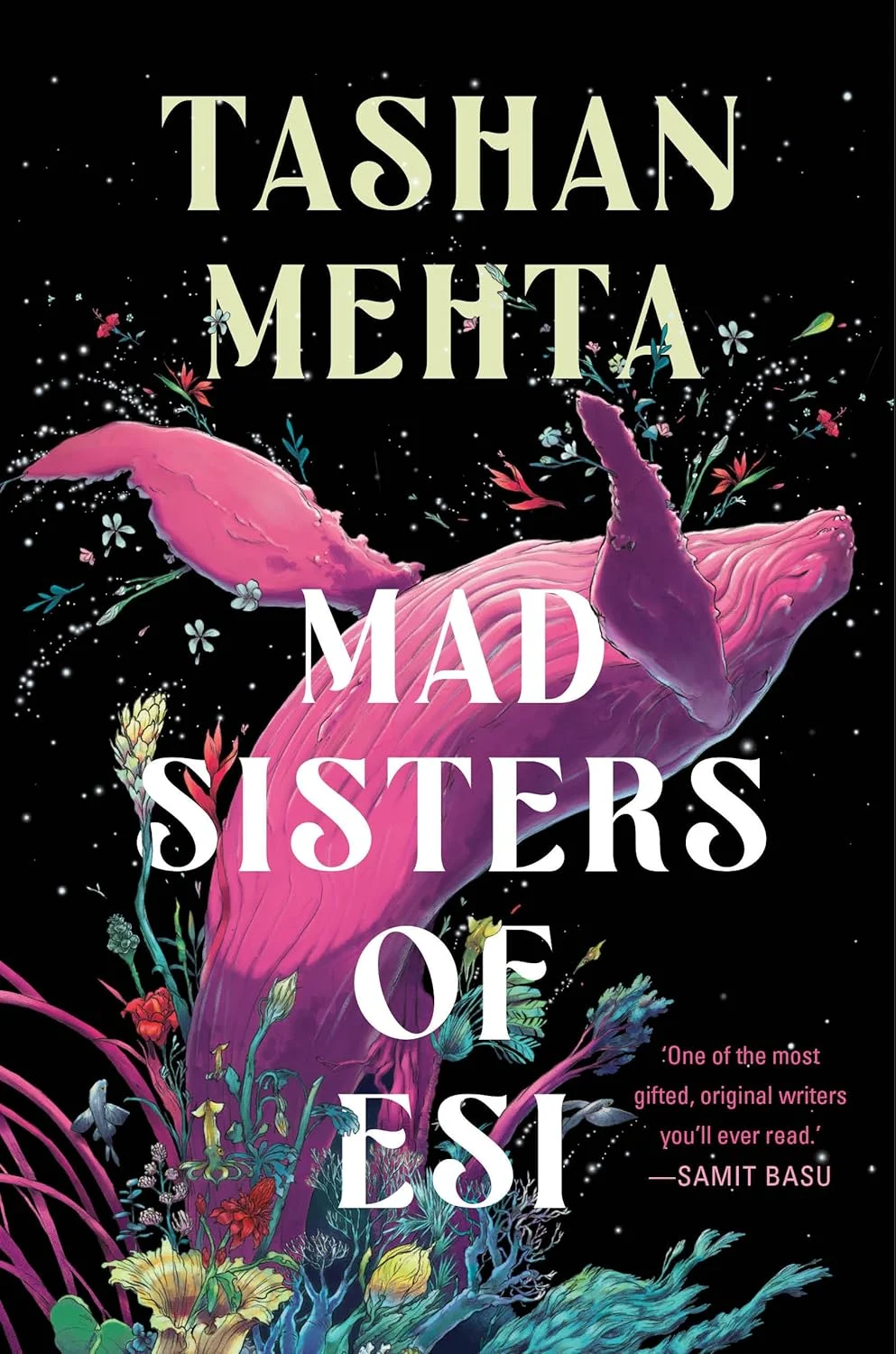
The Mythological Straitjacket: A Genre at a Crossroads
For over a decade, the landscape of Indian fantasy has been dominated by a singular, gravitational force: the mythological retelling. From the runaway success of Amish Tripathi’s The Immortals of Meluha (2010)—which effectively turned Vedic pantheons into a high-octane, marketable commodity—to the expansive, multi-author explorations of the Mahabharata and Ramayana, the genre has functioned within a predictable ecosystem.
In India, where religious belief is woven into the social fabric—with 97% of the population expressing a belief in God, according to a 2021 Pew Research Centre survey—storytelling often mirrors the cosmic hierarchy of the epics. Writers, both established and emerging, have leaned heavily on these ancient archetypes, treating them as essential handrails. The result is a market saturated with "snackable" narratives: stories that offer the comfort of the familiar, much like a quick kachori or samosa, providing a fleeting, greasy satisfaction while reinforcing the same moral binaries of fate, duty, and divine destiny.
However, a radical departure has arrived. Tashan Mehta’s Mad Sisters of Esi (2026) does not merely ignore these conventions; it dismantles them. By rejecting the "safe" path of the mythological retelling, Mehta has positioned her work as a landmark in contemporary Indian literature—a novel that dares to build its own mythology from the ground up, rather than borrowing from the reservoir of the past.
Chronology of a Genre: From Epics to Innovations
The trajectory of Indian fantasy can be viewed in three distinct phases:
- The Era of Reimagination (2010–2018): Triggered by the Shiva trilogy, this period saw authors like Kevin Missal and Anand Neelakantan capitalize on the "myth-hunger" of a rapidly growing reading public. Publishers discovered that the most successful fantasy titles were those that felt like a homecoming.
- The International Expansion (2018–2022): The success of Rick Riordan’s Pandava series, published under his own imprint, proved that the formula of mythological retellings was not just a domestic quirk but a global commercial strategy, cementing the "hero’s journey" within the Indian context.
- The Era of the Abstract (2026–Present): With the release of Mad Sisters of Esi, the genre has begun to shift toward the metaphysical. As Marathi author Gautamiputra Kamble noted in his collection The Seekers, the influence of the epics is often subconscious. Mehta’s work represents the first major attempt to consciously reject that subconscious script in favor of a new, fluid, and chaotic narrative structure.
The Architecture of Chaos: Structure as Story
"The problem with circular stories is that it is difficult to know where to begin."
With this opening, Mehta signals that Mad Sisters of Esi will not provide the linear comfort of a traditional fantasy novel. The book is not a straight line; it is a spiral, a series of concentric loops where the past and future fold into one another. The narrative rejects the conventional coordinates of beginning, middle, and end, instead offering an "astral topography" where the reader is perpetually adrift.
This structure is intentional. It mimics the mechanics of memory and consciousness. Where previous Indian fantasy authors focused on external, epic wars, Mehta focuses on internal, emotional topographies. The novel treats time not as a sequence, but as a fabric—a collection of silk, satin, and gossamer cobwebs that the reader can touch and feel.
The Heart of the Whale: A Narrative of Sisterhood
The emotional core of the novel is the bond between sisters. The story centers on Myung and Laleh, who reside within the "whale of Babel"—a sentient, cosmic entity swimming through space, housing infinite chambers and mini-worlds within its skin.
The conflict is intimate, yet cosmic:
- The Struggle of Home: While one sister finds solace in the boundaries of the whale, the other is compelled to venture out into the unknown.
- The Geography of Memory: Myung’s journey leads her to Ojda, a shape-shifting island home to the Museum of Collective Memory. Here, the landscape is alive, changing its form based on the songs and echoes of those who have passed through.
- The Ancestral Link: The narrative expands to include the "Mad Sisters" of Esi—Wisa and Magali—whose own search for one another forms the genesis of the whale and the museum.
Implications: A New Vocabulary for Indian Fantasy
The arrival of Mad Sisters of Esi poses significant questions for the future of the Indian publishing industry. If a book can succeed by defying the "mythological mandate," will publishers be more willing to take risks on non-traditional, abstract, or experimental fantasy?
1. Moving Beyond "Safe" Tropes
For years, the industry operated under the assumption that fantasy must be "readable" and "predictable" to succeed. Mehta proves that readers are capable of—and hungry for—complexity. Her prose thrives on what she calls "coherent incoherence," a state where the logic of the story is driven by emotion rather than plot mechanics.
2. The Redefinition of Humanism
In traditional epics, humanity is often a pawn in a game played by gods. In Mehta’s universe, the human element is the "highest note." Even when the narrative explores islands, magical creatures, and conscious time, the focus remains on the specific, fragile, and desperate search for connection. As the text posits: "In the face of the sublime, it is our humanness we hold close."
3. The "Madness" of Originality
Mehta addresses the fear of the unknown directly. By framing her story through the lens of "madness," she challenges the reader to accept that some stories do not need to be "ironed out" to be understood. The act of reading becomes an act of listening rather than decoding. This is a profound shift from the didactic, moralistic tone of traditional retellings.
Conclusion: Trusting the Fall
The cultural impact of Mad Sisters of Esi lies in its defiance. In a literary climate that has long demanded authors adhere to the comfortable grammar of gods and heroes, Mehta has chosen to leap into the void. She has created a work that is simultaneously a fairy tale, a philosophical treatise on memory, and a deeply human drama about the bonds of sisterhood.
For those expecting the familiar beats of a hero’s journey, the book will undoubtedly be a challenge. But for those willing to embrace the spiral, the rewards are immense. The novel does not just tell a story; it asks the reader to interrogate why we seek out fairy tales in the first place—to see ourselves reflected in the chaos before we step into a new, uncharted world.
As Mehta writes, "Everything is more powerful when you don’t understand it." In the case of Mad Sisters of Esi, the lack of a clear, linear map is not a failure of the narrative—it is its greatest strength. The genre of Indian fantasy has finally stopped staggering toward the nearest handrail. It has, at long last, learned to fly.


 Nana Wu
 Ali Ikhwan





