Siti Muinah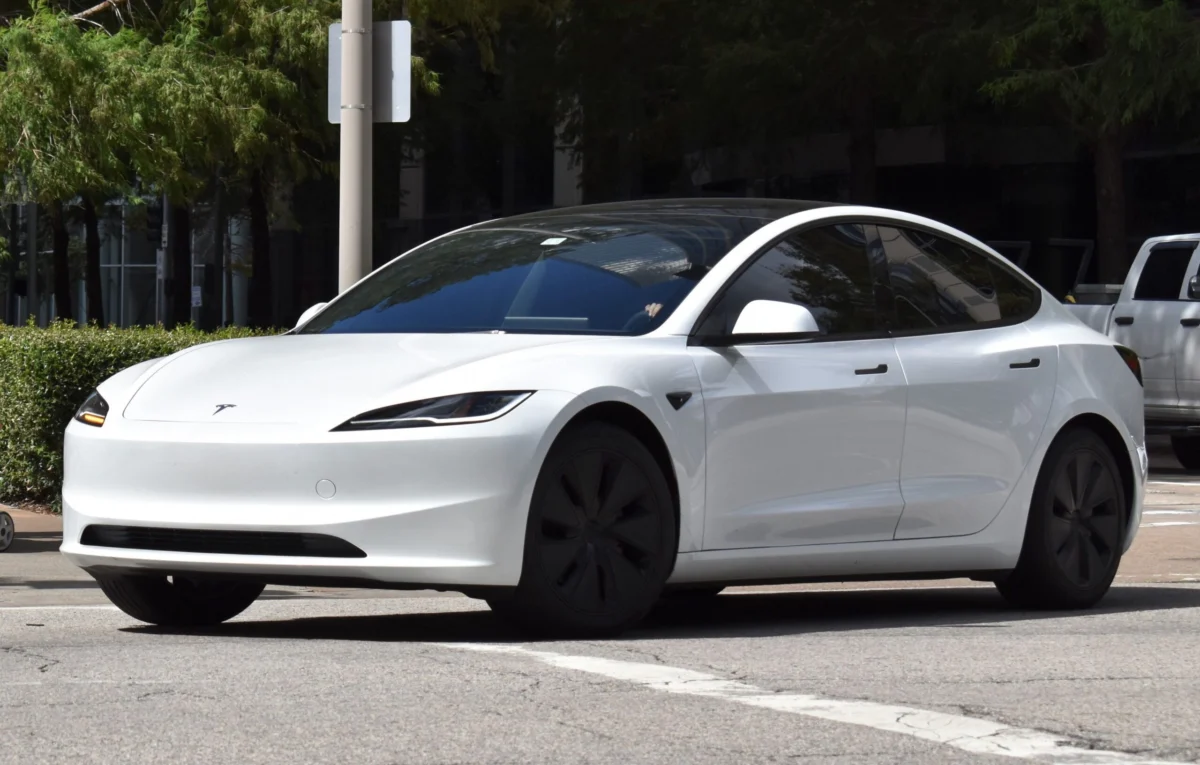
A quiet suburban evening in Texas was shattered last week when a 76-year-old grandmother, Martha Avila, was killed inside her own home. The incident, which has ignited a firestorm of legal and safety debates, occurred when a Tesla Model 3, traveling at speeds exceeding 70 miles per hour, veered off the road and plowed through the brick exterior of her residence. The crash did not only claim Mrs. Avila’s life; it also left her son-in-law, Justin Barbour, who was present in the home, seriously injured.
As the Harris County community reels from the tragedy, the incident has propelled Tesla’s "Full Self-Driving" (FSD) technology back into the center of a national discourse regarding the dangers of automation, the limits of human oversight, and the corporate liability of automakers in the era of artificial intelligence.
The Fatal Collision: A Sequence of Events
While investigators are still reconstructing the precise telemetry of the accident, the early details are harrowing. On the evening of the crash, the driver of the Tesla, 44-year-old Michael Butler, was operating the vehicle on suburban roads. According to reports provided to the Harris County Sheriff’s Office, Butler claimed to have had Tesla’s advanced driver assistance features—specifically the FSD (Supervised) system—engaged at the time of the impact.
Crucially, law enforcement officials noted that Butler exhibited "no signs of intoxication" at the scene. This detail is significant, as it shifts the focus away from human impairment and toward the interaction between the driver and the vehicle’s automation. The vehicle, according to preliminary reports, accelerated to a high rate of speed before losing control and striking the Avila residence. The force of the impact was catastrophic, turning a routine residential street into a scene of sudden, violent loss.
The Lawsuit: Allegations of Defective Design
In the wake of the tragedy, the family of Martha Avila has initiated a wrongful death lawsuit filed in the Harris County District Court. The complaint names both Michael Butler and Tesla, Inc. as defendants. The core of the legal argument, presented by the family’s legal team, is that Tesla’s Full Self-Driving software is inherently "defective in design and unreasonably dangerous."
The lawsuit posits that the technology creates a false sense of security, leading drivers to believe the vehicle is more capable than it actually is. By promising a system that can navigate city streets, manage intersections, and change lanes, Tesla allegedly lures drivers into a state of complacency. The plaintiffs argue that even though the system is technically labeled "supervised," the design encourages a "handoff" of situational awareness that the human brain is ill-equipped to handle in a split-second emergency.
Official Responses and the Corporate Defense
Tesla has maintained a staunchly defensive posture, echoing the rhetoric of its leadership. While the company did not respond to direct requests for comment from the press, Vice President of AI Software, Ashok Elluswamy, took to the social media platform X to offer a technical rebuttal. Elluswamy claimed that internal vehicle data indicates that the driver "manually overrode self-driving by pressing the accelerator all the way to 100 percent" and that the accelerator remained engaged even after the vehicle had struck the home.
CEO Elon Musk, a vocal proponent of Tesla’s autonomy efforts, further dismissed the notion that the software was at fault, stating on X that any speculation regarding the technology’s role in the accident "makes no sense." This response highlights the ongoing tension between Tesla’s public claims about the safety of its systems and the growing body of evidence suggesting that, regardless of human input, the system may be contributing to dangerous outcomes.
Precedent: The Florida Verdict and the "Hacker" Evidence
The Texas lawsuit is not an isolated event but rather the latest in a series of legal challenges questioning the safety of Tesla’s automation. Legal experts are closely watching this case, particularly in light of a landmark 2023 Florida verdict.
In that instance, a jury found that the driver of a Tesla Model S, while partially responsible for a fatal crash, was not the sole party to blame. The jury determined that Tesla shared one-third of the responsibility for the accident because it had marketed Autopilot as a safety feature that it could not fully deliver. The verdict resulted in $200 million in punitive damages and $43 million in compensatory damages.
The Florida case also exposed a troubling pattern regarding Tesla’s data practices. Despite the company’s assertion that it captures vast amounts of telemetry data, it initially claimed it could not retrieve the records necessary for the case. It was only through the intervention of an independent cybersecurity expert—a "hacker"—that the family’s lawyers were able to recover the critical data that ultimately helped secure the verdict. This has fueled concerns among regulators and consumer advocates about the transparency of the data Tesla uses to defend itself in litigation.
The Regulatory Landscape: NHTSA and NTSB Investigations
The federal government is now moving with increased urgency to determine if these accidents are part of a systemic defect. The National Highway Traffic Safety Administration (NHTSA) is currently conducting an extensive probe into FSD. This investigation was triggered by over 40 reports of FSD failing to adhere to traffic laws, including instances of vehicles running red lights and performing unpredictable maneuvers.
The agency’s mandate is to determine if the FSD interface provides "adequate time for the driver to respond to the unexpected behavior." This is the crux of the "automation complacency" problem: can a human driver, who has been conditioned to trust the car for miles of successful driving, truly be expected to jump in and save the day when the software makes a sudden, high-speed error?
Furthermore, the National Transportation Safety Board (NTSB) has joined the Harris County Sheriff’s Office in a joint probe of the Texas crash. The NTSB, known for its rigorous, forensic-level investigation of transportation disasters, will likely provide the most authoritative account of the mechanical and software conditions present during the final seconds of Martha Avila’s life.
Implications for the Future of Autonomous Driving
The broader implications of this case extend far beyond a single tragic death. We are currently witnessing a "Wild West" period in the evolution of autonomous vehicle technology.
1. The Handoff Problem
Matthew Wansley, a professor at Yeshiva University’s Cardozo School of Law, notes that the central danger lies in the design of the "supervision" requirement. If a system is designed in a way that allows a driver to lose situational awareness, the manufacturer may be held liable even if the human was the one operating the pedals at the moment of impact. The legal system is increasingly skeptical of the "driver is responsible" defense when the product itself is designed to make the driver stop paying attention.
2. Marketing vs. Reality
There is a growing gap between how Tesla markets its technology and how it functions in the real world. While Tesla refers to its system as "Full Self-Driving," it simultaneously maintains that it requires human supervision. Critics argue that this contradiction is not merely a branding choice but a dangerous safety hazard that obscures the actual risks of the software.
3. Data Transparency
As seen in the Florida case, the ability to independently verify what a vehicle was doing—and what the driver was doing—is essential for justice. The push for greater transparency in how Tesla stores and releases crash data is likely to become a central point of legislative debate in the coming years.
Conclusion: A Call for Accountability
As the legal proceedings in Texas begin to unfold, the family of Martha Avila is seeking more than just financial compensation. Their lawyer, Ryan Zehl, has stated that they are "committed to determining exactly what happened to prevent similar tragedies from occurring in the future."
For the victims of such crashes, the tech industry’s promise of "disruption" has come at an unacceptable price. Whether the Texas tragedy was the result of a human error, a software malfunction, or a dangerous synergy between the two, it highlights a critical reality: the technology currently on our roads is a work in progress. Until the industry can prove that its systems are as safe as their marketing suggests, the families of victims like Martha Avila will continue to look to the courts for the accountability that the regulatory system has yet to fully provide.

 Raul Delapena Setiawan
 Azzam Bilal Chamdy