Nana Wu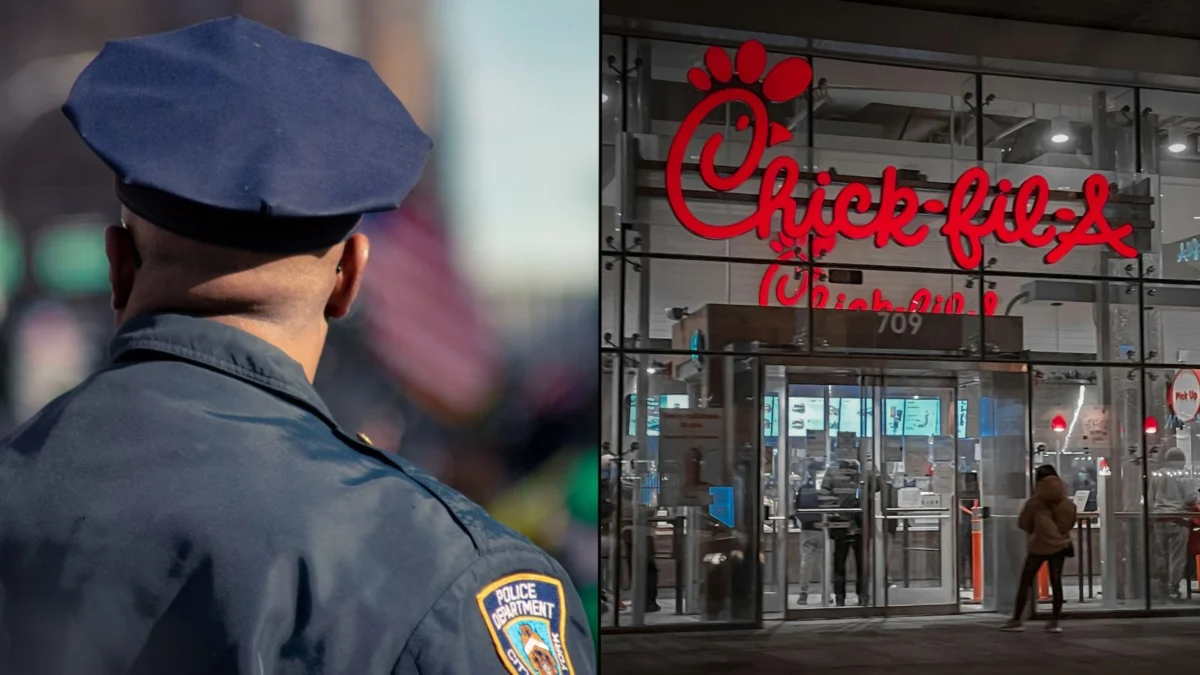
In a bizarre incident that underscores the growing tension surrounding retail discount policies and the strict legal consequences of impersonating law enforcement, a Texas man finds himself facing criminal charges after a routine visit to a Chick-fil-A drive-thru went awry. What began as an alleged attempt to secure a modest meal discount spiraled into a Class B misdemeanor charge, resulting in an arrest and a $2,000 bond.
The incident, which occurred in the Rio Grande Valley, serves as a cautionary tale regarding the misuse of public service credentials and the standard operating procedures restaurants employ when verifying identity for promotional discounts.
The Incident: A Drive-Thru Confrontation
On June 23, 59-year-old Eric Michael Rodriguez entered the drive-thru lane of a local Chick-fil-A, seeking to take advantage of a discount often reserved for law enforcement officers. According to reports from MyRGV, the situation escalated quickly when staff requested the standard proof of identification required to validate the request.
When Rodriguez claimed to be an "off-duty" police officer, employees followed corporate protocol by asking for his badge or official identification. Unable to produce valid credentials that satisfied the staff, Rodriguez was denied the discount. Rather than accepting the refusal and paying the full menu price, Rodriguez allegedly became agitated, leading to a heated confrontation that resulted in management contacting local authorities to report a disturbance.
When police arrived at the scene, Rodriguez reportedly maintained that the staff had been "rude" to him, attempting to deflect the focus onto the service he received rather than his initial claims. However, witnesses at the scene alleged that he had flashed a fraudulent badge to intimidate staff into granting the discount. Rodriguez vehemently denied these claims, asserting that he had only presented a military veteran identification card. Despite his protestations, law enforcement took him into custody on the spot.
Chronology of Events
The progression of the case against Rodriguez unfolded rapidly over a 48-hour period, moving from a fast-food counter to the booking desk of the county jail.
- June 23, 2026: Rodriguez arrives at a Chick-fil-A in the Rio Grande Valley. He requests a law enforcement discount, claiming off-duty status. Upon being asked for identification, a dispute arises. Police are summoned to the scene following reports of a disturbance and allegations of badge impersonation.
- June 23, 2026 (Evening): After speaking with staff and witnesses, responding officers determine there is probable cause for an arrest. Rodriguez is taken into custody and processed on charges of impersonating a public servant.
- June 24, 2026: Rodriguez is formally charged with a Class B misdemeanor. He is released from custody after posting a $2,000 bond.
- June 25, 2026: Local media outlets, including MyRGV, report on the incident, bringing the details of the arrest into the public eye.
The Mechanics of Retail Discounts and Verification
To understand the severity of the charge, it is essential to examine why businesses implement strict verification processes for public service discounts. Across the globe, restaurants, coffee shops, retail chains, and service providers offer "First Responder" or "Military" discounts as a gesture of gratitude. These programs are highly valued by the beneficiaries, but they are also targets for fraudulent activity.
The Standard of Proof
For a business to offer a discount, they must document the transaction for tax and accounting purposes. This is why staff are trained to verify identity. Common acceptable forms of ID include:
- Departmental Badges: For active law enforcement.
- Military IDs: (CAC cards or VA-issued cards) for active/retired military.
- Union Cards: Used in specific jurisdictions for verified members.
- Digital Verification: Increasingly, apps like ID.me or GovX are used to provide a seamless, paperless verification process that mitigates the risk of human error or forgery.
When an individual claims to be "off-duty," they are effectively asking for a discount based on a professional status that is not visible via a uniform. By demanding to see a badge, the restaurant is not merely being "rude," as Rodriguez claimed; they are performing a standard security check to prevent fraud.

Official Responses and Legal Implications
The legal ramifications for Rodriguez are significant. The charge of "False Identification as a Police Officer" is categorized as a Class B Misdemeanor under Texas law. This is not a trivial offense; it carries a maximum penalty of up to 180 days in county jail and a fine of up to $2,000.
The Prosecution’s Perspective
While the defense may argue that the act was a misunderstanding or an escalation of a minor verbal disagreement, the prosecution’s case hinges on the alleged use of a false badge. Impersonating a police officer is treated with extreme gravity in the United States, as it undermines the public trust in law enforcement and can create dangerous scenarios where civilians may rely on a fake officer for safety or instruction. Even if the intent was only to secure a discount on a sandwich, the law does not distinguish between the intent of the impersonation and the act itself.
The Impact on the Restaurant Industry
For Chick-fil-A, and similar service-industry establishments, this event highlights the "front-line" dangers faced by service workers. Staff are often trained in de-escalation, but they are frequently forced to handle customers who believe they are entitled to perks they cannot verify. Following this incident, industry experts suggest that more chains may move away from manual ID checks entirely, opting instead for integrated digital verification systems that remove the human element—and the potential for conflict—from the discount process.
A Broader Trend of Retail Conflict
This incident is not an isolated case of customer aggression in the food service sector. As the cost of living fluctuates and public tensions rise, instances of "customer rage" have seen a measurable uptick.
Recently, in a separate, more violent incident in Maryland, a 30-year-old woman was arrested for threatening Taco Bell staff with a firearm after a perceived delay in her order. When comparing the two cases, sociologists note a common thread: the "entitlement crisis" in service interactions. In both instances, the customers felt that their status—either as a veteran/officer or as a paying customer—granted them a level of authority or priority that superseded the standard rules of the establishment.
The case of Eric Michael Rodriguez serves as a stark reminder that in the eyes of the law, the line between a "customer dispute" and a "criminal act" is often paper-thin.
Moving Forward: What to Expect
As the legal proceedings continue, the court will need to determine the veracity of the claims regarding the "flashed badge." If it is proven that Rodriguez produced a fraudulent item to gain a financial advantage, the likelihood of a conviction increases significantly. Conversely, if the defense can prove that the identification presented was merely a legitimate veteran card, the charges may be mitigated or reconsidered, though the charge of causing a public disturbance may still stand.
For now, the story remains a prominent example of why corporate policies exist, why they are enforced, and why claiming a professional status that you do not hold can result in consequences far more expensive than the price of a fast-food meal. The $2,000 bond and the potential six-month jail sentence serve as a sobering deterrent for anyone tempted to lie for a few dollars off their lunch.
As the judicial system weighs the evidence, the public is left to consider the importance of maintaining civility in retail spaces and the absolute necessity of respecting the boundaries of professional impersonation laws. Whether this results in a plea deal or a trial, the incident in the Rio Grande Valley will undoubtedly be cited in future discussions regarding restaurant security and the legal definition of impersonation.

 Ali Ikhwan
 Iffa Jayyana