Azzam Bilal Chamdy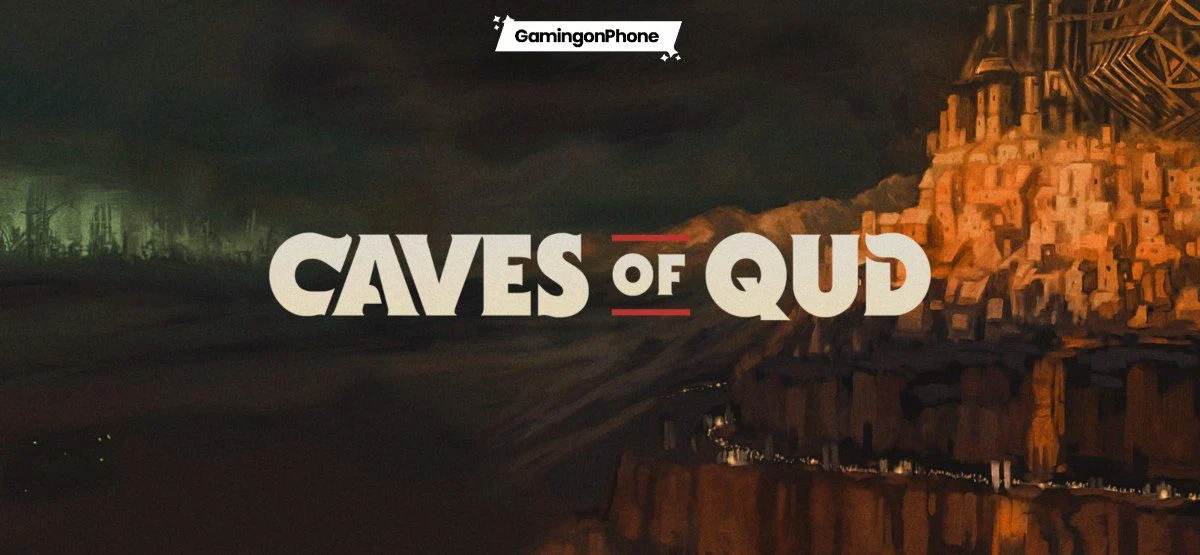
The landscape of mobile gaming is set to undergo a seismic shift as Freehold Games officially confirms the development of a mobile port for their magnum opus, Caves of Qud. Brian Bucklew, co-founder of the studio, recently broke the silence on the highly anticipated project, confirming that the deeply simulated, science-fantasy roguelike is making its way to handheld devices. While a concrete release date remains shrouded in mystery, the confirmation alone has sent waves of excitement through the community of hardcore RPG enthusiasts.
Main Facts: Bringing the Simulation to Your Pocket
Caves of Qud is widely considered one of the most complex and rewarding roguelike experiences in modern gaming. Known for its Hugo Award-winning writing and uncompromising commitment to systemic simulation, the game challenges players to survive in a world where history, geography, and biology are not just narrative window dressing—they are the core mechanics of survival.
The most significant takeaway from the announcement is the commitment to a portrait mode interface. For a game that relies heavily on text-based menus, complex inventory management, and tactical turn-based combat, the decision to optimize for a vertical screen orientation is a bold design choice. It suggests that Freehold Games is not merely “emulating” the PC version, but actively tailoring the user interface (UI) and user experience (UX) to suit the ergonomic needs of mobile users.
A Brief Chronology: From Cult Classic to Mainstream Success
To understand why this port is such a monumental event, one must look at the trajectory of Caves of Qud.
- The Early Years (2010–2015): Caves of Qud began its life as a niche project, steadily building a reputation within the roguelike community for its unparalleled depth. It operated as a true "cult" title, known mostly to aficionados of the ASCII-style exploration genre.
- The Steam Early Access Era (2015–2024): Upon entering Early Access, the game underwent a massive visual overhaul, transitioning to high-quality pixel art while maintaining its procedural integrity. Over nearly a decade, the developers consistently expanded the lore, adding complex faction systems, intricate biomes, and a sprawling narrative.
- The 1.0 Milestone (2024): The full release of version 1.0 marked the culmination of years of iterative development, cementing the title as a definitive work in the science-fantasy RPG genre.
- The Mobile Announcement (2024–2025): Following the successful 1.0 launch, the announcement of a mobile port indicates that Freehold Games is ready to introduce their complex world to a broader, on-the-go audience.
Supporting Data: Why This Port Matters
The appeal of Caves of Qud lies in its "emergent gameplay." Unlike static RPGs where the solution to a puzzle is scripted, Caves of Qud operates on a foundation of physics and chemistry. If a door is locked, you do not simply look for a key. You might burn the door down with a flame-based mutation, phase through it using temporal powers, or recruit a companion to smash it into gravel.
The Depth of Simulation
- Systemic Interaction: The game tracks the health, loyalty, and equipment of every NPC. You can, for instance, mind-control a creature, use its unique physiology to navigate dangerous terrain, and then return to your own body.
- Character Customization: With over 100 mutations—ranging from telepathy and force fields to growing multiple heads or wings—and a vast array of cybernetic enhancements, no two runs are identical.
- Faction Dynamics: The world is populated by over 70 factions, including sapient plants, sentient robots, and highly entropic beings. Your relationship with one group can fundamentally alter the game world’s response to your presence.
The sheer volume of data being processed under the hood makes this an ambitious port. Bringing this level of complexity to a mobile device without sacrificing the "feel" of the simulation is a technical hurdle that few developers would dare to attempt.
Official Responses and Developer Philosophy
Brian Bucklew has been transparent about the fact that the mobile version is not a side project, but a dedicated effort to ensure that the "Qud experience" remains intact. In discussions regarding the port, the studio has emphasized that the transition to mobile is about accessibility rather than simplification.
The focus on portrait mode is particularly revealing. It indicates a desire to make the game playable in "snackable" sessions—allowing players to navigate the dangerous Salt Marshes or the mysterious Spire while on a commute or waiting in a queue. By optimizing the game for a vertical orientation, the developers are signaling that they want to minimize the friction between the player and the game’s deep, often obtuse, command systems.
Implications for the Mobile RPG Market
The arrival of Caves of Qud on mobile signifies a growing trend in the industry: the migration of high-fidelity, "brain-burning" PC experiences to handheld platforms. For years, mobile gaming was unfairly categorized as the domain of "gacha" mechanics and simplified puzzles. The success of ports like Stardew Valley, Terraria, and now the impending arrival of Caves of Qud challenges this perception.
A New Standard for Hardcore Mobile Gaming
This port sets a new bar for what mobile players can expect from their devices. If a game as dense and mechanically complex as Caves of Qud can be adapted for touchscreens, it opens the door for other classic RPGs and simulation-heavy games to find a second life on mobile.
Furthermore, the longevity of Caves of Qud—a game that encourages hundreds of hours of play—is perfectly suited to the mobile format, where players often look for titles that offer high replay value. If Freehold Games can nail the control scheme, they will likely find a massive, untapped audience among mobile users who are starved for deep, narrative-rich, and challenging experiences.
What Fans Can Expect: The Road Ahead
As the development cycle continues, the community is looking for several key features in the final release:
- UI/UX Parity: Fans are hopeful that the mobile version will retain the keyboard shortcuts and command-line versatility of the PC version, perhaps through an optional "advanced" control scheme.
- Cross-Platform Integration: While not confirmed, the dream of many players is a cross-save feature that would allow them to switch between their PC and their phone seamlessly.
- Performance Optimization: Given the procedural generation and the sheer amount of active entities in a single map, performance optimization will be critical to ensuring the game runs smoothly without draining mobile batteries or causing thermal throttling.
Conclusion
The announcement of a mobile port for Caves of Qud is more than just a piece of news; it is a testament to the enduring popularity of the roguelike genre. By bringing one of the most intellectually stimulating games of the last decade to the palm of our hands, Freehold Games is proving that deep, meaningful, and complex storytelling has a permanent home on mobile platforms.
Whether you are a veteran of the Salt Marshes or a newcomer eager to explore the strange, mutated world of Qud, the mobile release promises to bring a fresh perspective to a classic experience. As we await further updates on the launch window and specific features, one thing is clear: the future of mobile gaming looks increasingly deep, increasingly strange, and entirely worth the wait.
Stay tuned for more updates as development progresses, and prepare your characters—the secrets of the ancient world will soon be in your pocket.


 Ali Ikhwan
 Nana Wu