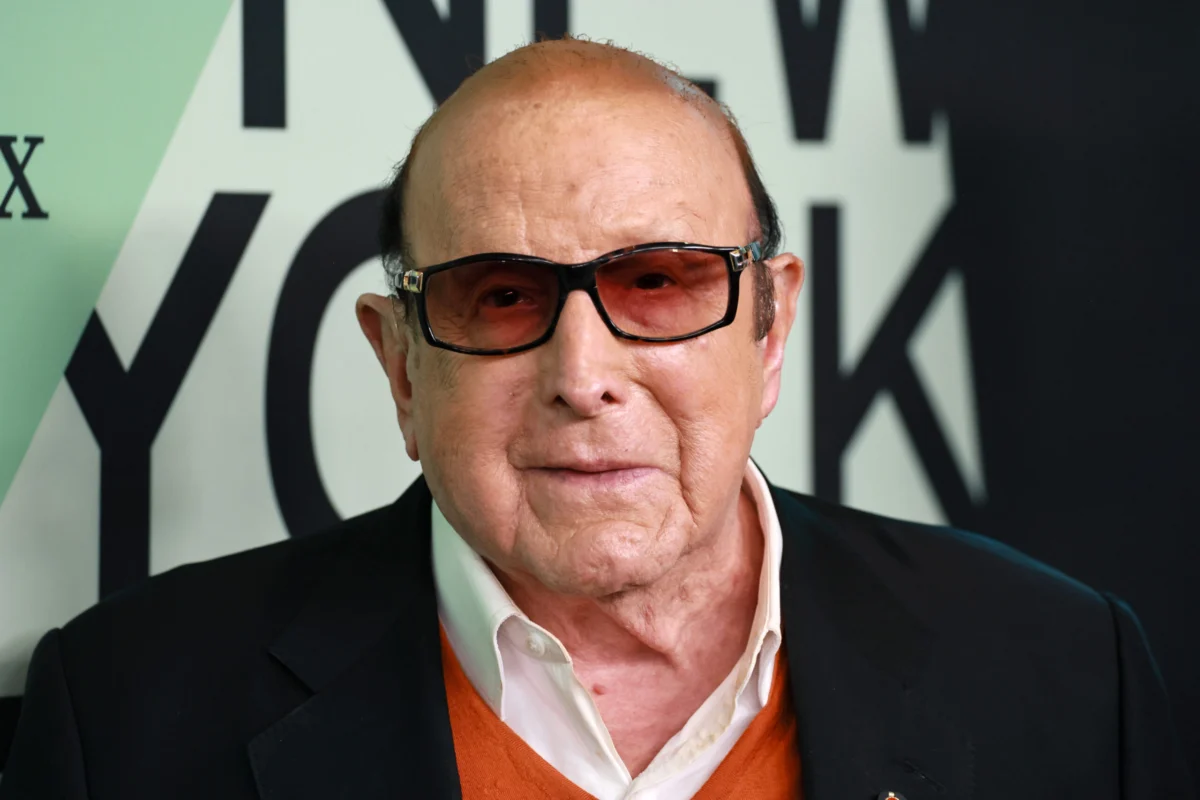
In the hallowed, wood-paneled expanse of Manhattan’s Central Synagogue, the air on Monday morning was thick with the weight of a musical era coming to a definitive close. A congregation of titans, executives, and family members gathered to bid a final farewell to Clive Davis, the legendary music mogul whose Midas touch, unwavering ear, and fierce advocacy for artistic truth defined the modern record business.
Davis, who passed away last week at the age of 94, leaves behind a legacy that is not merely recorded in charts and sales figures, but etched into the very cultural fabric of the 20th and 21st centuries. From the grit of the 1970s rock scene to the polished perfection of global pop, Davis’ career was a masterclass in artist development, proving that a record executive could be as vital to the creative process as the musicians themselves.
The Titan’s Final Curtain Call
The funeral service was a poignant reflection of the man who served as a bridge between generations. The ceremony, officiated by Rabbi Angela Buchdahl, was punctuated by performances that bridged the gap between somber reflection and celebratory tribute.
The service opened with a hauntingly beautiful clarinet solo by Kenny G, setting a reflective tone before the proceedings shifted toward the deeply personal. Jennifer Hudson, a powerhouse of vocal talent who thrived under the influence of Davis’ industry standards, delivered stirring renditions of Leonard Cohen’s "Hallelujah" and the definitive Whitney Houston anthem, "I Will Always Love You."
The presence of artists like Bruce Springsteen, Alicia Keys, Barry Manilow, and Dionne Warwick transformed the funeral from a traditional service into a summit of music history. Each speaker offered a unique window into a man who was, by all accounts, an insatiable "music obsessive"—a person who treated every demo tape, every vocal take, and every career trajectory with the gravity of a life-altering event.
A Chronology of a Mastermind
To understand the scope of the mourning at Central Synagogue, one must look at the timeline of Clive Davis’ career—a career that functioned as a roadmap for the evolution of American popular music.
The Columbia Years and the Discovery of Talent
Davis’ rise began in earnest at Columbia Records. It was here that he demonstrated a preternatural ability to identify artists who were not just commercially viable, but culturally transformative. His discovery of Bruce Springsteen in 1972 stands as the definitive moment of this era. As Springsteen recounted during his eulogy, the encounter was brief but life-changing: a young artist playing guitar in an office, and a visionary executive looking across the desk and uttering the simple, career-defining phrase: "Welcome to Columbia Records."
The Birth of Arista and the "Mandy" Era
Following his departure from Columbia, Davis did not fade into the background. Instead, he founded Arista Records, where he would solidify his reputation as the premier hit-maker of the era. His relationship with Barry Manilow is perhaps the most illustrative example of his hands-on management. Manilow recounted how he and Davis would argue over song choices—specifically the track "Brandy," which would eventually be transformed into the chart-topping hit "Mandy."
"He would show me a song; I would turn it down; we would argue; I would rearrange it; I would record it," Manilow reminisced. This cycle of debate and refinement lasted nearly 50 years, culminating in a professional bond that survived even as Manilow faced his own recent health battles.
The J Records Resurrection
Proving that his relevance was not tied to a single decade, Davis launched J Records at the age of 67. In an industry notoriously obsessed with youth, Davis’ tenacity was an anomaly. He refused to retire, refused to become a relic, and instead poured his energy into nurturing the next generation of stars, including Alicia Keys. Keys, appearing visibly moved, spoke of a man who looked past the "commerce" of the industry to see the "truth" within the artist.
The Personal Legacy: Fatherhood and Private Bonds
Beyond the boardrooms and the platinum records, the service highlighted the complexities of Davis as a father and a friend. His sons, Fred and Doug Davis, offered two distinct perspectives on a man whose professional life often occupied the center stage.
Fred Davis, the elder son, provided a nostalgic look at his father’s early ascent, recalling the tactile memories of sitting on the yellow carpeting in the Columbia office, reading lyrics to "Blinded by the Light." For Fred, the accolades were secondary to the fundamental fact that his father was, quite simply, "the best" at being a dad.
Conversely, Doug Davis offered a more nuanced reflection on growing up in the shadow of a mogul. He admitted that his father was not the type to play catch in the backyard or perform the mundane morning school run. Instead, Clive Davis offered an education in excellence: taking his son to see Frank Sinatra and Sammy Davis Jr., or keeping him up past his bedtime to witness history at a Whitney Houston showcase. These were the moments that defined their bond—an appreciation for greatness that bridged the gap between parent and child.
Official Responses and the Industry’s Bedrock
The industry response to Davis’ passing has been one of collective mourning, acknowledging that the infrastructure of the modern record label is built on the foundations he laid. Rob Stringer, CEO of Sony Music Group, emphasized this during his tribute, noting that the labels Davis spearheaded remain the "bedrock" of the company.
"Whilst we may not be changing the company’s name to Clive Davis Music, which he might quite’ve liked, we’ll honor his name as the great music man he was," Stringer remarked.
Even those absent due to professional commitments felt the loss acutely. Paul Simon, currently on tour, sent a note read by Doug Davis that captured the essence of the "empty seat" left behind. Simon’s intention to dedicate his upcoming Forest Hills Stadium concert to the man who would have been in the 10th row serves as a poignant metaphor for the entire industry: a massive, echoing space where the most influential voice has finally fallen silent.
Implications: The End of an Era
The death of Clive Davis marks more than just the passing of an individual; it signifies the end of a specific archetype in the music business. Davis belonged to an era of "A&R men"—artists and repertoire experts—who acted as mentors, editors, and champions. In an age of algorithmic curation and decentralized digital streaming, the idea of an executive who would obsessively call an artist "three times a day" to discuss a song concept feels like a relic of a bygone, more artisanal time.
The implications for the industry are profound. As the artists he mentored continue to carry his torch, the question remains whether the music business can produce another figure of such singular focus. Davis proved that the intersection of "art" and "commerce" didn’t have to be a compromise; he maintained that if the art was honest, the commerce would follow.
Final Notes: A Soundtrack for the Ages
The service concluded with a final, deliberate nod to the music that fueled Davis’ life. As his casket was moved from the Central Synagogue, the atmosphere shifted from the weight of grief to a celebration of energy. A string quartet performed Whitney Houston’s "I Wanna Dance With Somebody (Who Loves Me)," followed by the anthemic, driving chords of Bruce Springsteen’s "Born To Run."
It was a fitting end for a man who spent his life curating the soundtracks for the lives of others. As the music swelled and the congregation exited, it was clear that while Clive Davis may have left the building, the echoes of his influence would continue to resonate in every studio, every stage, and every record that dares to prioritize the human heart over the bottom line. He was, as Springsteen correctly summarized, "born to run everything"—and in the realm of music, he undoubtedly did.