Asep Darmawan
In the modern smart home ecosystem, we are often overwhelmed by the "glow"—the constant, intrusive light emitted by smartphones, tablets, and wall-mounted touchscreens. As we seek to integrate technology more seamlessly into our living spaces, the demand for "calm technology" has reached a fever pitch. Enter the SwitchBot Weather Station, a device that eschews the aggressive brightness of traditional LED panels in favor of the sophisticated, paper-like elegance of E-ink.
This latest entry from SwitchBot is not merely a weather gauge; it is a multi-functional dashboard that bridges the gap between environmental monitoring, personal productivity, and smart home automation. By synthesizing iCloud calendar synchronization, Matter-compliant sensor data, and a long-lasting E-ink display, SwitchBot has crafted a device that feels less like a gadget and more like a permanent piece of home infrastructure.
Main Facts: A New Paradigm for Smart Home Displays
The SwitchBot Weather Station is a masterclass in minimalist utility. At its core, the device is designed to provide actionable information at a glance without requiring the user to wake a screen or navigate an app interface.
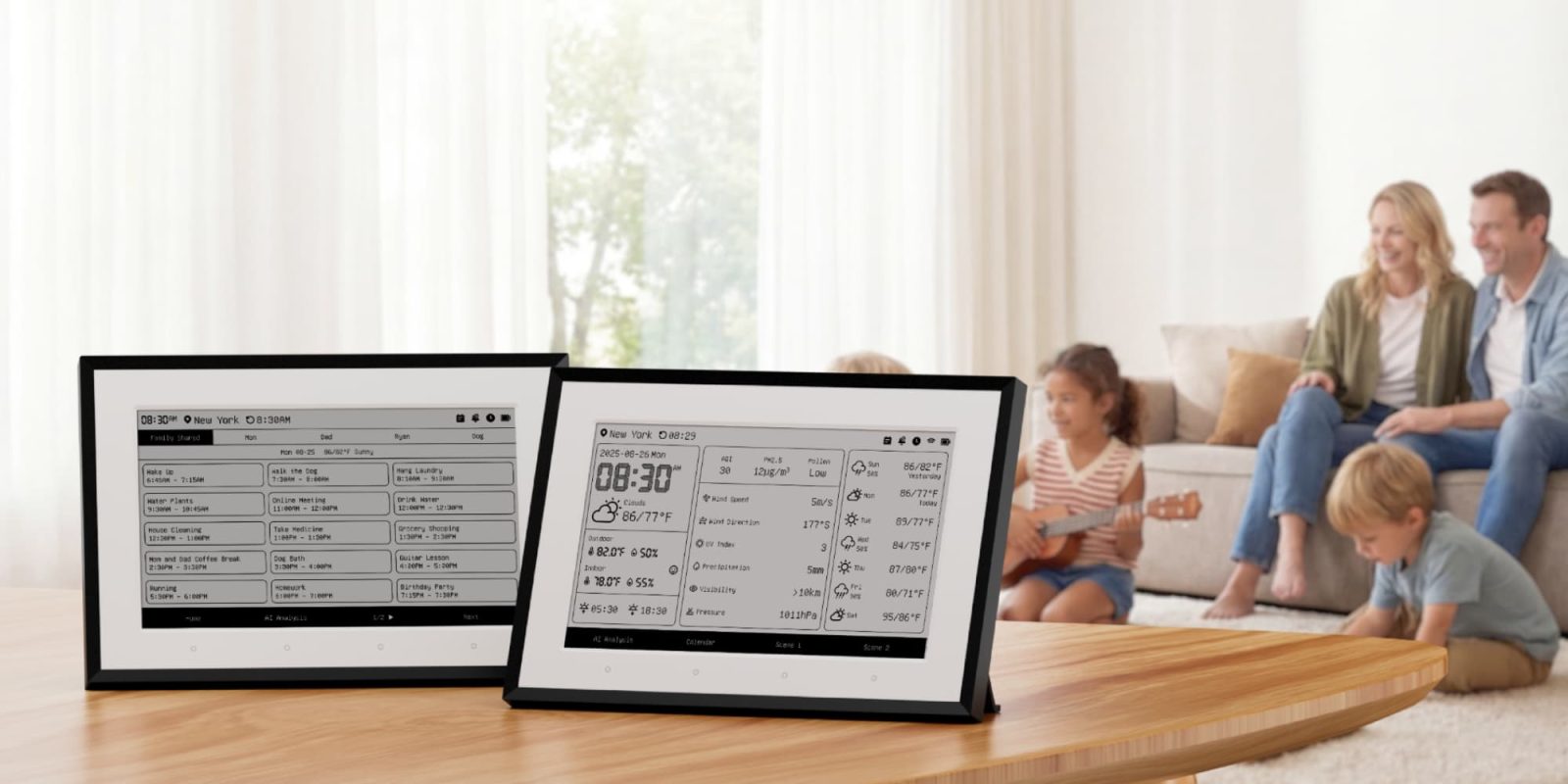
- Display Technology: The device utilizes a high-contrast E-ink panel, offering 180-degree viewing angles and excellent visibility in direct sunlight or dim ambient light. Unlike traditional LCD or OLED displays, the E-ink screen consumes power only when the image is refreshed, making it ideal for persistent, low-power data visualization.
- Integrated Sensing: It houses high-precision sensors for ambient temperature and humidity. These metrics are not just displayed on the screen; they are broadcast to the wider smart home network.
- Calendar Integration: Through the companion app, the device pulls data from Google, Microsoft, and Apple calendars, allowing families to visualize up to 30 events per person, per day.
- Power Management: A 5000mAh lithium-ion battery provides a robust power reserve. With a standard 3-hour Wi-Fi refresh rate, the device is rated for up to 12 months of operation on a single charge. For those requiring real-time data, the integrated USB-C port allows for continuous, tethered power.
- Connectivity: While the device functions as a standalone weather and calendar station, its true potential is unlocked via Matter-compatible hubs, allowing it to act as a sensor node for complex home automations.
Chronology: The Evolution of the SwitchBot Ecosystem
SwitchBot’s journey to the Weather Station has been a calculated evolution. To understand the significance of this product, one must look at the trajectory of the company’s recent hardware releases.

Phase 1: The "Bot" Era
Initially, SwitchBot gained market prominence by retrofitting "dumb" appliances. Their signature robotic finger—the SwitchBot Bot—was designed to physically press buttons on coffee machines or light switches. This established the company’s reputation for pragmatic, non-intrusive automation.
Phase 2: Sensor Expansion
Following the success of their mechanical bots, the company pivoted toward sensing. The launch of temperature and humidity sensors allowed users to trigger automations based on environmental changes. However, these sensors were traditionally small, screenless pucks hidden in corners.
Phase 3: The Convergence (2025–2026)
The development of the Weather Station represents the third phase: convergence. Recognizing that users wanted to see the data they were collecting without pulling out their phones, SwitchBot began integrating displays into their hardware. The Weather Station is the culmination of this effort, moving from a background sensor to a foreground, user-facing dashboard. By incorporating E-ink—a technology previously reserved for dedicated e-readers—SwitchBot has differentiated itself from the sea of cheap, high-energy-consuming smart displays.
Supporting Data: Why E-ink is the Superior Choice
The choice of E-ink over traditional display technology is a strategic one, supported by several technical advantages that enhance the user experience.
1. Energy Efficiency
In a typical smart home, a display that remains "on" all day consumes significant electricity. A 7-inch tablet screen might require 3–5 watts of power continuously. In contrast, the SwitchBot Weather Station uses micro-encapsulated electrophoretic technology. Once the pixels are set in place, they require zero power to maintain the image. This explains the 5000mAh battery’s ability to last for an entire year—a longevity metric that is virtually impossible for any display involving backlighting.
2. Cognitive Load and "Calm Tech"
Psychologists have long argued that the "blue light" emitted by common household electronics contributes to mental fatigue. By utilizing an E-ink display, the SwitchBot Weather Station mimics the reflective properties of paper. This makes the information readable in high-glare environments, such as a kitchen window ledge or a sun-drenched hallway, without the "iPad-on-a-stand" effect that often makes smart homes feel cluttered and commercialized.
3. Data Integration Metrics
The device supports a sophisticated array of display layouts. Users can choose from:
- Daily Overview: A compact list of the day’s top appointments.
- Countdown: Useful for tracking travel, holidays, or work deadlines.
- Custom Text: Allowing for personalized family reminders or chores.
- Climate Dashboard: A granular look at current temperature/humidity and a 5-day weather outlook.
Official Responses and Strategic Vision
In recent communications, SwitchBot representatives have emphasized that the Weather Station was designed to solve a specific pain point: the "fragmentation of family life."

"We observed that families were struggling to coordinate schedules and manage indoor environments simultaneously," a spokesperson noted. "By bringing the calendar and the climate sensor together, we aren’t just selling a weather station; we are selling a ‘Family Command Center’ that doesn’t demand your attention with notifications or bright, flickering LEDs."
Regarding the lack of a built-in Matter hub, the company explained that keeping the device as a dedicated client ensures better battery optimization and allows users to place the device anywhere in the home without being restricted by the signal-range requirements of a gateway hub. They maintain that the device’s ability to communicate with existing Matter hubs provides sufficient flexibility for the vast majority of smart home enthusiasts.
Implications: The Future of Ambient Automation
The SwitchBot Weather Station signals a major shift in the smart home industry. For years, the sector has been dominated by the "Big Three"—Apple, Google, and Amazon—who focus on high-power, high-bandwidth displays that double as entertainment devices. SwitchBot is effectively carving out a "low-bandwidth, high-utility" niche.
Impact on Home Automation
With the integration of Matter, the Weather Station serves as a high-fidelity sensor for your entire home. Consider this automation scenario: When the Weather Station detects that the indoor humidity has dropped below 30% during winter months, it triggers a Matter-enabled humidifier. When it detects a drop in temperature, it signals your smart thermostat to adjust. This happens silently and automatically, without the need for a user to touch a single button.

Design Aesthetics and Adoption
For interior designers and homeowners who value aesthetics, the SwitchBot Weather Station represents a compromise-free solution. Because it is battery-operated and requires no permanent wiring, it can be mounted on bookshelves, kitchen backsplashes, or entryways. The clean, monochrome aesthetic allows it to blend into home decor rather than standing out as a piece of "tech."
The "Hubless" Debate
Critically, the industry has debated whether such devices should act as standalone hubs. While some power users are disappointed that the Weather Station cannot bridge non-Matter devices, the move to rely on external hubs is likely a strategic decision to ensure the device remains lightweight and portable. It prevents the device from becoming a "single point of failure" in a complex smart home network.
Conclusion
The SwitchBot Weather Station is a rare device that manages to do a few things exceptionally well rather than attempting to do everything poorly. It is a testament to the fact that smart technology does not always need to be complex or high-energy. By embracing E-ink, prioritizing longevity, and leaning into the interoperability of Matter, SwitchBot has created a blueprint for the next generation of smart home peripherals.
As we look toward the future, we expect to see more companies following this "ambient" design philosophy. Whether it is a kitchen display, a smart door sign, or an environmental monitor, the transition from intrusive screens to subtle, paper-like displays is a welcome change. For the user who wants to be informed without being distracted, the SwitchBot Weather Station is not just a luxury; it is an essential upgrade for the modern, connected home.


 Lina Hope
 Nana Muazin