Nana Muazin
In the world of high-performance computing, software optimization is often viewed as a marathon of complex refactoring and architectural overhauls. However, recent developments in the open-source community have proven that sometimes, a massive performance leap is hidden behind the most modest of changes. Following a recent revelation that a minor three-line adjustment in the Linux kernel yielded a 5% storage speed boost, the tech world is buzzing over an even more impressive feat: a single-line modification in the GNU Compiler Collection (GCC) that has unlocked a staggering 12% performance increase for modern Intel and AMD processors.
This discovery, attributed to Intel software engineer Lili Cui, highlights the delicate balance between hardware architecture and the compilers that translate human-readable code into machine-executable instructions.
The Anatomy of the Change: Adding Three to the Variable
The modification, while mathematically trivial, is architecturally profound. Lili Cui, working within the GCC framework, identified a specific constant used by the compiler to estimate the "cost" of a branch misprediction. By simply increasing this value by three, Cui forced the compiler to be more conservative regarding branch generation.
To understand why "adding 3" carries so much weight, one must understand how modern CPUs function. CPUs rely on "pipelines"—a series of stages where instructions are processed in parallel. Because a CPU cannot wait for every conditional logic gate (if/else statements) to resolve before starting the next task, it employs a technique called "speculative execution."
Think of speculative execution as an intelligent guess. If a processor expects a specific outcome from a code path, it begins executing that path before the condition is officially met. If the guess is correct, the CPU saves precious clock cycles. If the guess is wrong—a "branch misprediction"—the CPU must flush its pipeline, discard the incorrectly processed work, and restart from the branch point. This is computationally expensive, resulting in significant latency.
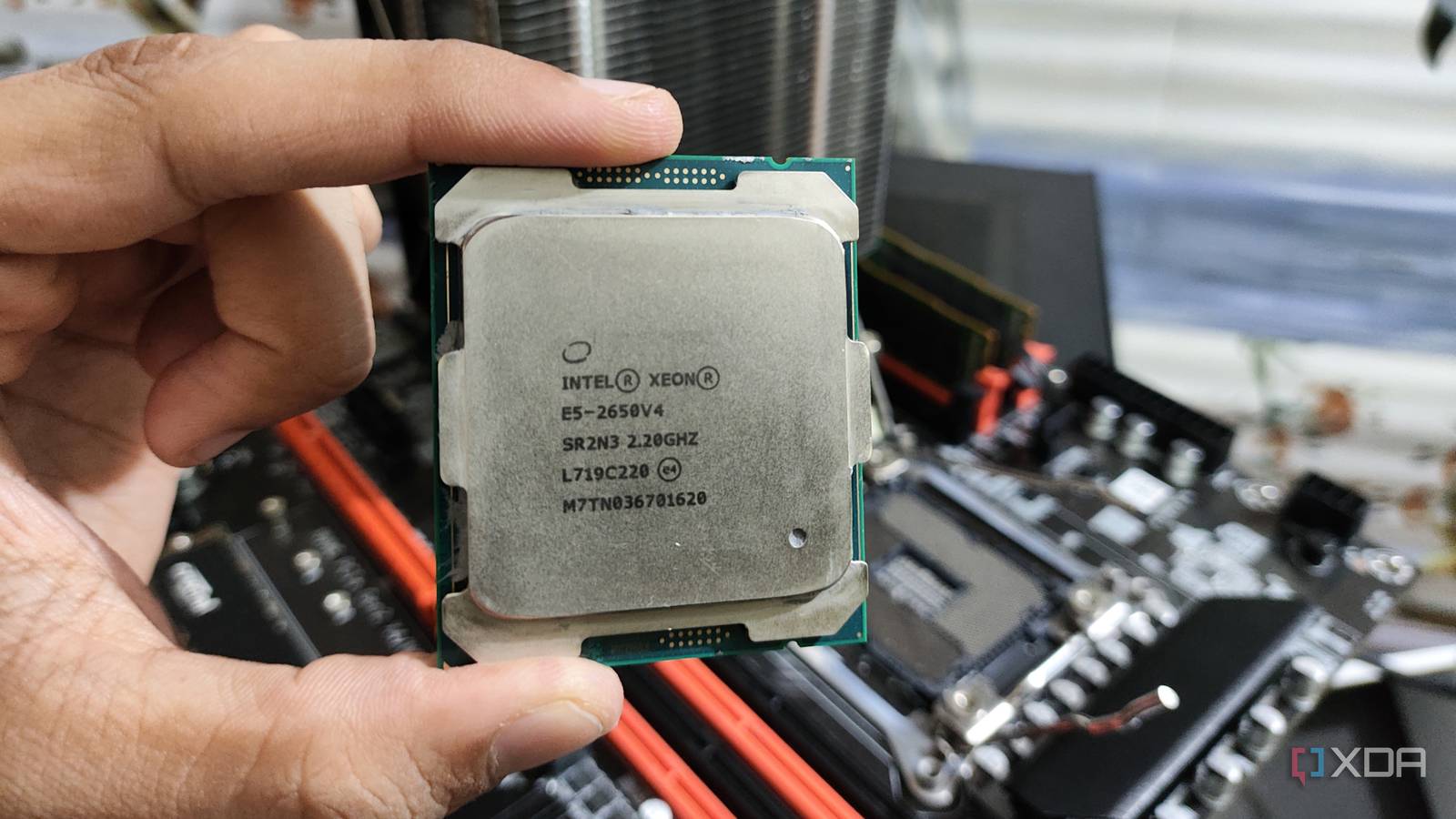
Cui’s change adjusted the internal math that GCC uses to decide whether to risk a branch or use a "branchless" sequence (a set of instructions that executes linearly, avoiding the need for prediction entirely). By increasing the penalty cost by three, GCC now prefers branchless code more frequently, thereby avoiding the catastrophic performance hits associated with mispredictions on modern processors with deep pipelines.
Chronology of the Discovery
The discovery did not happen in a vacuum; it is part of a broader trend of "micro-optimizations" gaining traction in the Linux and compiler development spaces throughout 2026.
- Mid-2026: As software complexity has ballooned, compiler engineers have begun focusing on how modern, high-transistor-count CPUs handle instruction flow.
- The Phoronix Observation: Technology news outlet Phoronix first brought public attention to the commit after monitoring the GCC development repository.
- The Commit: Lili Cui submitted the patch to the GCC source tree, specifically targeting the logic that governs "if-conversion"—the process of converting conditional branches into branchless instruction sequences.
- The Benchmark: Initial testing using the SPEC CPU 2017 benchmark suite—specifically the 544.nab_r (Nucleic Acid Builder) test—showed that both current-generation AMD Ryzen and Intel Core architectures benefited significantly from the change.
- The Roadmap: The patch has been officially merged for GCC 17, which is slated for a general release in 2027.
Supporting Data: Why Branching Matters
The 12% performance gain recorded in the 544.nab_r benchmark is substantial, particularly given the maturity of the x86_64 architecture. In modern computing, the "cost" of a misprediction is not static; it scales with the complexity of the CPU.
Modern processors feature deeper pipelines than their predecessors, meaning there are more "in-flight" instructions at any given time. Consequently, the penalty for a misprediction has risen. In the past, a branch misprediction might have cost a handful of cycles. Today, on chips with massive instruction caches and deep pipelines, the cost can be debilitating to real-world throughput.
The SPEC CPU 2017 benchmark is a industry-standard suite used to evaluate the compute-intensive performance of hardware. The "NAB" workload is particularly sensitive to branching logic because it involves complex molecular modeling, which relies on heavy mathematical iteration and conditional logic. By reducing the frequency of mispredictions, the CPU spends less time "backtracking" and more time processing actual physics and chemistry data. This 12% gain is a testament to how efficiently the compiler can "steer" the CPU’s execution flow when given the correct cost parameters.

Official Perspectives and Technical Implications
The engineering community has reacted with a mix of surprise and validation. Compiler optimization has long been considered an "art," where engineers weigh the trade-offs between code size, execution speed, and power consumption.
Lili Cui’s rationale, as documented in the commit notes, states: "Modern CPUs have deeper pipelines, making branch mispredictions more expensive. Increasing this cost encourages if-conversion, avoiding pipeline stalls from mispredicted branches."
Industry analysts note that this change represents a shift in how compiler designers view "modern" hardware. For years, compilers were tuned for older architectures where branches were cheap. As hardware has moved toward massive out-of-order execution engines, the "old" math no longer applies. This update serves as an acknowledgment that the software layer—the compiler—must evolve at the same pace as the hardware it serves.
Broader Implications for the Future of Computing
The ramifications of this change extend far beyond a single benchmark.
1. The Death of "Generic" Optimization
This discovery proves that there is no such thing as a truly "generic" compiler optimization. What works for a CPU architecture from 2015 is fundamentally different from what works for 2026-era silicon. This suggests that future versions of GCC may incorporate more aggressive, architecture-specific heuristics that adapt to the underlying hardware’s pipeline depth.
2. Efficiency as a Sustainability Goal
As data centers face increasing pressure to reduce power consumption, every instruction saved is a step toward greater energy efficiency. A 12% performance boost on the same hardware means that tasks finish faster, allowing the processor to return to a lower-power idle state sooner. This is "free" performance—no new hardware is required, and no power draw is increased; it is simply better utilization of the existing silicon.
3. The Role of Open Source in Performance
The fact that this was spotted and implemented by a contributor at Intel, and then vetted by the community via platforms like Phoronix, showcases the strength of the open-source model. When the world’s best engineers share code, the collective benefit to the global computing infrastructure is immense.
4. What Lies Ahead for GCC 17
With the patch merged into the development branch for GCC 17, developers across the globe will eventually inherit this performance boost simply by upgrading their compiler. While users shouldn’t expect a 12% performance increase in every application (the boost is highly dependent on the type of code being executed), the cumulative effect across the software ecosystem—from web browsers to scientific simulators—will be significant.
Conclusion: The Power of Precision
The narrative of "adding 3" is more than just a quirky tech story; it is a profound reminder of the complexity hidden beneath the surface of our devices. We often focus on hardware specs—clock speeds, core counts, and lithography nodes—as the primary drivers of performance. Yet, as this case demonstrates, the software layer remains the final arbiter of how effectively that hardware is utilized.
As we look toward the release of GCC 17 and beyond, it is clear that the next frontier of performance isn’t just about building faster chips, but about building smarter compilers that truly understand the silicon they inhabit. Lili Cui’s contribution may be small in terms of lines of code, but its impact on the future of high-performance computing is monumental. It serves as a reminder that in the world of computer science, precision is not just a virtue—it is the ultimate performance multiplier.


 Jia Lissa
 Neng Nana