Lina Irawan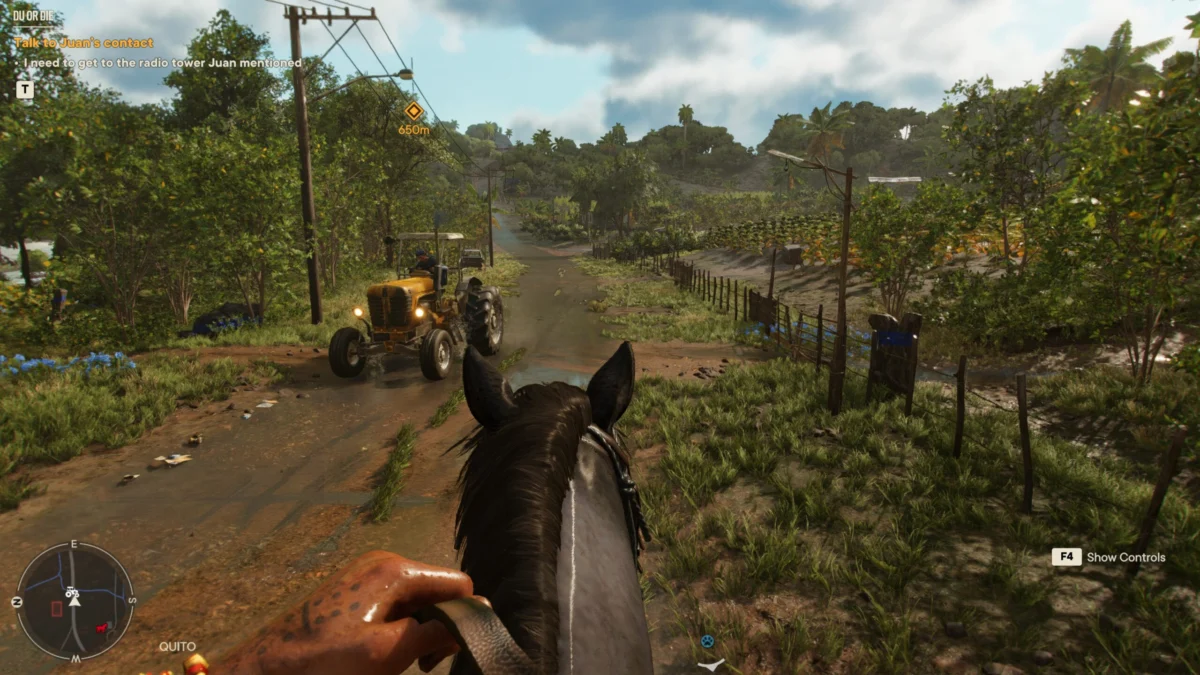
In the vast landscape of modern open-world gaming, few franchises occupy as recognizable a space as Ubisoft’s Far Cry. For over a decade, the series has defined the "Ubisoft formula": sprawling maps, checklists of objectives, and the promise of emergent chaos. With the release of Far Cry 6, the developer has attempted to iterate on this well-worn path. Yet, beneath the polished aesthetics and the high-profile casting, the game serves as a poignant reminder of the tension between franchise identity and the desperate need for genuine innovation.
The Core Identity: More of the Same, but Refined
If one were to place Far Cry 5 and Far Cry 6 side-by-side, the similarities would be striking. Both are absurdly large open-world shooters centered on the liberation of territory, the dismantling of military checkpoints, and the chaotic interaction with local wildlife.
In Far Cry 6, the gameplay remains fundamentally rooted in the series’ best trait: tight, responsive gunplay. However, these systems feel increasingly marginalized by a persistent, almost compulsive obsession with map saturation. The screen is a cacophony of icons, upgrade systems, and crafting resources, which often distract from the organic, player-driven moments that made the earlier entries in the series so iconic. Despite these flaws, there is an undeniable "magic" lurking beneath the UI clutter—a testament to the strength of the engine and the underlying mechanics that, when allowed to breathe, provide some of the most enjoyable sandbox experiences in the genre.
Chronology of a Revolution: The Narrative Framework
The story of Far Cry 6 introduces us to the island nation of Yara, a tropical paradise shackled by the iron grip of dictator Anton Castillo. Played by the inimitable Giancarlo Esposito, whose turn as Gus Fring in Breaking Bad cemented his reputation for playing terrifying, measured villains, Castillo is the central gravity of the narrative.
As the protagonist, Dani Rojas—a former military conscript turned guerrilla fighter—the player embarks on a 30-to-50-hour campaign to liberate the island. The narrative arc follows a classic revolutionary structure:
- The Call to Action: Dani escapes the clutches of the military and joins the fragmented guerrilla factions.
- The Consolidation: The player travels across three distinct provinces, each governed by one of Castillo’s brutal lieutenants.
- The Escalation: Through sabotage, propaganda, and tactical strikes, the player weakens the regime’s infrastructure.
- The Confrontation: The final push against Castillo himself.
While the premise is serviceable, the execution is hampered by a tonal identity crisis. The game struggles to balance the weight of a serious, grounded tale of revolution with the inherently "goofy" action-movie tropes that Far Cry has embraced over the years. The plot itself—centered on a bizarre subplot regarding a cancer-curing tobacco plant that requires toxic fertilizer—is perhaps the least compelling narrative hook in the franchise’s history.
Supporting Data: New Systems and Mechanical Shifts
Far Cry 6 introduces several new mechanics designed to emphasize the "guerrilla" aspect of the conflict, though their success is arguably mixed.
The Guerrilla Pathfinding
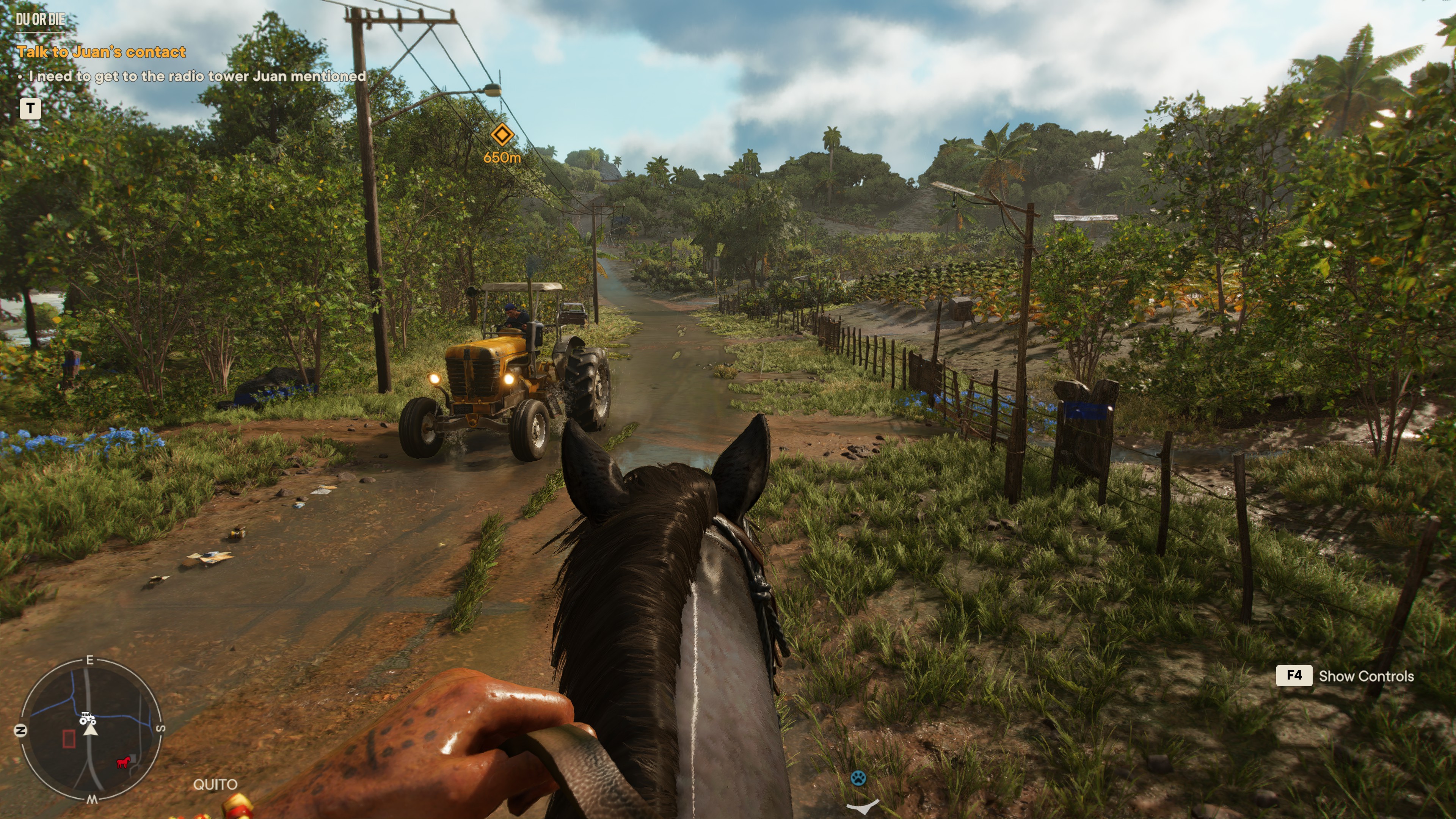
One of the most successful additions is the introduction of hidden guerrilla footpaths. These winding trails, marked by blue flowers, allow players to traverse the island without immediately alerting the military. This system encourages exploration and utilizes the terrain—requiring players to climb, grapple, and ride horses through the dense jungle. It is a refreshing departure from the reliance on roads and vehicles, successfully evoking the feeling of a resistance fighter hiding in plain sight.
The "Holster" Mechanic
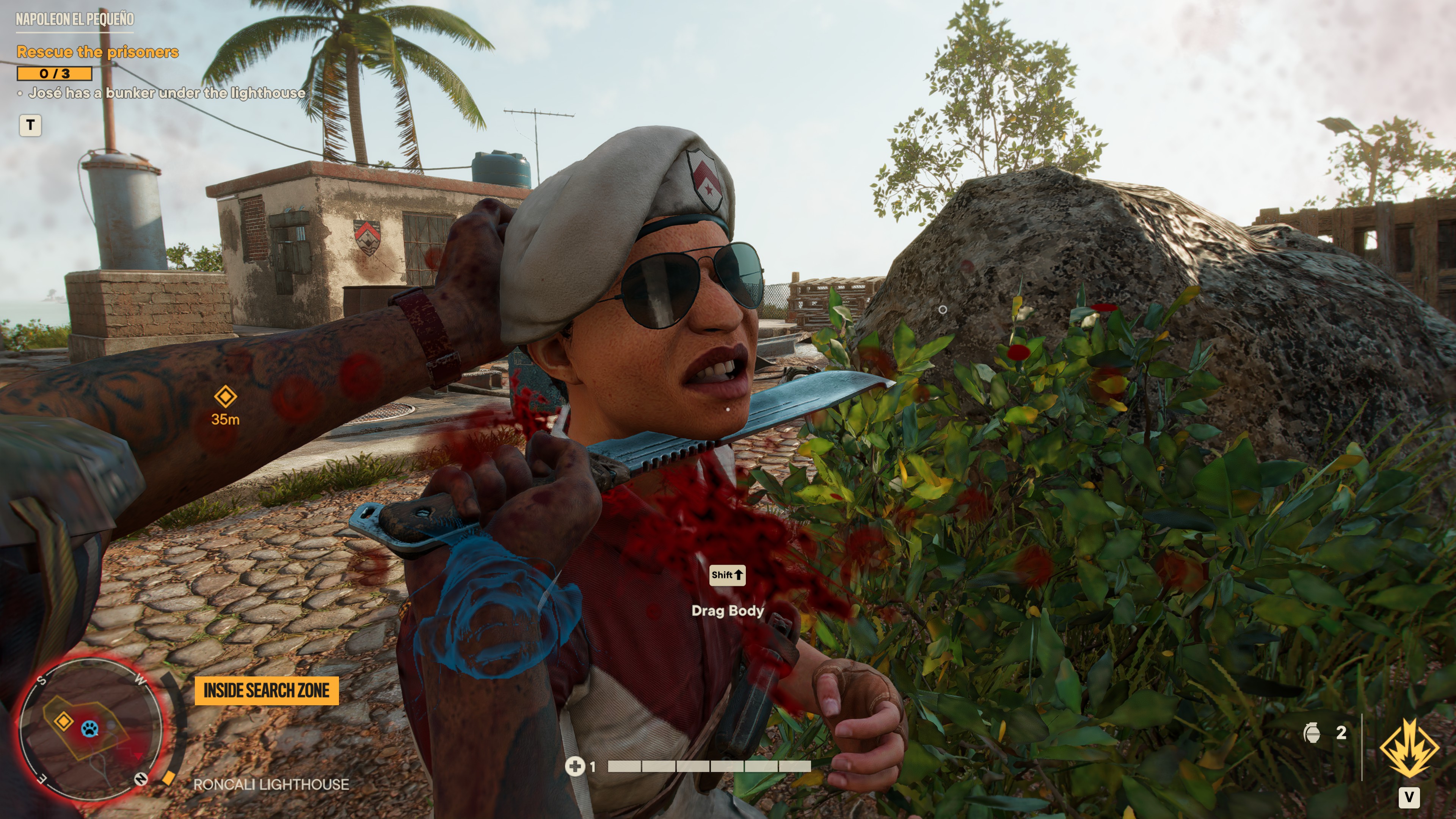
Conversely, the ability to walk freely through enemy-occupied towns and roads by holstering one’s weapon is a double-edged sword. While it provides a tactical advantage—allowing the player to get within point-blank range of targets—it inadvertently weakens the tension of being an outsider in hostile territory. It turns the island into a playground of convenience rather than a dangerous, occupied state.
Resolver and Supremo: The Controversy of Choice
The most divisive additions are the ‘Resolver’ and ‘Supremo’ systems.
- Resolver Weapons: Designed to look like "homemade" gear, these weapons include everything from CD-launchers to makeshift nail guns. While they fit the theme of a resource-starved resistance, they often drift into the realm of the absurd, clashing with the semi-realistic art style of the world.
- Supremo Backpacks: These are, in essence, "ultimate" abilities. Whether it is a volley of auto-targeting rockets or a ring of fire, they feel like mechanics imported from hero-shooters like Destiny. For many, these represent a "press to win" button that undermines the series’ core ethos: creative, improvisational problem-solving.
Official Responses and Industry Context
Ubisoft has positioned Far Cry 6 as a "modern take" on the series, emphasizing the scale of the world and the depth of the customization. The developer’s intent, as evidenced by the marketing, was to lean into the chaos of the sandbox. While they have succeeded in providing a massive, beautiful, and occasionally hilarious world, the critical consensus—and player feedback—has highlighted that the "Ubisoft formula" is showing its age.
Internal design philosophies at Ubisoft often favor accessibility and engagement metrics, which explains the sheer density of icons and tasks. However, the reliance on these systems suggests a lack of trust in the player’s ability to create their own fun, a sentiment that the game itself contradicts during its best, most emergent moments.
Implications: The Future of the Sandbox
The true value of Far Cry 6 does not lie in its narrative or its controversial "Supremo" backpacks; it lies in the sheer quality of its dynamic systems.
Consider a typical mission: an attempt to sabotage a series of agricultural aircraft. What begins as a stealthy infiltration often spirals into a multi-stage catastrophe involving aerial combat, ground-based explosions, and environmental hazards. In one instance, a simple attempt to recruit a guerrilla ally was interrupted by a local predator, leading to a chain reaction where a military patrol, a crocodile companion, and a civilian vehicle all converged in a chaotic, unscripted pile-up.
These moments are where the game truly shines. They demonstrate that the engine is capable of incredible, surprising depth. The implication for the future of the series is clear: Far Cry does not need more icons, more crafting menus, or more super-powered backpacks. It needs less friction. It needs to give players the tools to interact with a living world and then step out of the way.
Conclusion: A Step, Not a Leap
Ultimately, Far Cry 6 is a game of contradictions. It is a game that is occasionally annoying, often bloated, and narratively uneven. Yet, it remains a highly competent, undeniably fun open-world shooter. It is a better game than its predecessor, primarily because it refines the core loop while offering a larger, more diverse sandbox.
For the dedicated fan of the series, Far Cry 6 provides exactly what is expected: a massive world to conquer, a villain to topple, and a limitless supply of explosive chaos. For those seeking a revolutionary shift in the genre, however, the game serves as a sign that while the Far Cry series has reached a high level of technical polish, it may be time for a fundamental reimagining of what "guerrilla warfare" in a game world truly entails. If you are forced to choose between the recent entries, Far Cry 6 is the one worth playing—but it is a reminder that being "better" than the last installment is a low bar for a series with this much potential.

 Siti Muinah
 Raul Delapena Setiawan