Raul Delapena Setiawan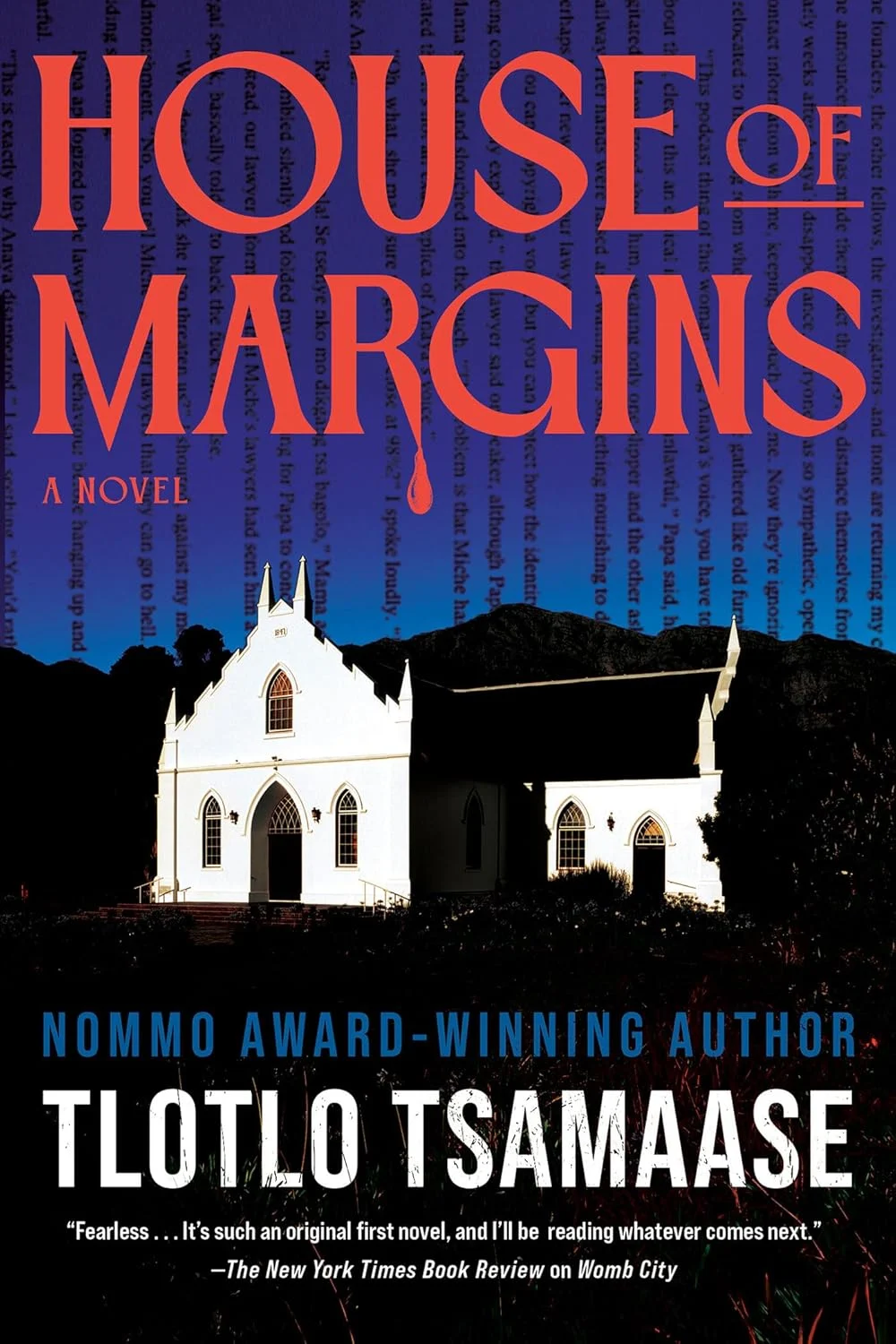
In her sophomore novel, House of Margins, Motswana author Tlotlo Tsamaase does more than merely tell a ghost story; she dissects the structural violence of the literary industry, the predatory nature of true-crime media, and the lingering specters of colonialism in Southern Africa. By weaving together the disparate threads of folkloric horror, cyberspace, and metanarrative commentary, Tsamaase has crafted a work that challenges the boundaries of contemporary fiction.
For readers, House of Margins is a gripping, multi-layered mystery. However, for writers, it serves as a profound indictment of the publishing world—a landscape where "authentic voices" are often requested but rarely permitted to speak without the filter of commercial palatability.
The Disappearance of Anaya Sebeya: A Chronology of a Mystery
The central narrative of House of Margins revolves around the sudden disappearance of Anaya Sebeya, an emerging Motswana fiction writer whose career hinges on the success of a prestigious writing residency in Cape Town, South Africa. The pressure is immense: Anaya views the fellowship as the final justification for her pursuit of a literary career against a backdrop of industry indifference and economic instability.
The narrative architecture of the book is intentionally fragmented, designed to reflect the chaos of a digital-age disappearance:
- The Past: Through Anaya’s own perspective, we witness her arrival at "Huis," the writing residency. We experience her mounting creative frustrations, the microaggressions of her peers, and her growing awareness that the house itself is not merely a setting, but a malevolent, sentient entity.
- The Present: The story shifts to the perspective of Ranewa, Anaya’s sister, who is desperate to locate her sibling. Ranewa’s investigation is guided by an uncanny, haunted mobile device that provides fragments of clues, mirroring the way information is often disseminated in the age of algorithmic surveillance.
- The Meta-Layer: Perhaps the most unsettling element is that Anaya’s story is being retold in real-time as a true-crime podcast. The host, whose intentions are palpably suspect, creates an additional degree of separation between the reader and the "truth" of Anaya’s experiences, forcing us to question the veracity of every piece of information provided.
Multimodal Storytelling: The Aesthetics of the Digital Age
Tsamaase experiments boldly with form, utilizing interludes that break the traditional flow of the novel. These segments—comprising text messages, snippets of social media threads, news clippings, and podcast transcripts—immerse the reader in the "Internet buzz" surrounding the case.
This structure serves a dual purpose. It provides an incredibly visceral, "breaking news" atmosphere that forces the reader into the role of a digital detective. Simultaneously, it exposes the toxicity of public discourse. The comment sections populated by faceless, biased observers, the sensationalist journalism, and the commodification of Anaya’s trauma reveal the grim reality of how human suffering is transformed into entertainment. By embodying the very medium she critiques, Tsamaase forces the audience to confront their own complicity in the consumption of "true crime."
The House as a Character: Colonialism and Historical Trauma
At the heart of the novel lies "Huis," the Cape Town residency that serves as the crucible for the story’s horror. Tsamaase writes the house not as a haunted building in the traditional gothic sense, but as a repository of historical trauma. The evil radiating from Huis is explicitly linked to the legacy of white colonialism and the systemic anti-Black violence that has scarred South Africa and Botswana.
While the prose does not shy away from the graphic realities of these historical atrocities, the novel avoids total nihilism. Instead, it positions the act of storytelling as a form of resistance, suggesting that even in the face of profound systemic hardship, there remains a path toward faith, love, and renewal.
Metacommentary: The Publishing Industry under the Microscope
One of the most compelling aspects of House of Margins is its unflinching look at the literary world. Anaya’s experiences at the residency serve as a case study for the marginalization of Black writers.
The Myth of the "Authentic Voice"
Anaya is frequently told by her mentors that her writing is "brilliant," yet she is simultaneously pressured to sanitize her work. When she incorporates her native language or describes the reality of anti-Black violence, she is met with pushback. The industry, as portrayed by Tsamaase, is obsessed with the idea of diversity but deeply uncomfortable with the reality of it. The refrain—"This is great, but…"—becomes a recurring motif, highlighting the industry’s desire for stories that are palatable to white and Western audiences rather than those that are truly authentic.
Interpersonal Conflict and Identity
The conflict is not only systemic but personal. Anaya must contend with Michele, a white South African fellow who weaponizes her status as a "minority" to deflect from the privilege she holds within the publishing hierarchy. This dynamic underscores a biting critique of the industry’s tendency to center the feelings of those in power, even within spaces ostensibly designed to amplify marginalized voices.
A Note on Representation: Navigating Complexity
If the novel has a point of friction, it lies in the characterization of Ogone, a fellow writer who befriends Anaya. The narrative arc surrounding Ogone, specifically her transition from a lesbian identity to a heteronormative marriage framed through religious conversion, presents a challenging juxtaposition.
Given that Anaya identifies as bisexual early in the text, the lack of a critical narrative response to Ogone’s conversion—and the broader implications of homophobia within the setting—can feel jarring. While the density of the novel’s focus on racism and institutional violence is understandable, the absence of a deeper interrogation of anti-queerness leaves a thematic gap. A more robust exploration of this tension would have elevated the narrative, ensuring that the intersectional nature of the characters’ identities was fully honored.
Implications for the Future of Horror
House of Margins is a triumph of formal innovation. By blurring the lines between genres—shifting between horror, speculative fiction, and sociological critique—Tlotlo Tsamaase has created a work that feels urgent and necessary.
The novel serves as a powerful reminder that the most terrifying ghosts are often the ones we create through our own societal structures. By interrogating who owns the rights to a story, who benefits from the retelling of tragedy, and who gets to decide what is "commercial," Tsamaase has set a new benchmark for what modern horror can achieve. For any reader seeking a story that is as intellectually stimulating as it is spine-chilling, House of Margins is an essential addition to the contemporary literary canon. It is a haunting, genre-defying masterpiece that demands to be read, analyzed, and—most importantly—heard.

 Muslim
 Reynand Wu