Iffa Jayyana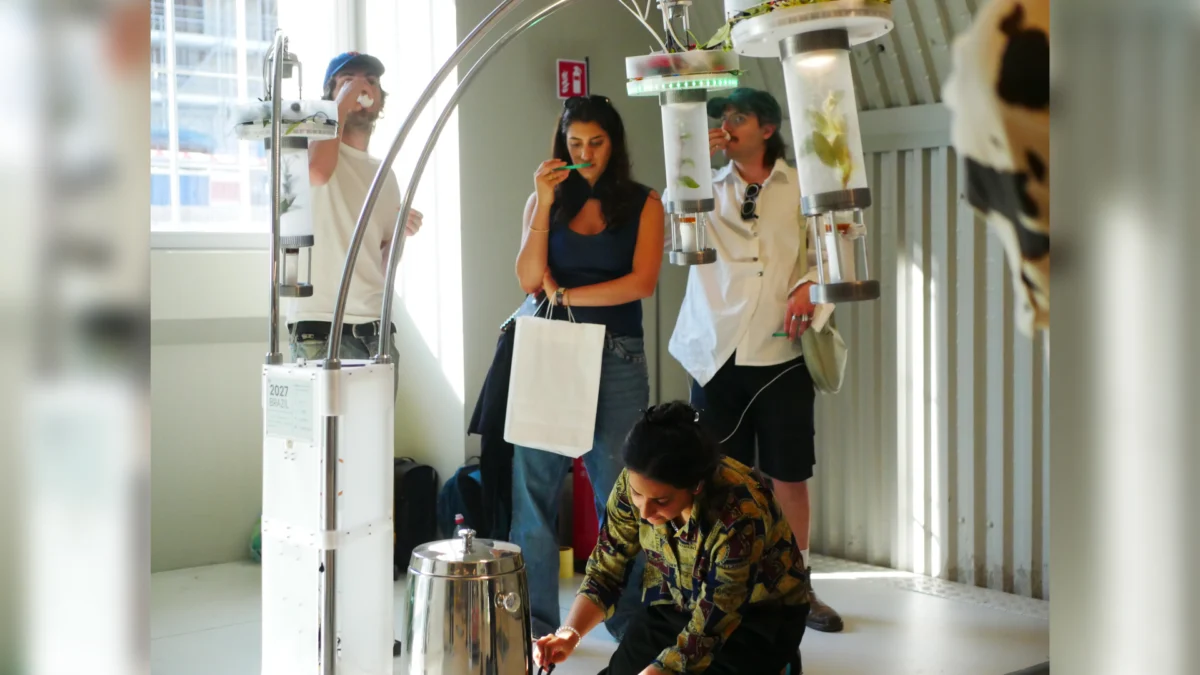
In a world grappling with the accelerating realities of climate change, the humble cup of coffee—a daily ritual for billions—faces an existential threat. As rising temperatures, unpredictable rainfall, and shifting ecological zones threaten the delicate Arabica bean, industrial designer Sarah Ali has launched a provocative, speculative project that asks a difficult question: If Earth can no longer sustain our coffee habits, what will we be drinking in the next century?
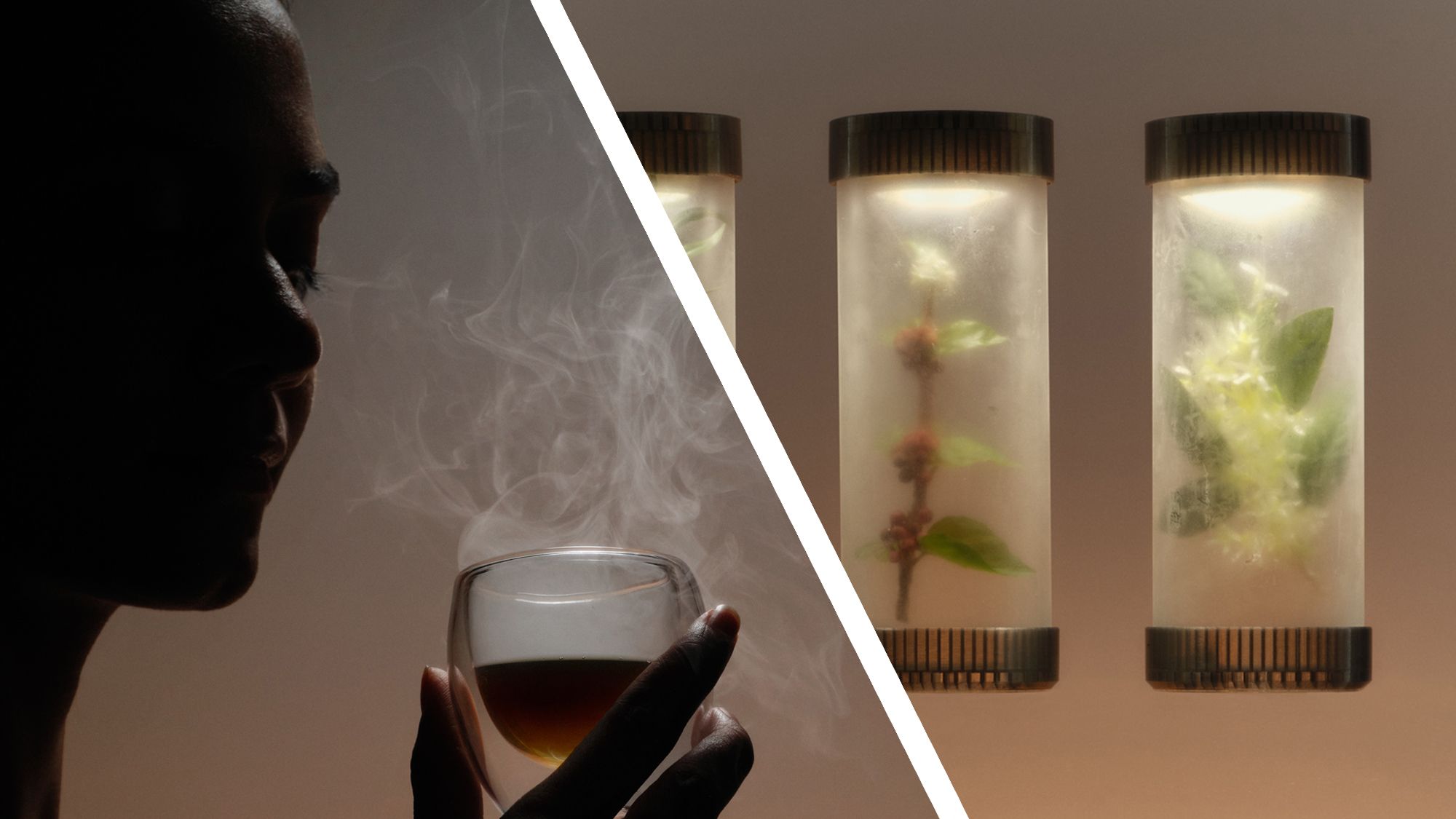
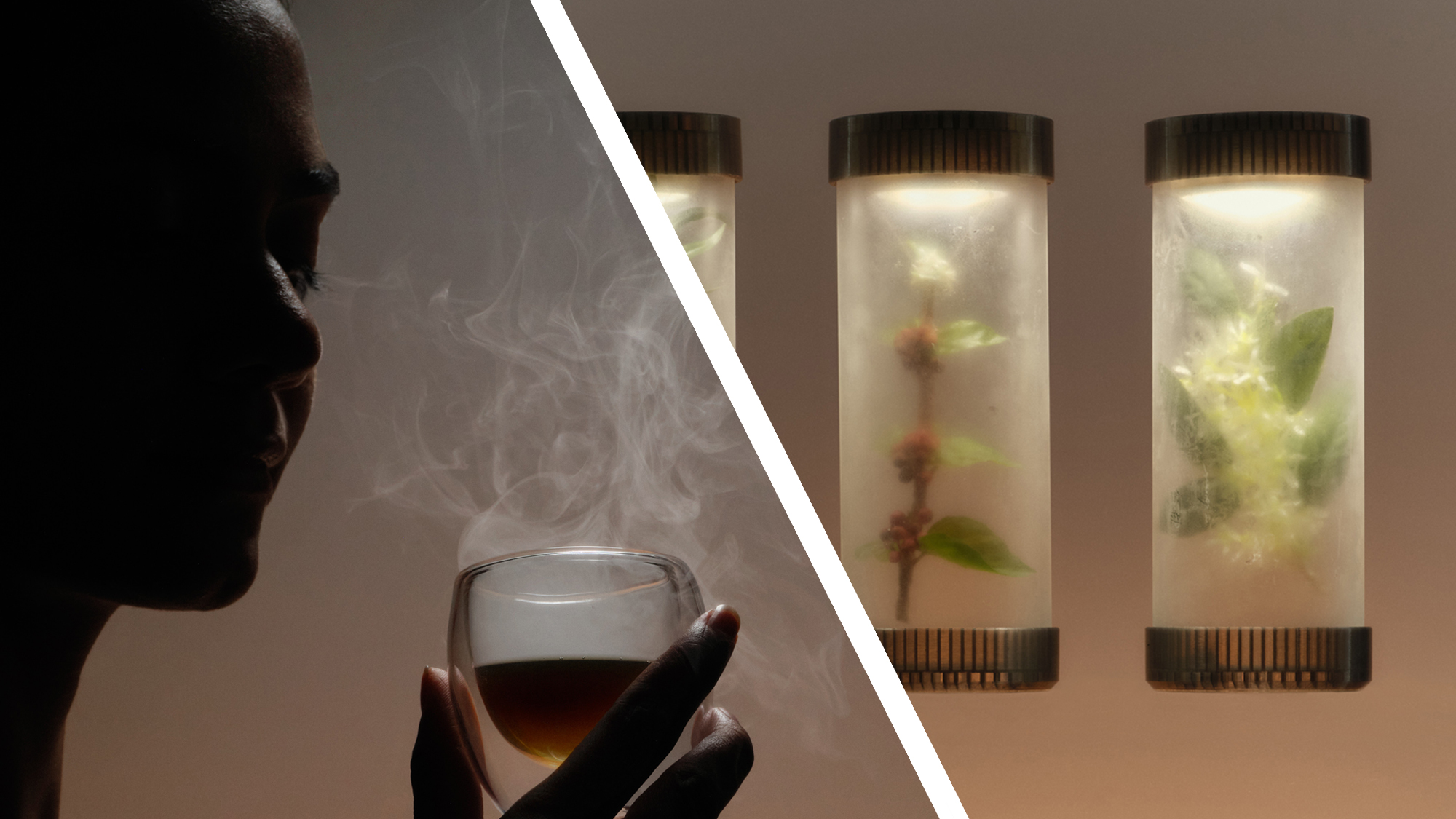
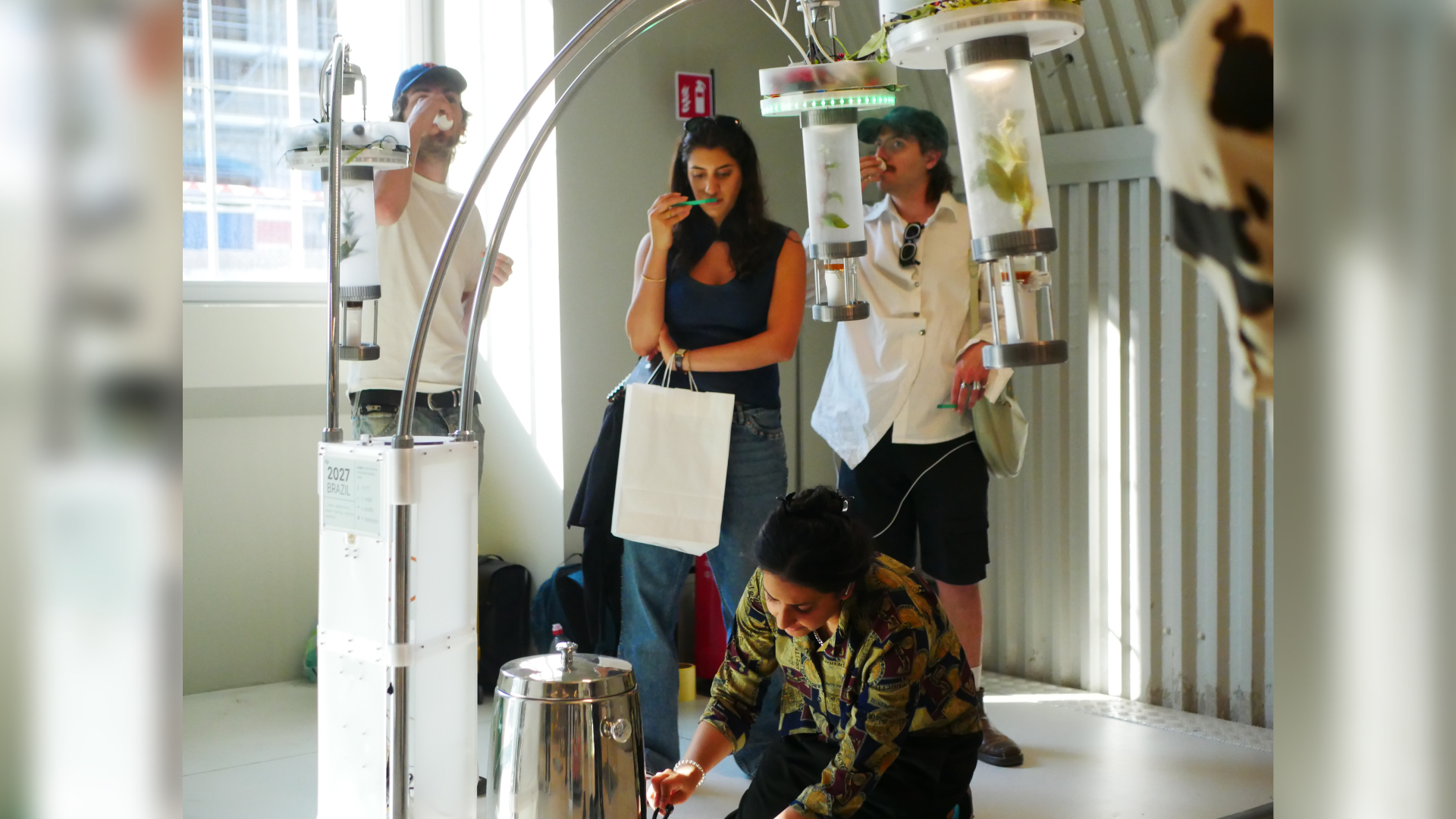
The result is Brew_Lab, a futuristic vending machine installation that serves up "edible scents"—a sensory experience designed to transport the drinker to three distinct points in the future. From the impending decline of traditional coffee to the rugged, gravity-defying brews of a Martian colony in 2126, the project serves as a wake-up call wrapped in a caffeine-infused art piece.
The Architecture of Tomorrow: Main Facts
Brew_Lab is the culmination of Sarah Ali’s MA research in "Material Futures" at Central Saint Martins, University of the Arts London. The installation debuted at Milan Design Week in April 2026 and was subsequently featured at the university’s prestigious degree show.
The core of the project is a sleek, conceptual vending machine that offers three distinct temporal experiences:
- Brazil 2027: A reflection on the immediate fragility of the global coffee supply chain.
- Sierra Leone 2080: A glimpse into the adaptation phase, utilizing the resilient Coffea stenophylla species.
- Mars 2126: A speculative look at extraterrestrial agriculture, simulating how coffee might be experienced under the conditions of a Martian settlement.
By integrating machine learning models with botanical data provided by NASA and the Royal Botanic Gardens, Kew, Ali has created an "edible scent" system. When added to a standard cup of coffee, these olfactory profiles alter the drinker’s perception, simulating the flavor nuances of beans grown under radically different climatic and environmental pressures.
A Chronology of Crisis and Adaptation
To understand the necessity of Brew_Lab, one must look at the timeline of the coffee industry’s vulnerability.
2027: The Fragile Present
The "Brazil 2027" profile serves as a grounding point, highlighting the current state of the industry. The global coffee market is heavily dependent on the Arabica bean, which is notoriously sensitive to temperature fluctuations and pests. According to research from the University of Florida, agricultural experts project that crop yields for these vulnerable varieties could plummet by as much as 80% by 2050. This phase of the project is intended to make the abstract data of climate modeling tangible.
2080: The Resilient Future
Moving forward to 2080, the project introduces the public to Coffea stenophylla. This species, once thought to be lost or neglected, has been revived by researchers like Dr. Aaron Davis of Kew Gardens. Stenophylla is significantly more resilient to heat and drought than the dominant Arabica. In Ali’s timeline, this bean becomes the backbone of the industry, representing humanity’s shift toward climate-smart agricultural solutions.
2126: The Martian Frontier
The final stop in the Brew_Lab journey is 2126. This is the most speculative segment, envisioning a future where Earth’s resources are so constrained that off-world colonies become a necessity. Working with data from NASA, specifically research conducted by Dr. Gioia Massa, Ali explored how the lack of Earth-standard gravity and the controlled environment of a space habitat would influence the development and consumption of coffee. The "Mars 2126" blend utilizes the rare, hardy racemosa bean, chosen for its potential to thrive in extreme, low-input conditions.
Supporting Data: The Science of Sensory Perception
The efficacy of Brew_Lab relies on the intersection of sensory science and botanical data. Ali did not simply invent flavors; she collaborated with world-leading experts to ensure the scents were grounded in biological reality.
Dr. Aaron Davis, who has studied 127 different species of coffee, provided the foundational insight that only 7 to 12 of these species possess the genetic hardiness required to survive the projected climate shifts of the next century. Ali utilized this data to inform her choice of beans.
Furthermore, the "Mars" component involved complex considerations regarding human physiology. "NASA’s research on agriculture allowed me to factor in the effect of gravity on our perception of taste," Ali explained. In microgravity or low-gravity environments, bodily fluids shift toward the head, which can cause congestion and significantly dampen the sense of smell and taste. The "Mars 2126" scent is therefore engineered to be more potent and aromatic, compensating for the physical limitations that space travelers would face while attempting to enjoy their morning brew.
Official Responses and Expert Collaboration
The project has garnered attention for its unique blend of industrial design and climate science. By bridging the gap between speculative design and real-world agricultural research, Ali has successfully engaged audiences who might otherwise be disengaged from climate discourse.
"This is very much a climate futures project," Ali stated in an interview with TechRadar. "The way I got to Mars was through the fact that if we keep on doing what we do now, our future in 100 years’ time might be that Earth won’t be able to facilitate all the things we need it to."
The involvement of NASA and the Royal Botanic Society underscores the project’s legitimacy. While the vending machine itself is a piece of speculative design, the challenges it addresses—agricultural collapse, the loss of biodiversity, and the search for food security in space—are at the very top of the global scientific agenda.
Implications for the Global Coffee Industry
Brew_Lab carries profound implications for how we view consumer products. We are accustomed to coffee as a commodity that is always available, regardless of the season or the climate. Ali’s project effectively breaks this illusion.
The Shift in Biodiversity
The heavy reliance on Arabica is a "single point of failure" for the global coffee market. By highlighting the potential of species like stenophylla and racemosa, Brew_Lab advocates for a shift toward crop diversification. If the coffee industry is to survive the next century, it must move away from its dependence on a single, fragile species and embrace the genetic diversity provided by the wild relatives of coffee.
Speculative Design as a Tool for Action
Ali’s project demonstrates the power of "speculative design"—using art to make future scenarios feel present. By forcing consumers to taste the future, the project moves the conversation away from dry statistics and into the realm of personal experience. It challenges the viewer to consider: If I want to continue enjoying coffee in 2126, what actions must I support today?
The Ethics of Space Colonization
The inclusion of a Martian coffee experience also raises ethical questions about our future off-world. If we move to Mars, do we bring our luxuries with us? And if so, how do we grow them ethically without destroying the fragile, resource-poor environments we are entering? By focusing on the "extreme scenario" of Mars, Ali argues that we are forced to think more deeply about how we treat our own planet today.
Conclusion: A Cup Half-Full
While the "Martian" setting on our home coffee makers is likely decades, if not centuries, away, the urgency behind Brew_Lab is immediate. Sarah Ali has successfully turned the prospect of a climate-ravaged future into a tangible, sensory experience that informs rather than frightens.
As the project continues to be shared at exhibitions and academic forums, its primary takeaway remains clear: the future of our favorite morning ritual is not a guarantee—it is a choice. Through the revival of resilient beans, the investment in agricultural science, and a fundamental shift in how we value biodiversity, we may be able to ensure that, even a hundred years from now, a good cup of coffee is still within reach.
Whether that coffee is grown in the high altitudes of a future Ethiopia or in a hydroponic bay on the Red Planet, the Brew_Lab project serves as a reminder that the seeds of our future are being sown today.

 Asro
Asro
 Ali Ikhwan