Suro Senen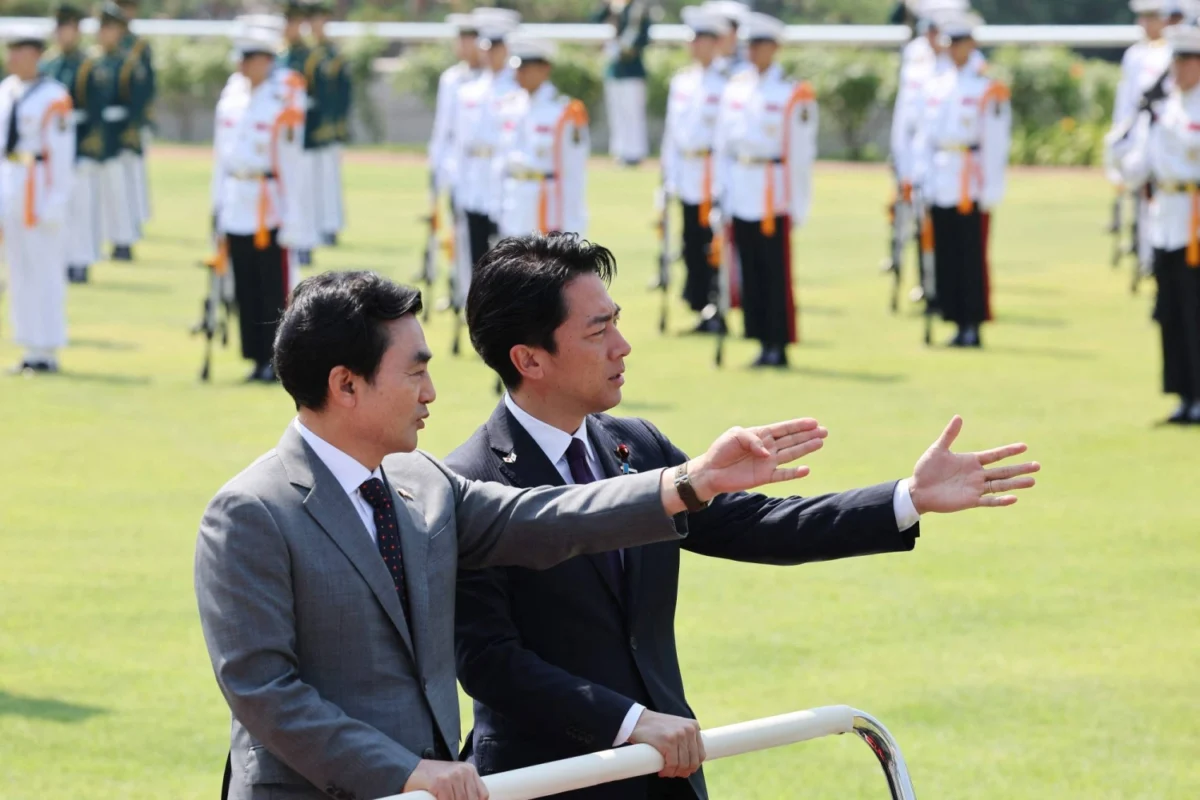
By Editorial Staff
In a significant milestone for regional stability in Northeast Asia, Japanese Defense Minister Shinjiro Koizumi concluded a high-stakes two-day visit to Seoul this past weekend. The summit, which marked the first time the defense chiefs of Japan and South Korea have held formal bilateral talks in 11 years, signals a profound thaw in what has historically been a volatile security relationship.
As the geopolitical landscape in the Pacific grows increasingly complex—defined by rapid technological advancements and shifting power dynamics—the meeting between Koizumi and his South Korean counterpart, Defense Minister Ahn Gyu-back, represents more than just a diplomatic formality; it is a strategic alignment aimed at securing the future of both nations.
The Core Developments: A Commitment to Future-Proofing Security
The centerpiece of the visit was a joint statement released by the two ministries following Sunday’s plenary session at the Defense Ministry in Seoul. The communiqué underscored a departure from the historical grievances that have frequently paralyzed bilateral security cooperation. Instead, the focus was firmly placed on "future-oriented" collaboration.
The most notable outcome of the summit was the formal agreement to integrate artificial intelligence (AI) and other emerging technologies into the two nations’ defense frameworks. Both Koizumi and Ahn recognized that the modern battlefield is no longer confined to traditional maritime and aerial domains; it is increasingly defined by cyber-warfare, autonomous systems, and data-driven decision-making. By aligning their research and development efforts, Tokyo and Seoul aim to maintain a technological edge that is vital for regional deterrence.
Beyond the high-tech horizon, the ministers committed to "soft-power" defense diplomacy. This includes high-profile cultural and operational exchanges, such as joint displays between Japan’s Air Self-Defense Force’s renowned aerobatic team, Blue Impulse, and South Korea’s Black Eagles. While these displays may appear ceremonial, they are deliberate confidence-building measures designed to foster inter-service familiarity and public goodwill.
Chronology of a Relationship in Flux
To understand the weight of this weekend’s meeting, one must examine the decade of diplomatic friction that preceded it.
- 2015–2018 (The Era of Erosion): Security cooperation between the two nations began to decline as historical disputes—largely stemming from the Japanese colonial period—spilled over into the security sphere. The relationship reached a nadir during the administration of President Moon Jae-in, which saw the near-dissolution of the General Security of Military Information Agreement (GSOMIA).
- 2019 (The Crisis Point): The two nations engaged in a heated dispute regarding a radar-locking incident involving a Japanese patrol plane and a South Korean destroyer, which brought military-to-military communication to a near-total standstill.
- 2023 (The Turning Point): A breakthrough occurred following the inauguration of the current South Korean administration, which prioritized the normalization of ties with Tokyo. High-level summits between Prime Minister Fumio Kishida and President Yoon Suk-yeol laid the political groundwork for a security reset.
- June 2026 (The Seoul Summit): Minister Koizumi’s arrival in Seoul marks the formal re-engagement of the defense ministries, effectively "unfreezing" the high-level channels that had remained dormant for over a decade.
Supporting Data: Why Bilateral Cooperation Matters
The urgency for this meeting is driven by objective security metrics. Northeast Asia is currently the theater for some of the world’s most intense military modernization programs.
The Threat Landscape
Recent intelligence reports indicate that the regional proliferation of ballistic missile technology and the expansion of naval fleets have placed both Japan and South Korea under increasing pressure. According to defense analysts, the ability for the two nations to share real-time intelligence is critical for tracking regional missile launches. During the 11-year gap in direct defense chief talks, the lack of a cohesive bilateral framework often forced both nations to rely on third-party intermediaries—primarily the United States—to relay time-sensitive security data.
The Technological Gap
The move toward AI-driven defense, as mentioned in the joint statement, is not coincidental. Japan’s defense budget has seen consecutive years of historic increases, focusing on "stand-off" capabilities and digital infrastructure. South Korea, meanwhile, maintains one of the world’s most advanced automated defense industries. Analysts suggest that the synergy between Japanese precision engineering and South Korean software agility could create a formidable technological bloc that would be difficult for any single adversary in the region to counter.
Official Responses and Diplomatic Nuance
The atmosphere in Seoul was described by observers as "professional and forward-looking." During the welcoming ceremony, both ministers participated in the inspection of an honor guard, a visual display of mutual respect that was heavily emphasized in state media releases.

In his opening remarks, Minister Koizumi noted that "the security of Japan and the security of South Korea are inextricably linked." He emphasized that in an era of global uncertainty, "the luxury of ideological division is a cost neither nation can afford."
Minister Ahn echoed these sentiments, highlighting that the "shared values" of the two nations—democracy, market economies, and the rule of law—provide a "natural foundation" for a robust defense partnership. While neither minister shied away from the historical baggage of the past, both emphasized that their mandate is to manage the future.
Public and political reaction in both Tokyo and Seoul has been cautiously optimistic. While nationalist factions in both countries remain skeptical of any moves toward closer military ties, the business and defense communities have welcomed the move as a long-overdue step toward regional normalization.
Implications: A New Pillar of Indo-Pacific Security
The implications of this summit extend far beyond the Korean Peninsula.
1. Strengthening the Trilateral Framework
This bilateral rapprochement acts as a vital "missing link" in the trilateral security architecture involving the United States. For years, the U.S. "hub-and-spoke" alliance system in Asia was hampered by the friction between its two primary allies. A strong Japan-South Korea axis creates a more cohesive trilateral front, allowing for integrated missile defense systems and synchronized naval patrols.
2. Deterrence and Regional Stability
By demonstrating a unified front, Tokyo and Seoul are sending a clear message to regional actors that the days of leveraging Japan-South Korea discord to gain geopolitical advantage are coming to an end. This "cooperative deterrence" is expected to stabilize the maritime borders of the Sea of Japan and beyond.
3. The Future of Defense Procurement
The mention of joint search and rescue (SAR) exercises is particularly significant. SAR cooperation is often a precursor to broader humanitarian assistance and disaster relief (HADR) collaboration, which is a low-friction way for military forces to build trust. Should these exercises prove successful, it is likely that the two nations will move toward more complex naval integration, including shared maintenance protocols for common hardware.
4. Navigating Internal Politics
The success of this summit now rests on the political durability of the current administrations. In both Japan and South Korea, domestic politics can be volatile. The challenge for Koizumi and Ahn will be to institutionalize these agreements—turning temporary diplomatic momentum into permanent bureaucratic protocols that can survive potential changes in government.
Conclusion: A Path Forward
The meeting in Seoul between Shinjiro Koizumi and Ahn Gyu-back is a testament to the idea that pragmatic security interests can eventually transcend historical legacy. While the road ahead remains complex and littered with the ghosts of the 20th century, the commitment to technological cooperation, intelligence sharing, and operational alignment suggests that the two nations are finally moving toward a more mature, modern partnership.
As the region faces the challenges of the late 2020s, the "Seoul Consensus" on defense may well be remembered as the moment the two neighbors decided that their shared future was far more important than their divided past. The world will be watching closely as these commitments are translated into concrete actions in the coming months, marking a new chapter in the story of Northeast Asian security.


 Neng Nana
 Asro
Asro