

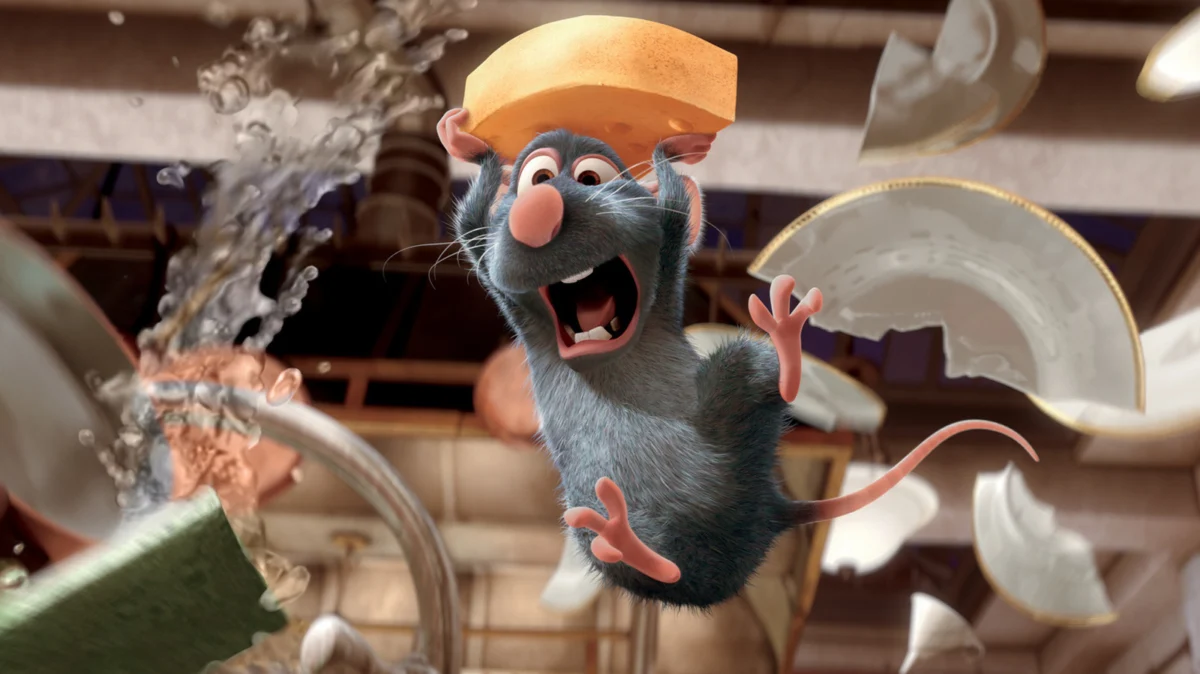
It has been nearly two decades since Pixar Animation Studios invited audiences into the bustling, high-stakes world of Gusteau’s, a Parisian fine-dining institution where the most talented chef happened to be a rat with a refined palate and a penchant for French cuisine. Since its 2007 debut, Ratatouille has remained a cornerstone of the Pixar canon—a masterpiece of animation, storytelling, and culinary philosophy. Yet, in an era where the “sequel machine” is the engine that drives Hollywood’s most profitable studios, Ratatouille remains a singular, self-contained entity.
As Pixar continues to lean heavily into established intellectual property—with Toy Story 5 currently looming on the horizon and the recent success of Inside Out 2 shattering box-office records—the absence of a Ratatouille sequel feels increasingly conspicuous. Fans have long clamored for a return to Remy’s world, and even star Patton Oswalt, the voice behind the iconic rodent, has expressed an openness to revisiting the character. However, the architect of the film, director Brad Bird, has remained steadfast in his refusal to serve up a second course.
The Chronology of a Culinary Classic
To understand why a sequel feels so unlikely, one must first look at the unique position Ratatouille holds in the Pixar timeline. Released in the summer of 2007, the film was the studio’s eighth feature. It was a risky proposition: a film about a rat—a creature traditionally associated with filth—working in a kitchen. Under the direction of Brad Bird, who had previously helmed the critical smash The Incredibles, the film was elevated from a standard "buddy comedy" into a poignant meditation on artistic integrity, elitism, and the idea that "anyone can cook."
In the years following its release, Pixar’s strategy underwent a seismic shift. While the studio was initially reluctant to produce sequels, the massive financial success of Toy Story 2 and 3 changed the corporate calculus. We have since seen a deluge of follow-ups: Cars 2 and 3, Finding Dory, Monsters University, and Incredibles 2. Ratatouille, however, occupied a different space. It was a standalone triumph that garnered an Academy Award for Best Animated Feature and solidified its reputation as a "critics’ darling."
While the film remains a massive success on streaming platforms and in the cultural zeitgeist, it never spawned the massive merchandise empire that Cars did, nor did it possess the open-ended narrative potential of Toy Story. It was a finite, perfect arc. By the time the final frame of Ratatouille rolled, the story of Remy, Linguini, and Colette had reached a natural, satisfying conclusion.
Official Responses: Brad Bird’s Firm Stance
The primary reason for the absence of Ratatouille 2 is not a lack of interest from the studio, but a profound lack of creative necessity from the director. In recent interviews, most notably with Collider, Brad Bird has been refreshingly transparent about the nature of his conversations with Pixar executives.
"No. I don’t," Bird said when asked about his interest in a sequel. "Pixar’s made little feints towards [a possible sequel] to see how I would react. They’ll, like, crack a joke, but the joke will be a little bit serious, like, ‘Would you?’ And I’m like, ‘No, we told that story.’"
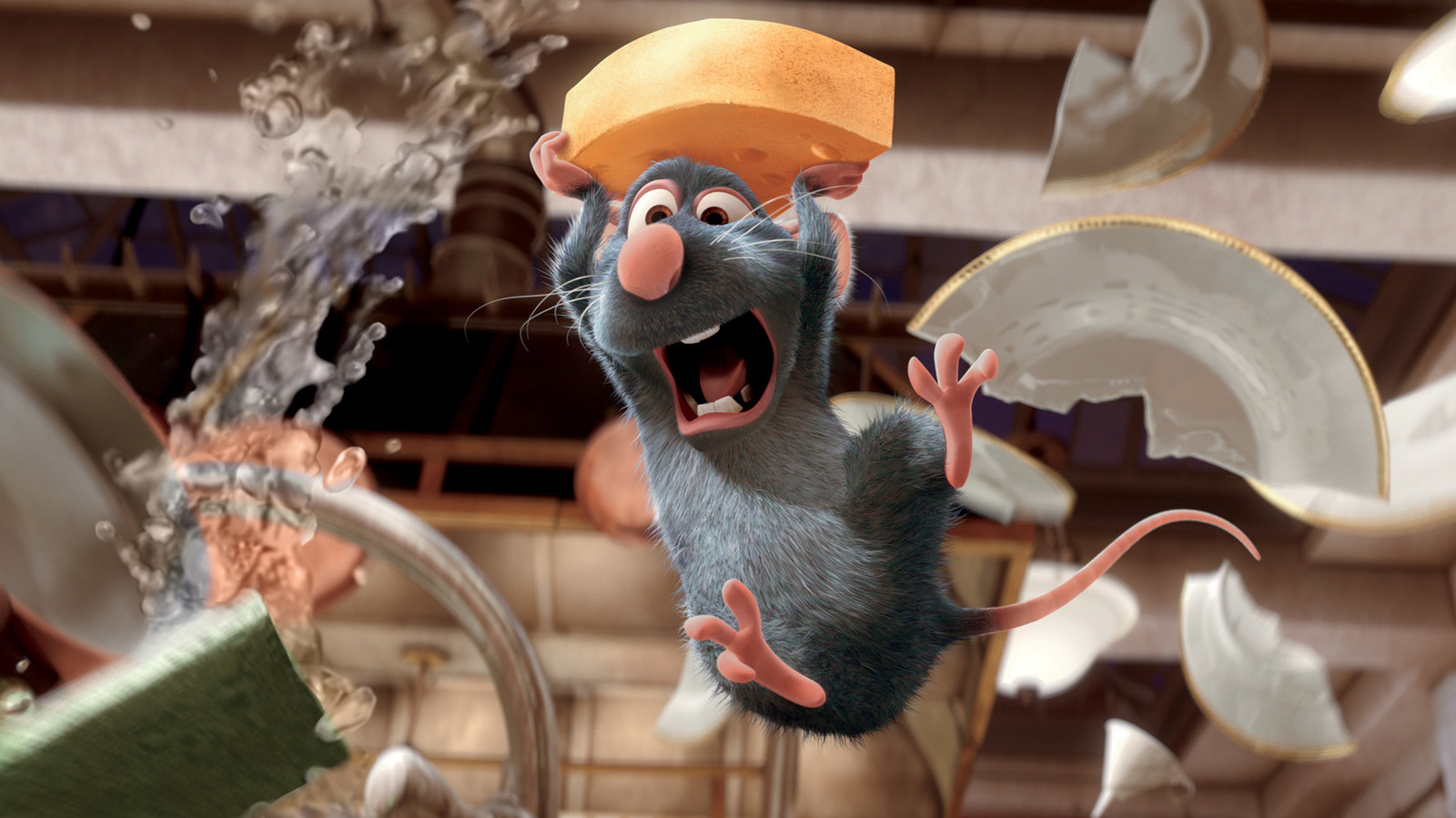
This response highlights a fundamental philosophical divide in modern filmmaking. For the studio, a sequel is a risk-mitigation tool; for a creator like Bird, a sequel is a creative challenge that must be justified by the story. Bird’s reluctance is not rooted in disdain for his characters, but in a respect for the narrative integrity of the original film. He maintains that once a story has been told to its completion, forcing an epilogue serves only to dilute the impact of the original.
The Burden of Success: The ‘Iron Giant’ Parallel
Bird’s resistance to sequels is not limited to Ratatouille. He has consistently applied the same logic to his other animated masterwork, The Iron Giant. Despite the film’s massive cult following and status as one of the most beloved animated features of the 20th century, Bird views it as a closed book.
"Any time you do something that ends up connecting with people, they automatically think, ‘How about another?’" Bird explained. He points out the irony that, while audiences now clamor for more, The Iron Giant was actually a box-office disappointment upon its initial 1999 release. The film had to "catch up" to its audience through home media and word-of-mouth.
"What would you do to follow that up?" Bird asked. "He’s lumbering around, still undiscovered? In other words, to me, that story is told."
This perspective offers a rare glimpse into the mind of a filmmaker who prioritizes the emotional resonance of a project over the infinite scalability of a franchise. By refusing to produce "more of the same," Bird preserves the sanctity of the original experience, ensuring that The Iron Giant and Ratatouille are remembered for their quality rather than their ubiquity.
Implications for the Pixar Model
The refusal to produce a Ratatouille 2 serves as a fascinating case study in the evolving relationship between creative vision and corporate strategy. Pixar is currently in a state of transition. Following the lukewarm reception of several original films, the studio has pivoted back toward sequels and established franchises. The announcement of The Incredibles 3—which Bird is currently writing—shows that he is not entirely opposed to sequels, provided there is a compelling narrative reason to return to a world.
However, the distinction is clear: The Incredibles was designed with a world-building potential that Ratatouille lacks. A family of superheroes dealing with the evolving dynamics of parenting and crime-fighting offers a structural framework that can support multiple chapters. A rat learning to cook is a singular, character-driven journey.
The implication here is that not every successful film needs to be a franchise. By resisting the urge to produce Ratatouille 2, Brad Bird and Pixar are upholding a standard of quality that suggests art should be valued for its own sake, rather than as a vessel for endless revenue generation.
The Future of Animation: Quality Over Quantity
As audiences become increasingly fatigued by the constant cycle of reboots, remakes, and sequels, there is a growing appreciation for films that respect the audience enough to end when the story is done.
The "Ratatouille case" proves that even in a studio environment dominated by quarterly earnings and shareholder expectations, there is still room for creative "no’s." It serves as a reminder that the most memorable stories are often those that leave us wanting more, rather than those that overstay their welcome.
For the fans who dream of a return to the kitchen of Gusteau’s, the news may be disappointing. But there is a silver lining. Because there is no sequel, the original Ratatouille remains unblemished. It remains exactly what it was in 2007: a near-perfect piece of cinema that captures the joy of creation, the value of friendship, and the enduring truth that talent can come from the most unlikely of places.
Sometimes, the best thing a director can do for a story is to step away from the stove, hang up the apron, and leave the masterpiece exactly as it is. Brad Bird has made his choice, and for those who cherish the legacy of Remy, it is a choice that demands respect. The kitchen may be quiet, but the legacy of the little rat who could is louder than ever.








