

BANGKOK – The discovery of a 17-year-old girl’s body stuffed inside a suitcase in the coastal resort city of Pattaya has sent shockwaves through Thailand, igniting a firestorm of grief and public demand for justice. The suspect, a 40-year-old Australian national identified as Simon Peter Carman, was apprehended at Bangkok’s Suvarnabhumi Airport as he attempted to flee the country. The case, which has drawn sharp scrutiny regarding the safety of minors and the conduct of foreign tourists, is now winding its way through the Thai judicial system.
The Grim Discovery: A Pattern of Evidence
The investigation, led by the Royal Thai Police, moved with unusual speed, fueled by a trail of damning digital evidence. According to authorities, the sequence of events began in a condominium unit in Pattaya, approximately 150 kilometers east of Bangkok.
Police investigators pieced together the final hours of the victim’s life using high-definition CCTV footage recovered from the building. The footage reportedly shows Carman entering the condominium accompanied by the teenage girl. Several hours later, the video captures the suspect exiting the building alone, struggling with the weight of a large suitcase.
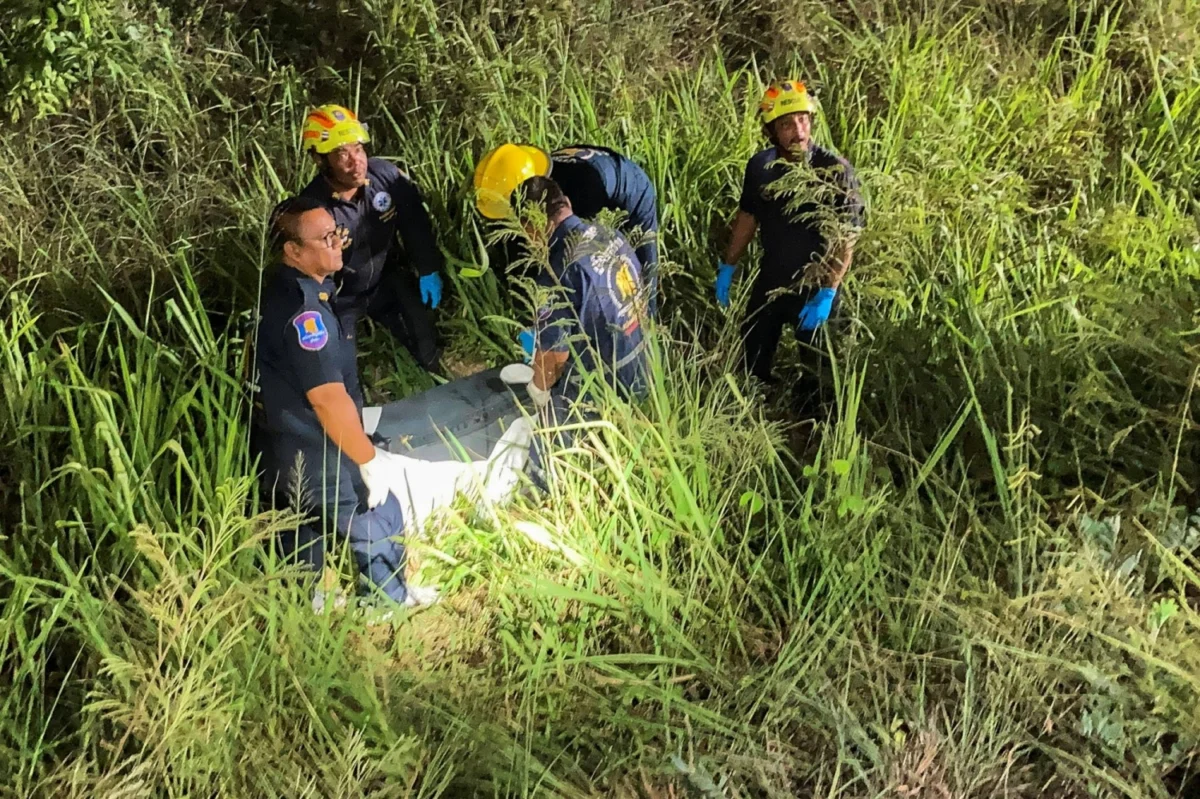
In an official statement released via their Facebook page, the police detailed how the suspect loaded the suitcase onto a motorcycle. He was seen driving to a remote, overgrown grassy area situated near a local railway line, where he abandoned the luggage containing the girl’s remains. The discovery of the body shortly thereafter triggered an immediate manhunt, culminating in the issuance of an arrest warrant for Carman.
The suspect was intercepted at Suvarnabhumi Airport in the early hours of Saturday morning. He was reportedly in the process of clearing security to board an international flight back to Australia when police officers apprehended him.
Chronology of a Tragedy
The timeline of the investigation highlights the calculated nature of the crime and the swift response of local law enforcement:
- The Initial Encounter: CCTV footage places the victim and Carman entering the Pattaya condominium.
- The Act: Police believe the murder occurred shortly after their arrival in the apartment.
- The Disposal: Hours later, the suspect is seen on camera transporting the suitcase by motorcycle to a secluded site near the railway tracks.
- The Discovery: Local authorities are notified of a suspicious suitcase; the discovery of the body leads to a rapid forensic identification of the victim.
- The Interception: Working against the clock, police identify Carman as the prime suspect. As he attempts to flee Thailand, he is arrested at Suvarnabhumi Airport by specialized officers.
- The Confession/Statement: While being processed at the police station, Carman issued a brief, controversial statement to the media and the victim’s family, claiming the events were "out of his control."
- Current Status: Carman has been transferred to the Pattaya Provincial Court to face formal charges, including murder, concealment of a corpse, and the trafficking of a minor for sexual purposes.
The Human Cost: A Family’s Anguish
For the family of the 17-year-old victim, the loss is absolute. The girl’s father, 46-year-old Thongchai Donhomla, remains shattered by the news. In a media interview, he described his daughter as a resilient and hardworking young woman who stepped into a maternal role for the family after the loss of her own mother.
"I am deeply saddened. My daughter had no mother, so whenever she wanted anything, she would find a way, herself, and she always helped me, too," Donhomla said, struggling to articulate his grief. "She was my support system."
The sentiment of the family has shifted from shock to a resolute demand for the death penalty. Her stepmother, Oradee Bussarakum, echoed the feelings of many in the Thai public, calling for the maximum sentence under the law.
"I told the police I want him executed," Bussarakum stated. "As a mother, I don’t know what else to say. I just want him to face the full consequences."
Official Responses and Legal Implications
The charges leveled against Carman are severe. Under the Thai Penal Code, the combination of murder, the concealment of a body, and the sexual exploitation of a minor carries the potential for the most stringent penalties available in the Thai justice system, including life imprisonment or the death penalty.
While the death penalty remains on the statute books in Thailand, it is rarely carried out. However, cases involving the heinous murder of a minor often garner significant public pressure, which can influence sentencing outcomes.
The "Out of Control" Defense
Carman’s statement at the police station—"I feel bad for what happened to your daughter. It was out of my control"—has been widely criticized as an attempt to evade personal responsibility. Legal analysts suggest this statement may be used by the prosecution to establish premeditation or a lack of remorse, both of which are critical factors during the sentencing phase of a trial.
Broader Implications: Tourism and Child Protection
This incident has reignited a long-standing debate in Thailand regarding the oversight of foreign nationals and the protection of vulnerable youth in tourist-heavy regions like Pattaya.
Heightened Security Measures
The ease with which a foreigner was able to allegedly commit such a crime and attempt to depart the country has led to calls for more stringent surveillance in residential complexes that cater to short-term foreign renters. Many are asking why security protocols at the condominium did not flag the removal of the suitcase at the time, or if current monitoring is sufficient to deter predatory behavior.
Child Protection and Human Trafficking
The charge of "taking a minor for sexual purposes" suggests that this was not merely a random act of violence but part of a larger pattern of exploitation. NGOs and child rights activists have long warned that the "nightlife" industry in coastal cities can inadvertently foster environments where minors are at extreme risk of victimization by foreign tourists.
This tragedy serves as a grim reminder that despite Thailand’s efforts to improve its international image and safety standards, the underlying issues of human trafficking and the exploitation of minors persist. The case is expected to be a test of the Thai legal system’s ability to handle high-profile cases involving foreign nationals, particularly when the victim is a minor.
Looking Ahead: The Trial Process
As of now, the Pattaya Provincial Court has not set a date for the initial hearing. The investigation is ongoing, with police forensic teams continuing to analyze evidence from the condominium and the site where the body was found.
The Australian Embassy has been notified of the arrest, which is standard procedure in such cases. While the Australian government typically provides consular assistance to its citizens, it has maintained a strict stance that its citizens must adhere to the laws of the host country.
For the people of Thailand, the outcome of this trial will be closely watched. It is more than just a criminal proceeding; it is a search for accountability. The community is waiting to see if the judicial system will honor the wishes of a mourning family and send a clear message that the exploitation and murder of the nation’s youth will be met with the full weight of the law, regardless of the perpetrator’s nationality.
As the case moves forward, the memory of the 17-year-old girl, who worked to support her father and dreamed of a future, remains at the center of a national conversation about justice, empathy, and the urgent need to protect the most vulnerable in a globalized society.











