Iffa Jayyana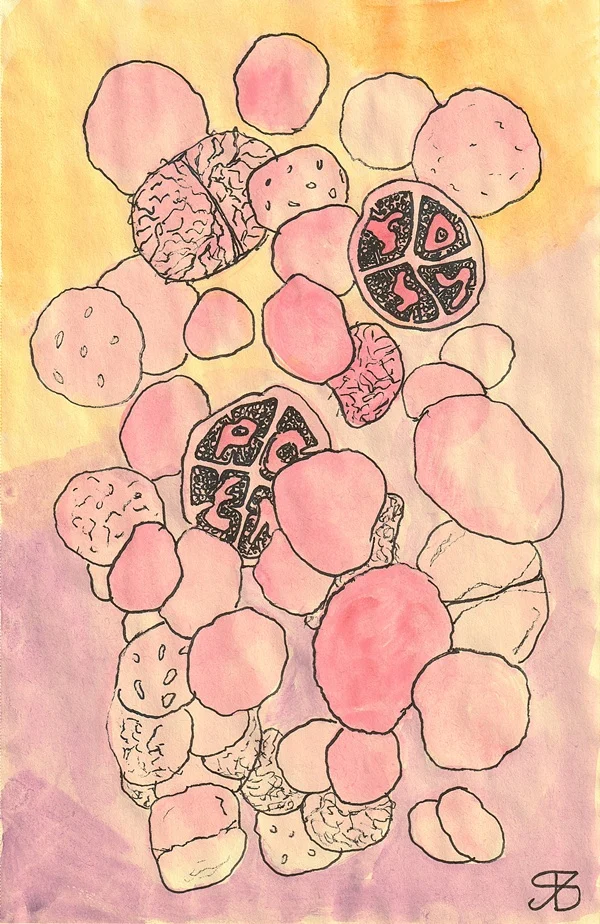
In a profound convergence of synthetic biology and literary art, Canadian poet Christian Bök and University of Texas chemical engineer Lydia Contreras have achieved a feat that blurs the boundary between the printed page and the living cell. By encoding a poem into the DNA of Deinococcus radiodurans—an extremophilic bacterium colloquially known as "Conan the Bacterium"—the duo has effectively created a biological library capable of surviving conditions that would reduce human civilizations to dust.
This project, titled "The Sound of Trying to Remember," represents more than a mere curiosity; it is a fundamental challenge to the concept of archival preservation. While stone tablets erode and digital hard drives suffer from bit rot and electromagnetic interference, this living manuscript replicates itself, carrying the "ghost in the machine" into the deep future.
The Genesis of the Living Poem: A Chronology of Collaboration
The endeavor began with a shared anxiety regarding the ephemerality of human culture. Christian Bök, a conceptual poet renowned for his work The Xenotext—which similarly explored the possibility of encoding poetry into the genome of a bacterium—sought to push the limits of linguistic durability.
- 2020–2024 (Conceptualization): Bök and Contreras began discussing the intersection of biochemical engineering and the poetic form. The primary challenge was selecting a host organism that could withstand not just time, but the cataclysmic environmental pressures that typically destroy biological integrity.
- 2025 (Development): The team successfully mapped the linguistic structure of a poem into the four-letter alphabet of DNA: Adenine (A), Cytosine (C), Thymine (T), and Guanine (G). The poem was treated as a sequence of data, translated into a molecular format that could be synthesized into a plasmid.
- 2026 (The Insertion): In a breakthrough procedure, the synthesized DNA—the poem—was introduced into Deinococcus radiodurans. The bacterium, in a display of biological adaptability, incorporated the foreign genetic material into its own plasmid ring, successfully transcribing the human elegy into its cellular reality.
Supporting Data: Why Deinococcus radiodurans?
The choice of Deinococcus radiodurans as the vessel for this art is a masterstroke of biological selection. Unlike most organisms, which are fragile and prone to rapid degradation, this bacterium is a titan of endurance.
The Extremophile Advantage
- Radiation Resistance: D. radiodurans can withstand doses of ionizing radiation up to 5,000 Gray (Gy). For context, a dose of 5–10 Gy is fatal to a human. The organism achieves this through a sophisticated DNA repair mechanism that stitches together shattered genetic fragments within hours.
- Desiccation and Vacuum: It thrives in environments that are bone-dry or completely devoid of air, surviving in high-vacuum conditions similar to those found in outer space.
- Chemical Stability: It is highly resilient against acids and extreme temperatures, allowing it to exist in a dormant state for vast spans of geological time.
By embedding the poem within this microbe, Bök and Contreras have shifted the burden of preservation from human maintenance to biological replication. As long as the bacterium has access to basic nutrients and the ability to divide, the poem is essentially immortal. Every time the cell splits, the "text" is copied with high fidelity, creating a self-replicating, distributed archive.
Implications for Future Civilization
The implications of this experiment are profound, touching upon philosophy, biology, and the future of human legacy.
1. The Death of the Library
For millennia, humanity has relied on external storage: papyrus, parchment, silicon, and cloud servers. Each requires specific environmental controls or stable energy grids. By moving the "data" into the genetic code, the information becomes part of the organism’s evolutionary trajectory. This is a "library" that does not require a librarian; it only requires life.
2. A Message for a Post-Human World
The project acknowledges a sobering reality: humanity may not endure forever. Should our civilization vanish, D. radiodurans—which can survive in permafrost or salt deposits for millennia—could serve as a biological time capsule. If a future sentient species, or a highly evolved biological system, develops the ability to sequence DNA, they will not find the remnants of our wars or our industries. Instead, they will discover the "soft, human, utterly vulnerable sound of trying to remember."

3. Bio-Ethics and Genetic Art
The project raises significant ethical questions. Is it ethical to "edit" life for the purpose of artistic expression? While the modification is harmless to the host, it marks the first time that pure, abstract human emotion has been encoded into the hereditary blueprint of a living entity, turning a creature of biology into a creature of literature.
Perspectives on the Project
The scientific community has lauded the project for its technical ingenuity, while the literary world has viewed it as a milestone in the "New Materialism" movement.
"We are moving from an era where we record history on surfaces to an era where we record history within the fundamental code of existence," notes Dr. Lydia Contreras. "The cell is not merely a vessel; it is a collaborator."
Christian Bök, whose long-standing fascination with the Xenotext has culminated in this work, emphasizes the emotional weight of the project. "A poem is a way of saying ‘I was here.’ By putting that poem into the most resilient organism on Earth, we are extending the reach of that sentiment into an almost incomprehensible future. It is an elegy for the present, written for an audience that may not even know what a ‘book’ is."
Conclusion: The Persistence of Memory
The "Rosy Poem" project, illustrated by Romie Stott, serves as a bridge between the infinitesimal and the infinite. It is a reminder that while the ink on our pages will inevitably fade and our monuments will crumble, the code of life is a persistent, enduring medium.
As Vinita Agrawal, an observer of the project and a poet herself, has noted in her own explorations of impermanence, the act of creation is an act of defiance against entropy. By entrusting our poetry to the microscopic armor of Deinococcus radiodurans, Bök and Contreras have ensured that human thought will not simply be read; it will be lived.
In the silence of a future without us, these bacteria will continue to replicate—a quiet, microscopic chorus of human memory, waiting for a reader who may one day learn to interpret the nucleotides and, in doing so, rediscover the sound of a species that once tried, against all odds, to be remembered.
Technical Note on Publication
This article features insights from the collaborative work of Christian Bök and Lydia Contreras. Publication of the original "Rosy Poem" and related research materials was made possible by a generous donation from Lisa Nohealani Morton during the annual Strange Horizons Kickstarter initiative. The project stands as a testament to the power of independent funding in the pursuit of experimental, cross-disciplinary art.

 Evan Lee Salim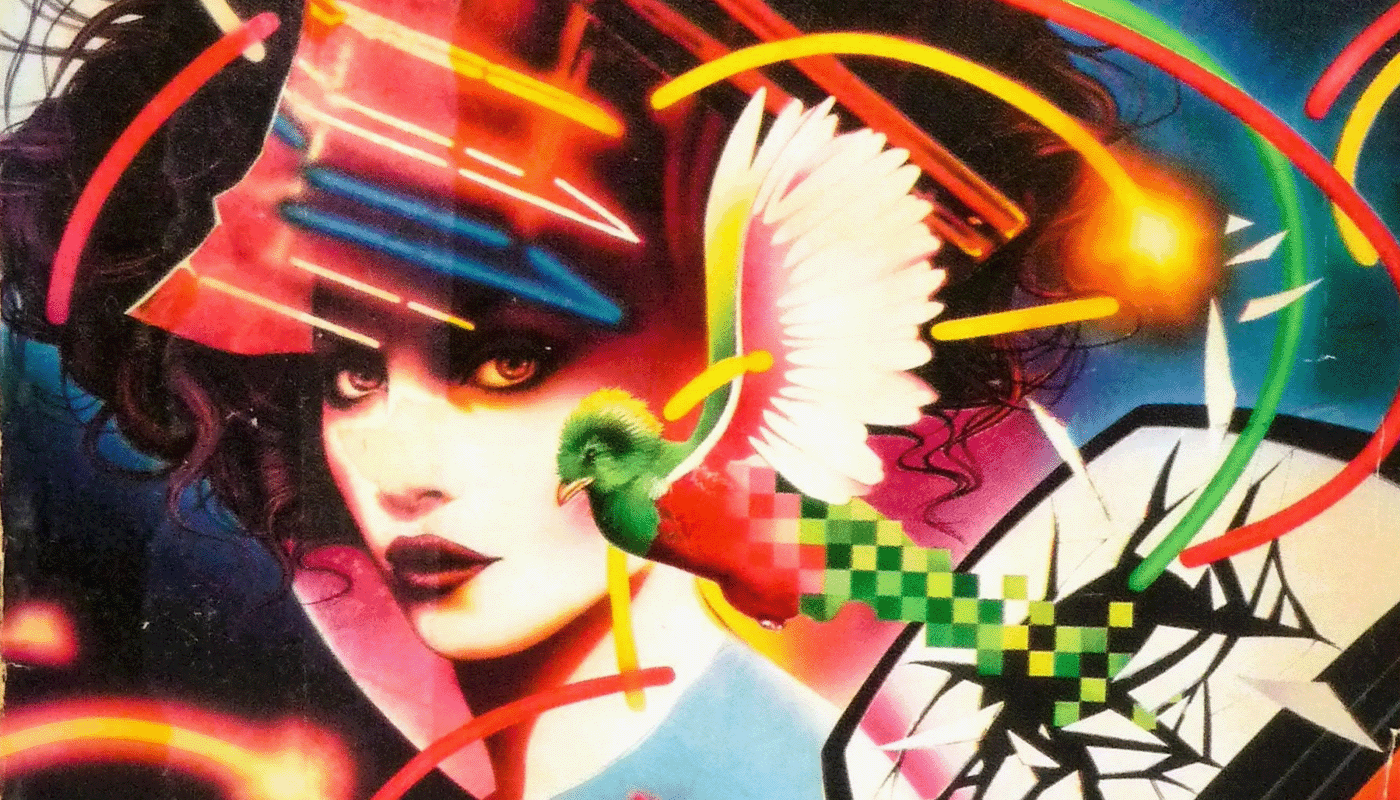
 Sagoh
Sagoh