The calendar has turned to late June, marking a pivotal milestone for bibliophiles participating in the 2026 Read Harder Challenge. As the literary community crosses the midway point of the year, organizers are launching an extensive outreach initiative to gauge reader progress, identify common hurdles, and celebrate the diverse narratives that have defined the first six months of this annual reading marathon.
The Read Harder Challenge has long served as a catalyst for readers to step outside their comfort zones, prompting them to engage with genres, authors, and perspectives they might otherwise overlook. As we navigate the transition into the second half of the year, the focus shifts from the initial excitement of setting goals to the practical realities of sustained reading habits.
Main Facts: Taking the Pulse of the Community
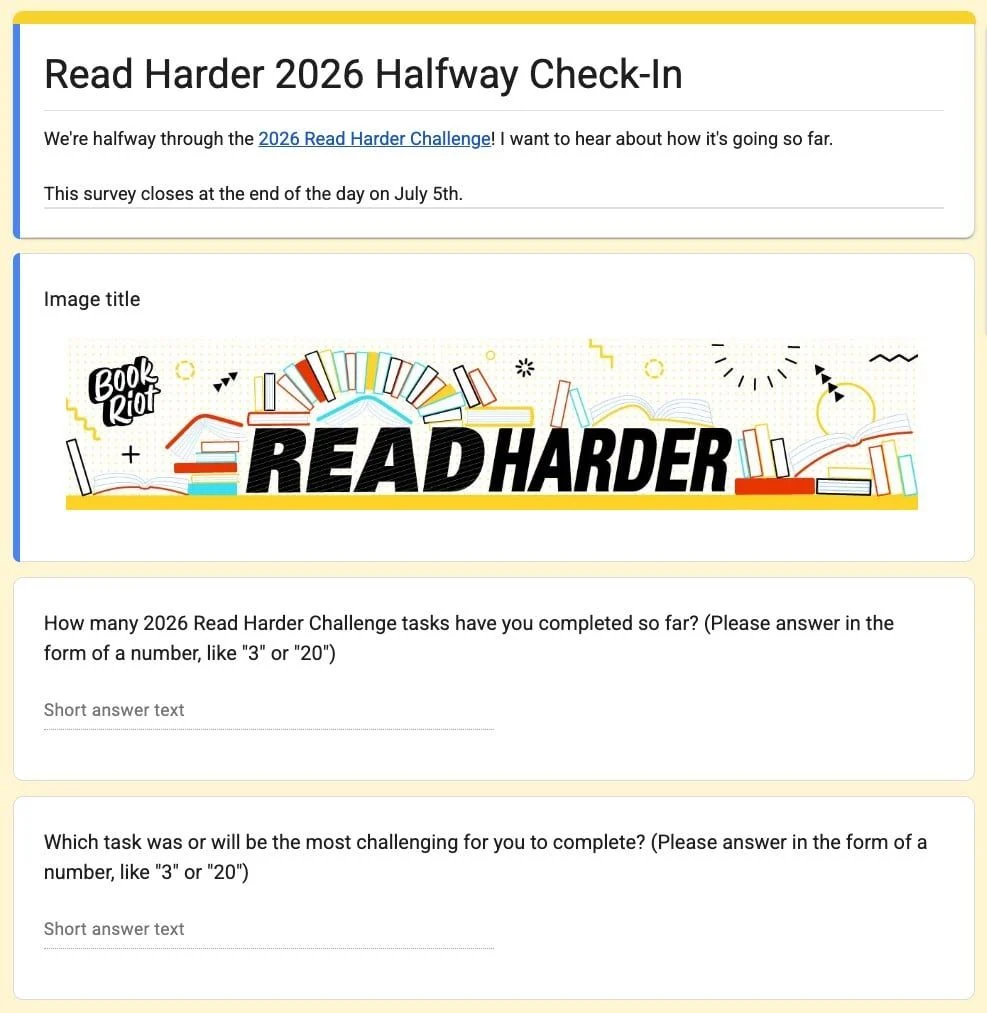
The Read Harder initiative, a staple in the reading community, is currently conducting a comprehensive "Halfway Check-In." This effort aims to capture the quantitative and qualitative data regarding how participants are managing their reading lists. The survey, which is being hosted via Google Forms, asks participants to reflect on three critical metrics:
- Progress Tracking: How much of the total challenge list have participants successfully completed?
- Obstacle Identification: Which specific prompts or categories have proven to be the most difficult to fulfill?
- Discovery and Impact: What has been the standout title of the year so far, and how has the challenge shaped their reading habits?
The survey is not merely a data-collection exercise; it is designed to build a community dialogue around the challenges of reading with intention. By aggregating these responses, organizers aim to provide a snapshot of the current literary landscape and provide support for those who may have fallen behind their target pace.
A Chronological Look at the 2026 Challenge
The trajectory of the 2026 Read Harder Challenge began in January with a surge of enthusiasm, characterized by "New Year, New Reads" energy. During the first quarter, social media platforms and book clubs were flooded with TBR (To-Be-Read) piles and initial selections for the various prompts.
- Q1 (January–March): The "Launch Phase," defined by initial planning and the selection of titles. This period typically sees the highest level of engagement as readers tackle the easier or more enticing prompts on their lists.
- Q2 (April–June): The "Sustaining Phase." As the novelty of the new year fades, readers often encounter "reading slumps" or find themselves struggling with more challenging or niche prompts. This is where the commitment to the challenge is tested.
- The June 25th Announcement: The official call for the halfway check-in was released, signaling the transition into the second half of the year. This provides a formal moment for reflection.
- July 5th Deadline: The survey will officially close on July 5th, 2026, marking the conclusion of the data-gathering phase.
- Post-July Findings: In the weeks following the survey, an analysis of the participant responses will be published, offering insights into which books have resonated most with the community and which prompts have been the most polarizing.
Supporting Data and the Psychology of Reading Challenges
Why do reading challenges like Read Harder resonate so deeply with the public? From a psychological perspective, these challenges gamify the act of reading, transforming a solitary habit into a structured, achievement-oriented endeavor.
Data from previous years suggests that participants who engage in "check-in" activities are significantly more likely to finish their annual goals. By articulating their progress, readers move from passive consumption to active engagement. Furthermore, the "TBR effect" is a significant byproduct of these challenges. When a reader completes a prompt, they often add several more books to their list based on community recommendations, creating a self-sustaining cycle of literary exploration.
The survey results will likely reflect common pain points, such as:
- Time Constraints: The perennial struggle to balance reading with professional and personal responsibilities.
- Genre Fatigue: The difficulty of finding quality works in genres that the reader does not typically favor.
- Accessibility Issues: Challenges related to finding specific books in local library systems or independent bookstores.
Official Perspectives and Community Guidelines
The organizers behind the Read Harder project have emphasized that the spirit of the challenge is not about "winning" or rigid adherence to a schedule, but rather about the expansion of the reader’s intellectual horizons.

"We can’t wait to hear what you all have to say," the organizers noted in the project’s official release. "I’m sure I’ll end up with a ton more books on my TBR list after seeing what everyone else has been reading."
To maintain the integrity of the conversation, the organizers have reiterated their commitment to a safe and inclusive environment. The comments section of the official platform is moderated strictly according to community guidelines, which prioritize respectful discourse and supportive interactions. As the community discusses their findings, the organizers are encouraging participants to share their successes and failures without fear of judgment, fostering an environment where "reading hard" is a shared experience rather than a solitary competition.
Implications for the Second Half of 2026
The results of the mid-year survey will have several significant implications for the remainder of the year. First, the data will allow the organizers to curate future reading lists that better reflect the interests and limitations of their audience. If a particular prompt is found to be impossible for a large portion of the community, it may lead to a restructuring of the 2027 challenge.
Second, the findings will serve as a motivational tool. For those who are behind on their goals, seeing that they are not alone—and that many others are also struggling with the same categories—can alleviate the pressure to quit. The "crunching of the data" will likely yield a curated "Mid-Year Best Of" list, which will act as a resource for readers looking for high-quality recommendations to finish their remaining prompts.
Finally, the survey highlights the evolution of the modern reading experience. In an era dominated by short-form content and digital distractions, the dedication to a long-term, multi-book challenge represents a significant cultural commitment to deep reading and sustained attention.
How to Participate
For those who have yet to participate in the survey, the process is straightforward:
- Access the Form: The survey is hosted via a direct link (https://forms.gle/1FNjVQf1dNqz43We9).
- Provide Honest Feedback: Participants are encouraged to be candid about their struggles and their successes.
- Submit by July 5th: This is the hard cutoff for data inclusion.
- Stay Tuned: Keep an eye on the official newsletter and blog for the release of the aggregated findings.
As we move into the second half of 2026, the Read Harder Challenge remains a vital component of the reading community. Whether you have completed five prompts or fifty, the check-in is an opportunity to pause, reflect, and reinvigorate your commitment to the written word.
For those who find themselves in need of a new read to keep the momentum going, the organization also offers a "Book Deals" newsletter, providing discounts of up to 80% on titles, further lowering the barrier to entry for readers looking to fulfill those final, difficult categories. As the summer progresses, the collective progress of these readers will continue to shape the literary conversation, proving that even in a fast-paced world, the slow and deliberate act of reading remains a priority for many.