Laily UPN
In this week’s comprehensive look at the intersection of pop culture, science, and history, we explore the enduring legacy of legendary filmmakers, the shifting tides of the global box office, and the profound, accidental intimacy captured in humanity’s most distant time capsule.
1. Celebrating a Century of Wit: Journey Planet’s Mel Brooks Issue
The latest installment of Journey Planet (Issue 95) serves as a sprawling, affectionate tribute to the incomparable Mel Brooks. Marking a "century of Mel Brooks"—both in terms of his enduring influence and his celebrated career—this issue dives deep into the archives of comedy.
From the sharp satire of Blazing Saddles to the genre-defying absurdity of Spaceballs, the editors have curated a collection of essays and retrospectives that examine how Brooks managed to dismantle taboos while keeping audiences in stitches. The issue functions as a testament to the idea that true comedy is the most effective weapon against intolerance, a theme that resonates as strongly today as it did during the height of the filmmaker’s theatrical run.
2. Box Office Report: Toy Story 5 Dominates as Supergirl Struggles
The cinematic landscape is currently defined by a tale of two franchises. According to recent Deadline reports, Disney/Pixar’s Toy Story 5 continues its massive run, pulling in $70 million domestically during its second weekend. With a global cume reaching $585 million, the film is closing in on the $300 million mark stateside. Its 56% drop-off is being hailed as a sign of sustained audience interest, mirroring the successful trajectory of Incredibles 2.
Conversely, Warner Bros./DC Studios’ Supergirl has faced a difficult launch. With a domestic opening of approximately $38 million against a production budget ranging from $170 million to $186 million, the film has struggled to gain traction. Comparisons to the low opening of The Marvels ($46.1 million) and the critical reception of Joker: Folie à Deux ($37.6 million) suggest that the studio faces significant hurdles in revitalizing the DC brand for a post-superhero-fatigue audience.
3. The Literary Legacy of James Tiptree Jr.
At Transmissions from Tomorrow, Joel Miller offers a poignant exploration of the identity and work of Alice Sheldon, who famously wrote under the pseudonym James Tiptree Jr.
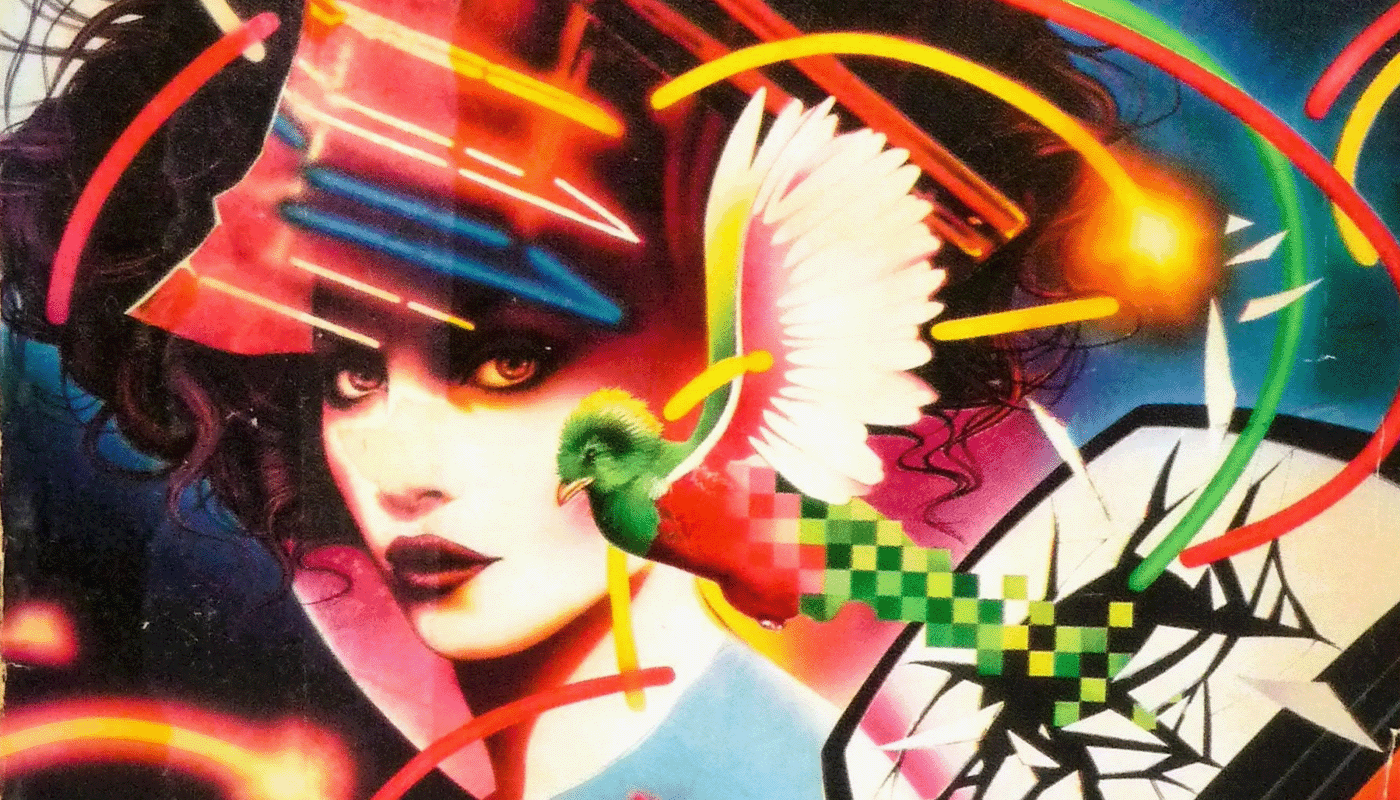
Tiptree’s 1973 Hugo Award-winning novella, The Girl Who Was Plugged In, is analyzed as a proto-cyberpunk masterpiece. William Gibson, the father of the genre, has frequently cited Tiptree’s work as a direct inspiration for Neuromancer. The story, which explores a corporate-sponsored influencer culture, feels eerily prescient today. Miller highlights how Tiptree used her narrative to challenge the reader’s complicity in a society that values artificial, curated beauty over the "ugly" reality of human suffering, proving that science fiction remains our most effective mirror for societal decay.

4. Tolkien on Screen: A Study in Adaptation Accuracy
The debate regarding the fidelity of adaptations continues to stir the Lord of the Rings fandom. A recent breakdown by CBR.com ranks various adaptations based on their adherence to J.R.R. Tolkien’s source material, with the 1980 animated Return of the King receiving particular scrutiny.
While modern audiences are accustomed to the sprawling epics directed by Peter Jackson, the Rankin/Bass animated production is frequently cited as a cautionary tale in "abridged storytelling." By omitting key figures like Legolas, Gimli, and Faramir, and replacing the tension of the Battle of the Pelennor Fields with musical numbers, the production is often viewed by purists as a tonal departure from the gravity of the novels. This serves as a vital reminder that while medium-specific changes are often necessary for adaptation, the spirit of the source material remains a non-negotiable benchmark for fans.
5. The Intimate Science of the Voyager Golden Record
In a fascinating historical footnote reported by Space Daily, we revisit the 1977 launch of the Voyager spacecraft. While the Golden Record is officially a curated selection of humanity’s cultural and biological achievements, it hides an intensely personal secret: a recording of Ann Druyan’s brainwaves and heartbeat.
Recorded just two days after she and Carl Sagan agreed to marry, this physiological data was intended to represent "human life signs." However, modern researchers and historians suggest that the record effectively carries a private love letter, now traveling over 25 billion kilometers from Earth. This intersection of cold scientific data and the warmth of human connection remains one of the most romantic, and scientifically significant, artifacts in human history.
6. Remembering Ann Blyth (1927–2026)
Hollywood lost a icon this week with the passing of Ann Blyth at the age of 98. A staple of the Golden Age, Blyth was perhaps best remembered for her chilling performance as the manipulative Veda Pierce in the 1945 classic Mildred Pierce.
Blyth’s career was remarkably diverse, spanning high-stakes drama, romantic fantasy like Mr. Peabody and the Mermaid, and Broadway-style musicals such as Kismet. Her later work on television, including a notable turn on The Twilight Zone in 1964, cemented her status as a versatile performer whose influence spanned generations of cinema.
7. Remembering Robert Asprin (1946–2008)
On what would have been his 78th birthday, we reflect on the contributions of Robert Asprin, a titan of humorous fantasy. Asprin’s MythAdventures series introduced readers to Skeeve and Aahz, proving that fantasy did not always need to take itself seriously to be profound.

Beyond his solo work, Asprin’s legacy is tied to the Thieves’ World shared-universe anthology. By creating the city of Sanctuary, he provided a sandbox for dozens of writers to play in, creating a template for world-building that has influenced everything from Dungeons & Dragons modules to modern urban fantasy literature. His ability to blend the gritty with the absurd remains a hallmark of 1980s speculative fiction.
8. Pop Culture Phenomena: From Minions to Star Trek
The reach of franchise marketing has reached new heights in West Hollywood, where a 80-foot "slime monster" installation has taken over the historic Carney’s restaurant. Promoting the upcoming Minions and Monsters, the installation serves as a reminder of the sheer scale of modern animation marketing.
Parallel to this, linguistic experts are noting the rise of "Minionese" as a cultural phenomenon among Generation Alpha. The Guardian reports that the gibberish language, which mixes real-world linguistic roots with melodic nonsense, bears a striking resemblance to the evolution of internet slang among younger generations.
Finally, for Star Trek enthusiasts, CBR.com highlights how the series Strange New Worlds has successfully retrofitted 53 years of continuity regarding Captain Pike. By grounding his character shift in the traumatic, pre-determined knowledge of his own fate—first explored in Star Trek: Discovery—the writers have managed to reconcile the stoic officer of the past with the deeply human protagonist of the present.
Implications for Future Media
The common thread through this week’s news is the power of continuity—whether it is the emotional continuity of a heartbeat on a distant spacecraft, the thematic continuity of Tolkien’s world, or the narrative continuity required to keep a 50-year-old franchise like Star Trek relevant. As the industry continues to pivot between legacy intellectual property and new, experimental storytelling, the most successful projects will continue to be those that respect the "human" element, whether that is a voice in a recording, a character’s internal struggle, or a creator’s singular wit.

 Sagoh
Sagoh