Siti Muinah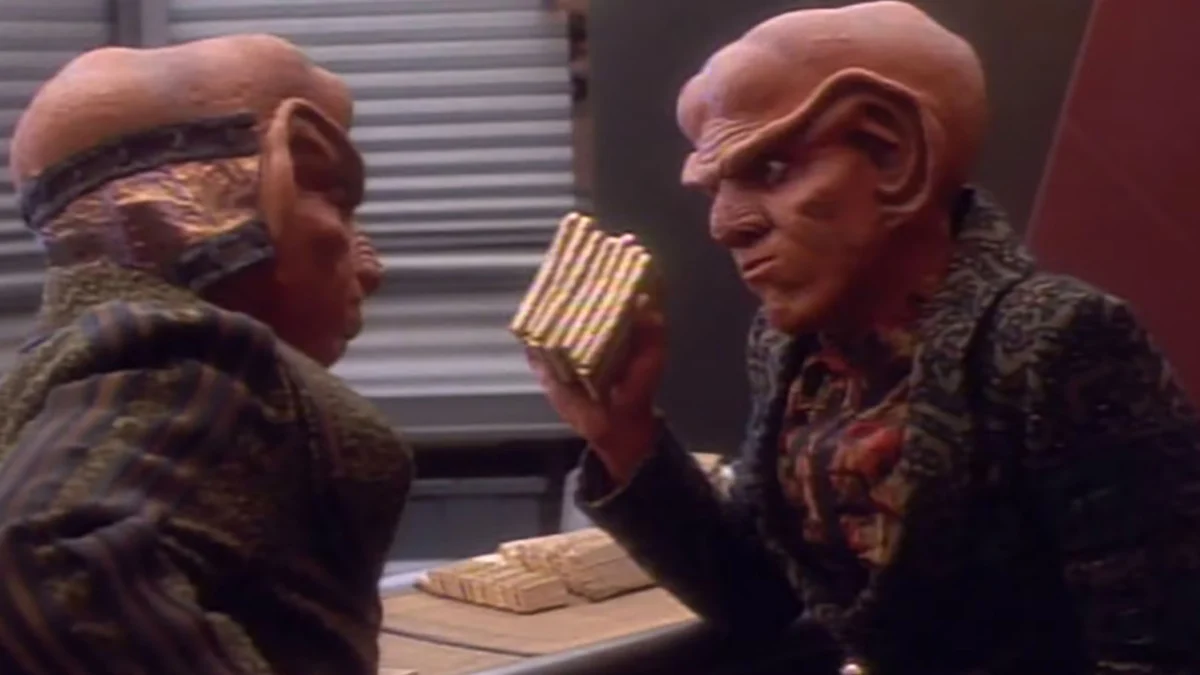
In the 24th century of Star Trek, the traditional markers of human success—accumulated wealth, property ownership, and the frantic pursuit of capital—have been relegated to the annals of history. When Captain Jean-Luc Picard famously informed an awakened 20th-century capitalist in The Next Generation that "people are no longer obsessed with the accumulation of things," he was not merely expressing a personal philosophy; he was defining the fundamental socio-economic bedrock of the United Federation of Planets.
For viewers and scholars alike, the "Star Trek" economic model remains one of the franchise’s most compelling, if occasionally contradictory, pillars. It posits a utopian future where hunger, poverty, and the struggle for survival have been eradicated by advanced technology and a radical shift in human values. However, beneath the veneer of this post-scarcity society lies a complex web of galactic trade, inter-species diplomacy, and the lingering question of how a moneyless civilization interacts with a universe that is, in many corners, still driven by profit.
The Architecture of Post-Scarcity: How the Federation Operates
The Federation’s economic model is built upon a paradox: it is a society without money, yet it functions within a galaxy where money is often the primary language of interaction. This stability is primarily afforded by the replicator—the ultimate disruptive technology.
By manipulating matter at the subatomic level, replicators allow citizens to synthesize food, clothing, and spare parts near-instantaneously. When the basic requirements for biological survival are met with the push of a button, the incentive to hoard resources vanishes. The Federation’s internal economy is based on "self-improvement" and contribution to the collective. In this framework, human labor is not a commodity to be sold for survival; it is a pursuit of excellence, discovery, and service to the greater good.
However, the "no money" assertion is often a point of debate. While citizens of the Federation may not need currency to buy a meal or rent a home, the presence of "credits" in dialogue throughout the franchise suggests a bureaucratic mechanism for tracking resources, particularly when dealing with non-aligned worlds.
Chronology of Economic Evolution: From Capitalist Roots to Utopian Abundance
The transition from a market-based economy to the Federation’s post-scarcity model did not happen overnight. Historical records within the Star Trek canon suggest a volatile period of transition following World War III, characterized by extreme scarcity and social upheaval.
- The Era of Scarcity (Pre-22nd Century): Earth struggled with the remnants of late-stage capitalism and the devastation of nuclear war. Survival was the primary economic driver.
- The Warp Transition (21st-22nd Century): With the invention of warp drive and the subsequent contact with the Vulcans, humanity was introduced to a more efficient, resource-sharing philosophy. As replicator technology (and its precursor, the food synthesizer) emerged, the necessity for a wage-based economy began to dissolve.
- The Golden Age (23rd-24th Century): By the time of The Next Generation, the transition was complete. Money was officially declared obsolete within the Federation. Citizens focused on intellectual, artistic, and scientific endeavors.
- The Post-Federation Collapse (32nd Century): As seen in Star Trek: Discovery, the destruction of the dilithium supply led to the "Burn," which caused the Federation to fracture. In the resulting chaos, the Emerald Chain—a hyper-capitalist, exploitative syndicate—emerged, proving that when technology and central governance fail, society inevitably regresses to the most brutal forms of mercantilism.
The Galactic Exchange: The Role of Non-Federation Currencies
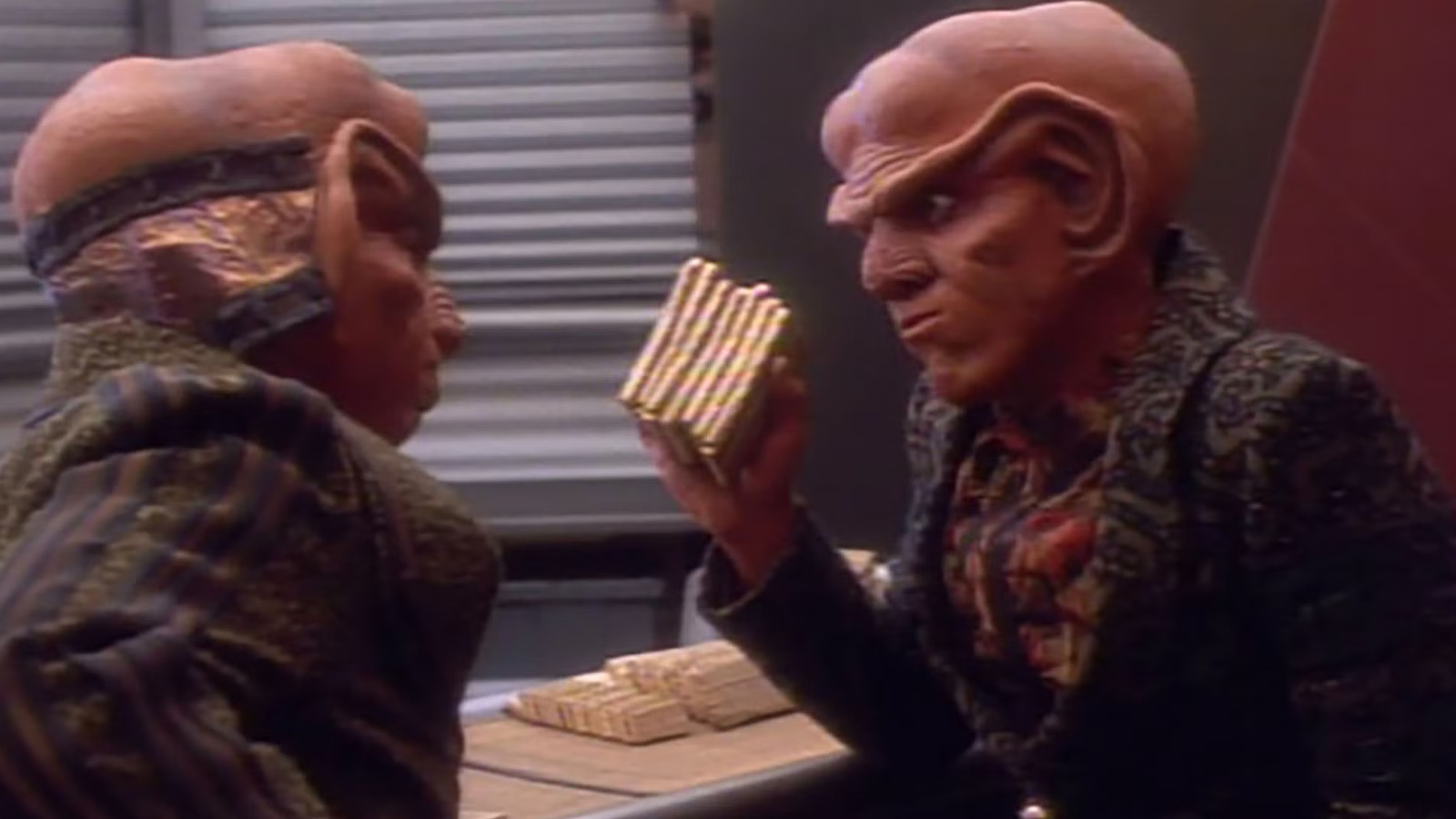
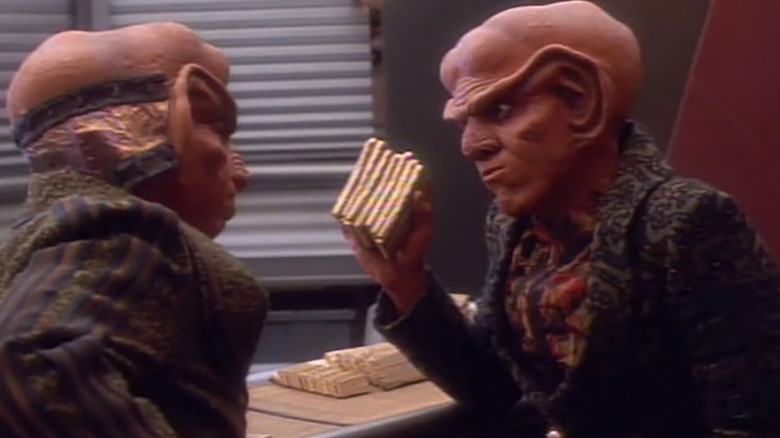
While the Federation has evolved beyond currency, the rest of the galaxy has not. The Ferengi Alliance, for instance, represents the antithesis of the Federation’s values. For the Ferengi, profit is the sole moral compass. Their society is governed by the "Rules of Acquisition," a series of aphorisms that prioritize greed and negotiation over communal welfare.
Gold-Pressed Latinum: The Standard of Value
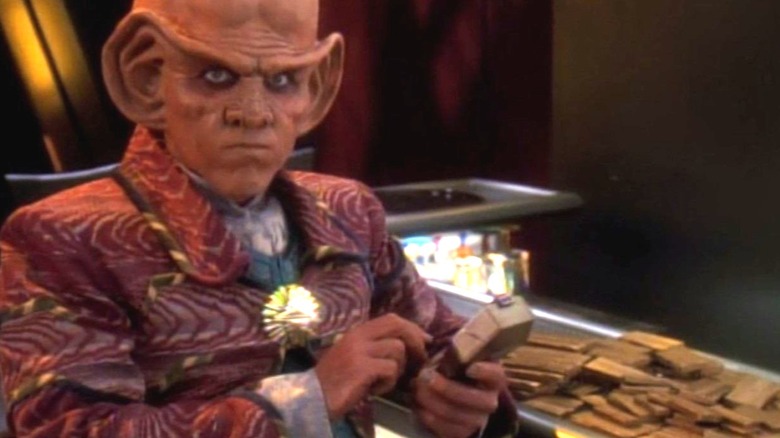
Because gold is easily replicated, it has lost its intrinsic value as a precious metal in the Star Trek universe. Consequently, the galaxy gravitated toward gold-pressed latinum. Latinum is a rare, liquid metal that cannot be replicated by standard technology, making it the perfect vessel for trade. It serves as the primary currency for independent traders, criminal syndicates, and non-Federation governments.
The Role of Barter and Diplomacy
When Federation officers interact with these cultures, they often rely on a hybrid approach. While they do not have personal bank accounts, Starfleet maintains "credits" as a diplomatic tool. These credits function more like a resource-allocation token than a traditional currency. When a Starfleet officer visits Quark’s Bar on Deep Space Nine, they are likely utilizing a pre-arranged credit allowance granted by the station or the Federation to facilitate trade and maintain diplomatic relations with the local population.
Supporting Data: The Moral Implications of Wealth
The narrative arc of Star Trek consistently frames the pursuit of money as a sign of intellectual and moral immaturity. Characters like Harcourt Fenton Mudd are depicted as comedic, albeit dangerous, villains whose desire for "a buck" keeps them trapped in a cycle of dishonesty and failure.
Conversely, the Federation’s rejection of money is presented as the hallmark of an advanced civilization. The moral implication is clear: when survival is guaranteed, humanity is free to pursue its true potential. However, this creates a friction point in the show’s storytelling. The "villainy" of capitalism is a recurring theme, often used to contrast the enlightened nature of the Federation with the desperate, grasping nature of their neighbors.
This creates a "moral hierarchy":
- The Enlightened: Those who create for the sake of discovery (The Federation).
- The Traders: Those who facilitate the flow of goods (The Ferengi, Orions).
- The Exploitative: Those who use commerce as a weapon of slavery (The Emerald Chain, the Cardassian Union).
Official Perspectives: The Creator’s Intent
Gene Roddenberry, the creator of Star Trek, was staunch in his belief that humanity would eventually outgrow its primitive economic tendencies. He intended for the Federation to be a projection of a future where social inequality was solved by the equitable distribution of technology.
In several behind-the-scenes interviews, writers and producers have admitted that the "no money" rule was occasionally an obstacle to plotting. How do you have a heist episode if there is no money to steal? How do you have a debt-collection subplot if debt doesn’t exist? These constraints forced writers to get creative, leading to the development of complex trade-based narratives involving rare minerals, engine parts, and diplomatic favors.
Implications: A Model for the Future?
The economic vision of Star Trek remains a subject of intense academic and economic debate. Critics argue that even in a post-scarcity world, "positional goods"—items that are finite by nature, such as a beachfront property on Risa or a seat at a popular concert—would still require some form of currency or rationing.
Furthermore, the reliance on an "enlightened" citizenry to regulate itself without the incentive of profit assumes a psychological evolution that may not be compatible with human nature. Yet, the series continues to resonate precisely because it offers an alternative to the grim, resource-starved futures often depicted in science fiction.
Summary of Economic Dynamics
| Currency Type | Primary User | Status |
|---|---|---|
| Credits | Federation/Diplomats | Used for external trade/resource allocation |
| Gold-Pressed Latinum | Ferengi/Traders | The standard for non-Federation commerce |
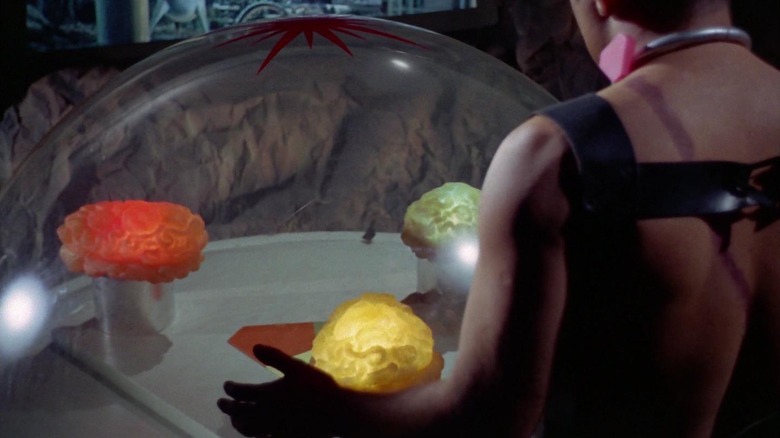
| Quatloos | Triskelions | Used for gambling/leisure |
| Barter | General Galaxy | Used for high-value/rare equipment exchange |
Ultimately, Star Trek does not present an economic textbook; it presents a moral challenge. By removing the veil of currency, the series forces the audience to consider what we would do if we didn’t have to work to survive. Would we stagnate, or would we, as Picard suggests, reach for the stars? The enduring popularity of the franchise suggests that the dream of a world beyond the ledger is as vital today as it was when the show first premiered.


 Nana Muazin
 Pevita Pearce