

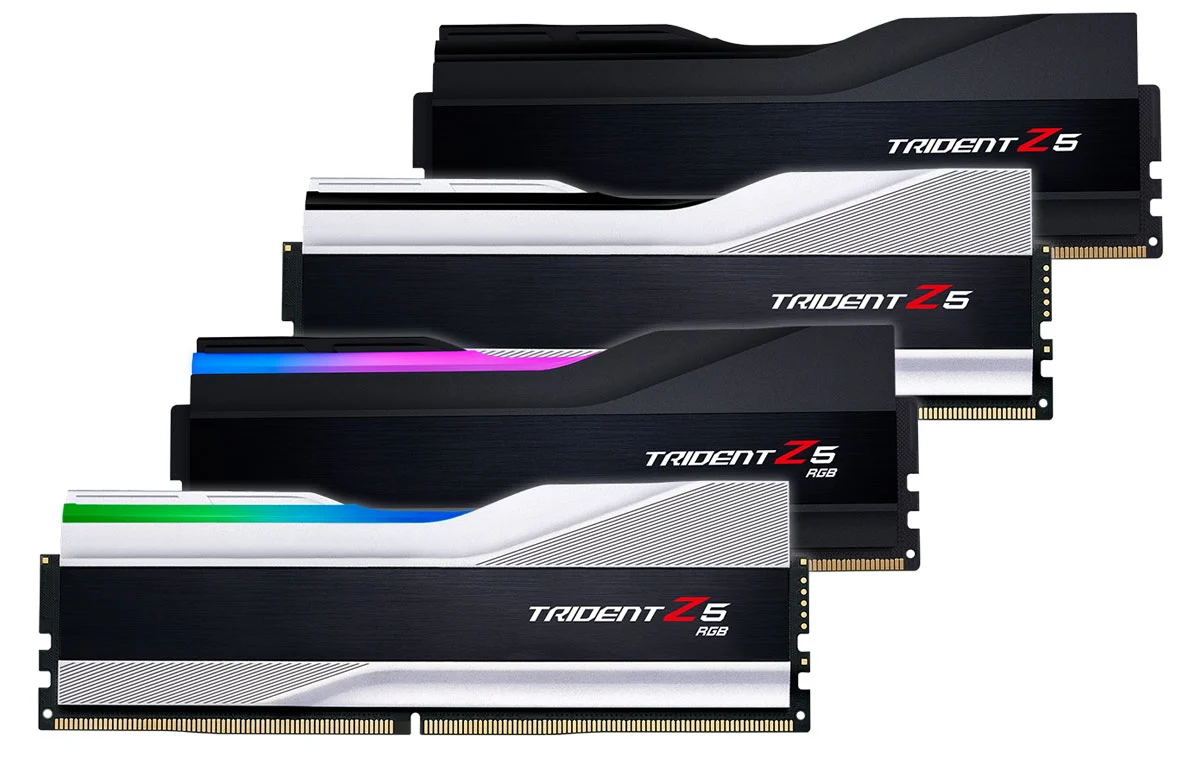
As the computing industry stands on the precipice of a major architectural shift, the battle for dominance in the next-generation memory market has officially intensified. With the impending release of consumer desktop platforms supporting DDR5, manufacturers are rushing to capture the "world’s fastest" title. While competitors like Corsair have spent the last few months building anticipation for their own high-speed modules, G.Skill has decisively seized the spotlight with the announcement of its Trident Z5 DDR5-6600 CL36 memory kits, setting a new benchmark for performance enthusiasts and professional overclockers alike.
Main Facts: Breaking the 6600MHz Barrier
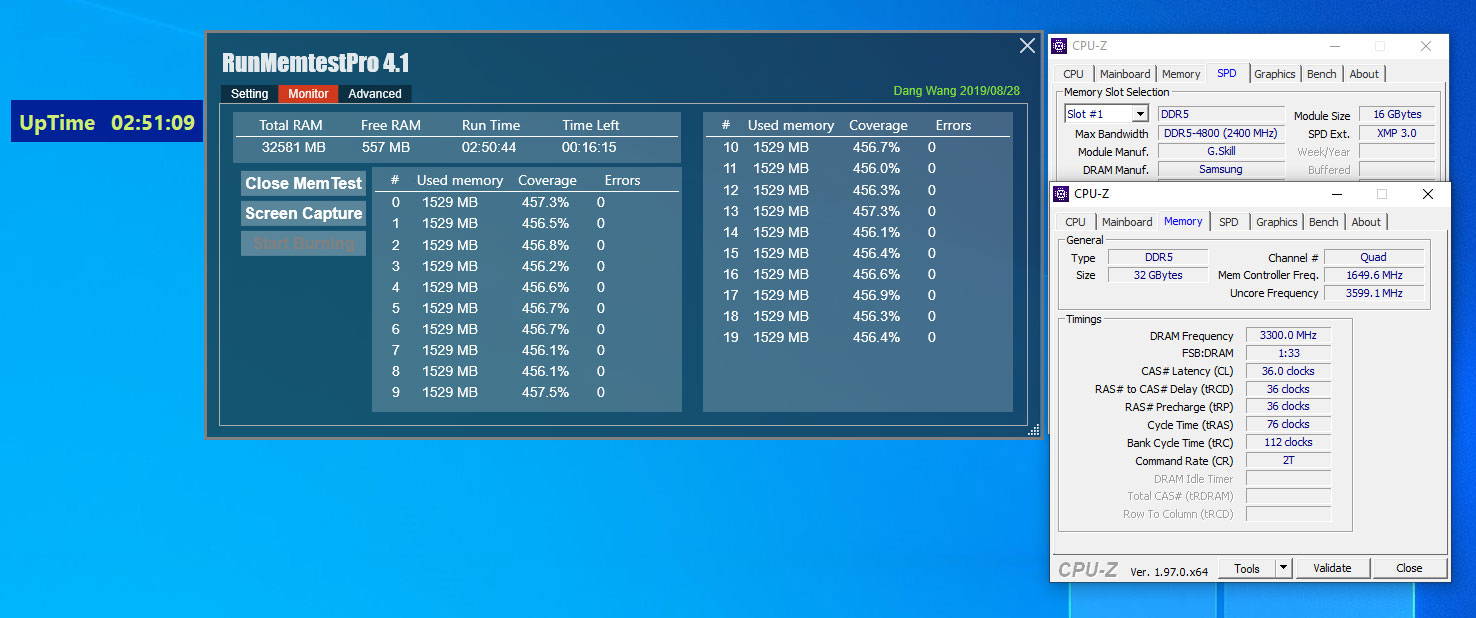
G.Skill’s latest announcement centers on its flagship Trident Z5 series, specifically the 32GB (2x16GB) memory kits rated at a blistering 6600MHz. This is not merely a marketing claim; G.Skill has confirmed that these kits are validated to operate at the aggressive latency timings of CL36-36-36-76.
In the world of high-performance RAM, the relationship between frequency (measured in MHz or MT/s) and latency (measured in CAS cycles) is critical. Most standard DDR5 modules currently slated for the initial wave of consumer releases are shipping with CL40-40-40 timings. By achieving CL36 at 6600MHz, G.Skill is effectively pushing the boundaries of what is possible with early-production DDR5 silicon, offering a lower-latency, higher-bandwidth solution that significantly outperforms the "standard" offerings currently flooding the pipeline.
The Trident Z5 kits are designed to cater to the extreme upper echelon of the PC building market. These modules are not intended for the casual office user; they are precision-engineered tools for gamers, content creators, and competitive overclockers who demand the absolute minimum in system bottlenecking.
A Chronology of the DDR5 Transition
To understand the magnitude of this announcement, one must look at the timeline of the DDR5 rollout.
The Early Teasers (May 2021)
The conversation surrounding DDR5 began in earnest during the spring of 2021. Manufacturers began signaling that the transition from DDR4 was imminent. In May, Bit-Tech reported on Corsair’s aggressive teasing of DDR5-6400 modules. At that time, 6400MHz was viewed as the "holy grail" of initial DDR5 performance. It signaled that while the JEDEC standard for DDR5 started at 4800MHz, the enthusiast market would push significantly further immediately upon launch.
The Validation Phase (Summer 2021)
Throughout the summer, memory manufacturers worked closely with motherboard vendors and CPU manufacturers (primarily Intel, with its 12th Generation Alder Lake platform on the horizon) to ensure signal integrity. Achieving stability at speeds exceeding 6000MHz is a monumental task, as higher frequencies increase electrical noise and thermal output, making the physical design of the PCB and the quality of the ICs paramount.
The October Breakthrough (October 2021)
The announcement of the G.Skill Trident Z5 DDR5-6600 kit marks the transition from "pre-launch anticipation" to "real-world performance validation." By moving the bar from 6400MHz to 6600MHz while simultaneously tightening the timings to CL36, G.Skill has effectively leapfrogged the industry’s previous performance targets, forcing competitors to scramble to match these specifications in the weeks leading up to the retail launch of next-generation processors.
Supporting Data and Technical Engineering
The success of the Trident Z5 series is not an accident of manufacturing, but a result of rigorous binning processes. Much like its history with high-end DDR4 memory, G.Skill sources high-performance Samsung DDR5 Integrated Circuits (ICs).
The process of "binning" involves testing thousands of individual memory chips to find those that can withstand higher voltages and faster clock cycles without producing errors. Only a small percentage of manufactured ICs meet the stringent requirements for the 6600MHz CL36 specification. Once these "golden" chips are identified, they are paired into matched sets to ensure that the two sticks of RAM in a dual-channel kit perform identically. This consistency is the secret sauce that allows enthusiasts to push their systems beyond factory specifications without encountering blue screens or data corruption.
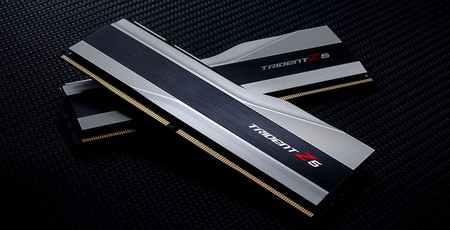
From a design perspective, the Trident Z5 series features a dual-texture aesthetic. The heat spreader is crafted from brushed aluminum, available in metallic silver or matte black, and is capped with a premium piano black top bar. For those who prefer a more vibrant aesthetic, G.Skill has confirmed a parallel lineup of Trident Z5 RGB models, which integrate a translucent light bar optimized for smooth, addressable RGB lighting—a staple for modern gaming builds.
Official Responses and Market Positioning
G.Skill’s messaging has been characteristically bold. By positioning the Trident Z5 as "the ultimate performance choice," the company is clearly aiming to capture the mindshare of the "early adopter" demographic.
"We are pushing the absolute limits of current DDR5 technology," a company spokesperson noted during the announcement. While they stopped short of providing a roadmap for every SKU, they emphasized that the 6600MHz kit is the flagship. The lack of a detailed matrix suggests that G.Skill is currently focusing its manufacturing capacity on these high-margin, high-performance kits to maximize impact.
Market analysts observe that this strategy is a classic play for brand dominance. By claiming the top-tier spot, G.Skill elevates the perception of their entire DDR5 product stack. Even if a consumer buys a lower-tier G.Skill kit, the "halo effect" created by the 6600MHz flagship suggests that the same engineering rigor has been applied to the more affordable models.
Implications for the PC Ecosystem
The shift to DDR5 is arguably the most significant memory upgrade in over a decade. However, the move to these bleeding-edge speeds comes with several implications that consumers must consider.
The Performance Premium
The most immediate implication is cost. While official pricing for the 6600MHz kits remains undisclosed, industry experts anticipate a significant "early adopter tax." Given the scarcity of high-bin DDR5 ICs and the complexity of the PCB design required to maintain signal integrity at these frequencies, these kits will likely command a premium of 50 percent or more compared to equivalent-capacity DDR4 memory. For the average user, the marginal gains in frame rates or rendering times may not justify the significant investment.
Compatibility and Platform Maturity
High-speed memory is only as good as the platform that supports it. These kits are being validated against the latest generation of motherboards, specifically those utilizing the Z690 chipset. Users attempting to run these kits on early-production boards or with mismatched CPU memory controllers may face instability. The BIOS maturity of these new motherboards will be the deciding factor in whether these kits can hit their rated speeds out of the box using XMP (Extreme Memory Profile) settings.
Thermal Considerations
At 6600MHz, thermal management becomes a genuine concern. G.Skill’s aluminum heat spreaders are not just for aesthetics; they are functional components designed to dissipate the heat generated by the high-frequency operations of the DDR5 modules. Enthusiasts planning to overclock these kits further will need to ensure that their PC cases have sufficient airflow, as memory thermals can often be a silent killer of system stability.
Conclusion: The Path Forward
The announcement of the G.Skill Trident Z5 DDR5-6600 kit is a clear signal that the era of DDR5 has arrived with force. For the performance enthusiast, the prospect of 6600MHz at CL36 is a tantalizing evolution of system speed. However, as we wait for these products to hit retail shelves, the broader market remains in a state of flux.
While the headline numbers are impressive, the true test will be in the real-world gaming benchmarks and productivity suites over the coming months. Will the transition to DDR5 provide the massive performance leaps promised, or will the early-generation kits face the same maturity struggles that defined the early days of DDR4?
For now, G.Skill has firmly placed itself at the vanguard of the DDR5 revolution. Whether you are a competitive overclocker looking to shatter records or a power user building a future-proof workstation, the Trident Z5 represents the bleeding edge of memory technology. As the industry watches and waits, one thing is certain: the bar for DDR5 performance has been set, and it is higher than many expected. Consumers should prepare their budgets and their motherboards accordingly—the race for the fastest PC has officially begun.











