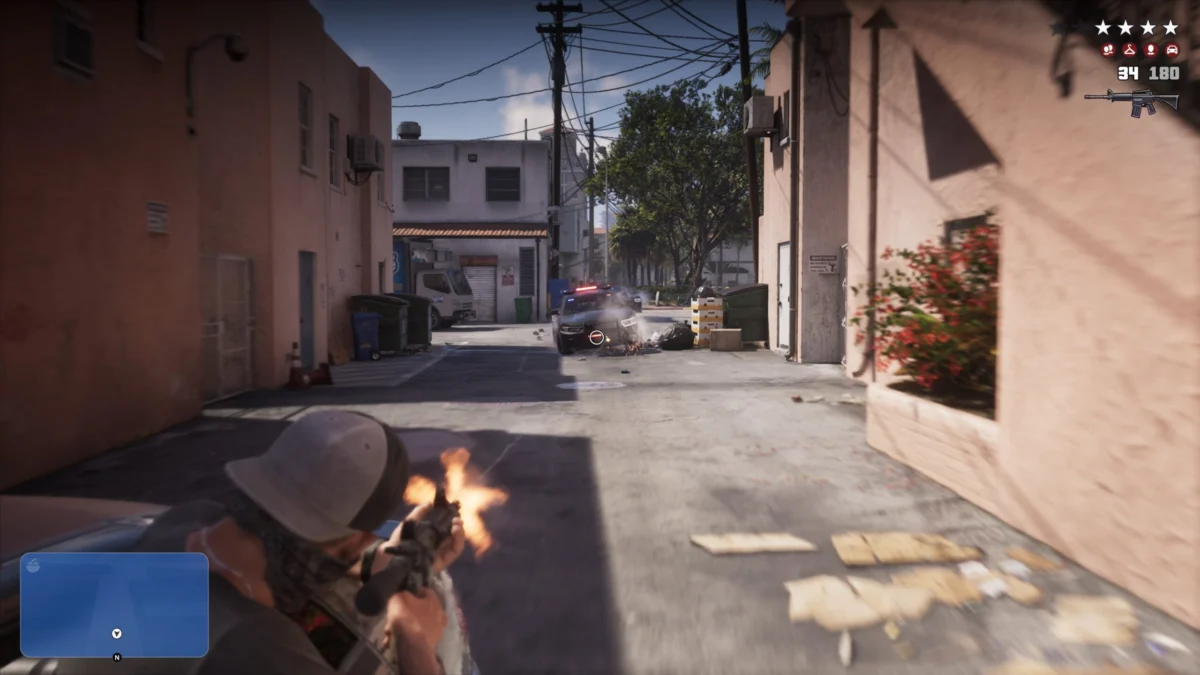
After years of agonizing anticipation, rumors, and leaks, the veil has finally been lifted on Grand Theft Auto VI. With a release date now firmly on the horizon, the gaming world has shifted its focus from "when will it arrive?" to "how will it run?" Following an exclusive three-hour gameplay showcase hosted by Rockstar North for content creator Davy Jones, a critical technical detail has surfaced that has sparked intense debate across the gaming community: Grand Theft Auto VI will target a frame rate of 30 frames per second (FPS) at launch.
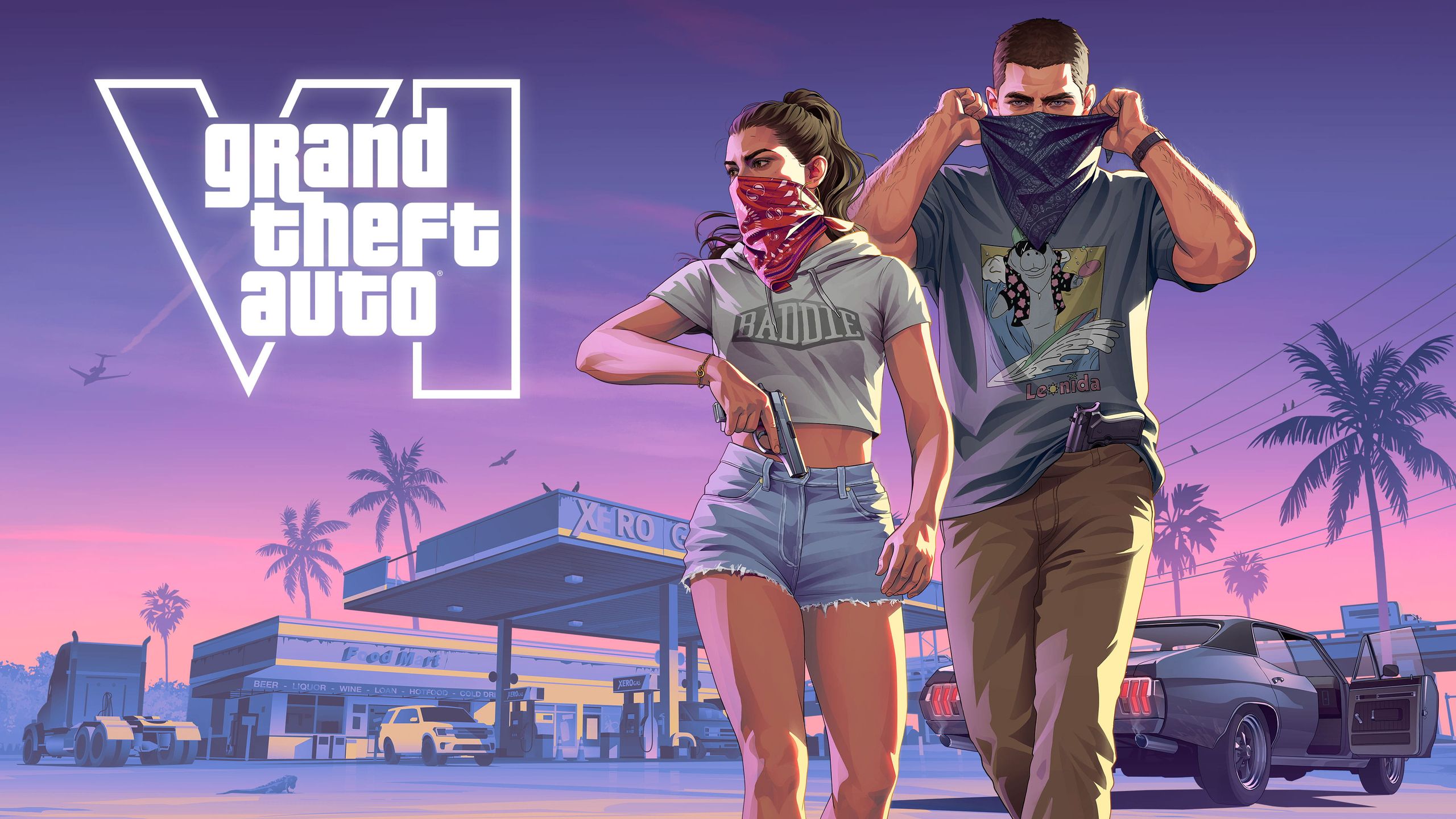
This revelation serves as a sobering reminder of the trade-offs required when pushing the boundaries of interactive entertainment. As players prepare for the return to the neon-soaked, chaotic streets of Leonida, understanding why Rockstar has opted for this performance ceiling is essential to managing expectations for what is arguably the most ambitious title in the history of the medium.
The Reality of the 30 FPS Target: A Departure from Industry Standards
In an era where "Performance Mode" (60 FPS) has become the gold standard for console gaming, Rockstar’s decision to lock GTA VI to 30 FPS at launch represents a bold, if controversial, design choice. During the showcase, Rob Nelson, Head of Development at Rockstar North, addressed the performance metrics directly. While the demonstration displayed a visually breathtaking world—filled with dense NPC populations, complex lighting, and unprecedented physics—it was clear that the engine was prioritized for fidelity over fluidity.
When pressed by observers regarding the potential for a 60 FPS toggle, Nelson noted that the game is locked to 30 FPS for the time being. He added that he would need to "consult the technical team" regarding future updates or potential performance modes. This response suggests that while Rockstar is aware of the demand for higher frame rates, the current build of the game is pushing console hardware to its absolute limit, leaving no overhead for a high-performance mode that would require significant sacrifices in resolution or graphical density.
A Chronology of Rockstar’s Performance Philosophy
To understand the current situation, one must look at Rockstar’s historical approach to hardware optimization. For over a decade, the developer has favored a "cinematic" experience that pushes the technical capabilities of consoles to their breaking point, often at the expense of frame rate.
- The PS3/PS4 Era (GTA V): When Grand Theft Auto V launched in 2013, it was a technical marvel that managed to render a massive open world on aging hardware. It was locked to 30 FPS, a standard that remained consistent even when the game was ported to the PlayStation 4 and Xbox One.
- The Red Dead Redemption 2 Benchmark: In 2018, Red Dead Redemption 2 set a new bar for environmental detail and AI simulation. Like its predecessor, it launched at 30 FPS. Even today, the title remains locked to that frame rate on current-gen consoles, demonstrating Rockstar’s commitment to visual consistency over raw performance.
- The GTA V Current-Gen Refresh: It was not until the release of the "Expanded and Enhanced" version of GTA V on the PlayStation 5 and Xbox Series X that players finally received an official 60 FPS mode. This establishes a clear pattern: Rockstar tends to release games at a locked 30 FPS on launch hardware and potentially introduces higher performance targets via post-launch patches or hardware-specific iterations later in the console cycle.
Why the Hardware Bottleneck is Real
The decision to stick with 30 FPS is not merely a stylistic choice; it is a technical necessity born from the sheer complexity of the game’s systems. Technical analysts, including those at Digital Foundry, have weighed in on why this might be the case.
The CPU Conundrum
While the GPU in the PlayStation 5 and Xbox Series X is capable of impressive graphical output, the limiting factor for a game of this scale is almost certainly the CPU. Grand Theft Auto VI features an unprecedented density of NPCs, each with their own schedules and simulated behaviors. Coupled with advanced traffic AI, complex physics simulations, and dynamic weather systems, the CPU demand is enormous. To maintain a stable 60 FPS, the game would likely require a massive reduction in world density or simulation complexity, which would fundamentally alter the "living, breathing world" experience Rockstar is striving to create.
Resolution and Fidelity
The gameplay showcased ran at an upscaled 4K resolution (utilizing a 1440p base). This suggests that Rockstar is aiming for the highest possible image quality. Given that the game utilizes advanced ray-traced reflections and global illumination, the rendering pipeline is likely already under immense pressure. By choosing 30 FPS, the developers can maintain high-quality lighting and complex geometry without needing to strip away the visual features that make the game look "next-gen."
The "PS5 Pro" Factor and Future Implications
The existence of the PlayStation 5 Pro introduces an interesting variable. With its upgraded GPU and, more importantly, its PSSR (PlayStation Spectral Super Resolution) upscaling technology, there is speculation that the Pro model might be the only console capable of hitting a stable 60 FPS, should Rockstar decide to implement such a mode.
However, if the bottleneck is indeed the CPU—which remains largely unchanged even in the PS5 Pro—then even the mid-cycle refresh may struggle to double the frame rate without significant compromise. This lends further credence to the theory that for the majority of the current console generation, 30 FPS will be the definitive way to experience the intended vision of the developers.
The Visual Trade-offs: Motion Blur as a Necessary Tool
One of the most noticeable aspects of the recent gameplay footage was the use of heavy motion blur. While some players find this feature jarring, it is a standard technique used by developers to mask the lower frame rate. By smearing the image during fast camera movements, motion blur creates an illusion of fluidity that makes 30 FPS appear smoother than it would otherwise.
In the police chase sequence observed in the footage, the motion blur was particularly aggressive. While it effectively smoothed out the high-speed action, it also highlighted the fact that the game cannot simply be "unlocked" to a higher frame rate without causing severe stability issues. For players sensitive to frame pacing, the lack of an option to disable motion blur on consoles may be a significant point of contention.

Looking Ahead: The PC Perspective and 40 FPS Hopes
While console players will likely be locked into the 30 FPS experience at launch, the inevitable PC port offers a different outlook. Historically, Rockstar’s PC versions provide the tools for unlocked frame rates, allowing users with high-end hardware to bypass the limitations imposed by consoles. However, the wait for the PC version is traditionally long, and the hardware requirements for such a title will undoubtedly be steep.
For console players, there remains a glimmer of hope for a middle-ground solution. As seen in other titles, a 40 FPS mode—designed for displays that support 120Hz refresh rates—could serve as a compromise. By providing a frame rate that is perfectly divisible by 120Hz, developers can offer a smoother experience than 30 FPS without the heavy CPU tax of 60 FPS. Whether Rockstar will implement such a feature remains to be seen.
Conclusion: A Vision Beyond Numbers
While the news of a 30 FPS lock may disappoint those who prioritize high frame rates, it is important to contextualize this within Rockstar’s design philosophy. The studio has never been one to chase performance numbers at the cost of the "Rockstar polish." Grand Theft Auto VI is clearly being designed as a cinematic, immersive experience where the depth of the world, the quality of the assets, and the complexity of the AI take precedence.
Ultimately, the impact of this performance target will depend on the stability of the frame rate. A rock-solid 30 FPS is often preferable to a fluctuating 45–60 FPS. If Rockstar can deliver a stutter-free, consistent experience that allows players to fully immerse themselves in the world of Vice City, the frame rate debate may fade into the background as soon as the game hits the shelves. The wait continues, but one thing is certain: the technological threshold for open-world gaming is about to be raised significantly, regardless of the frame rate.