Suro Senen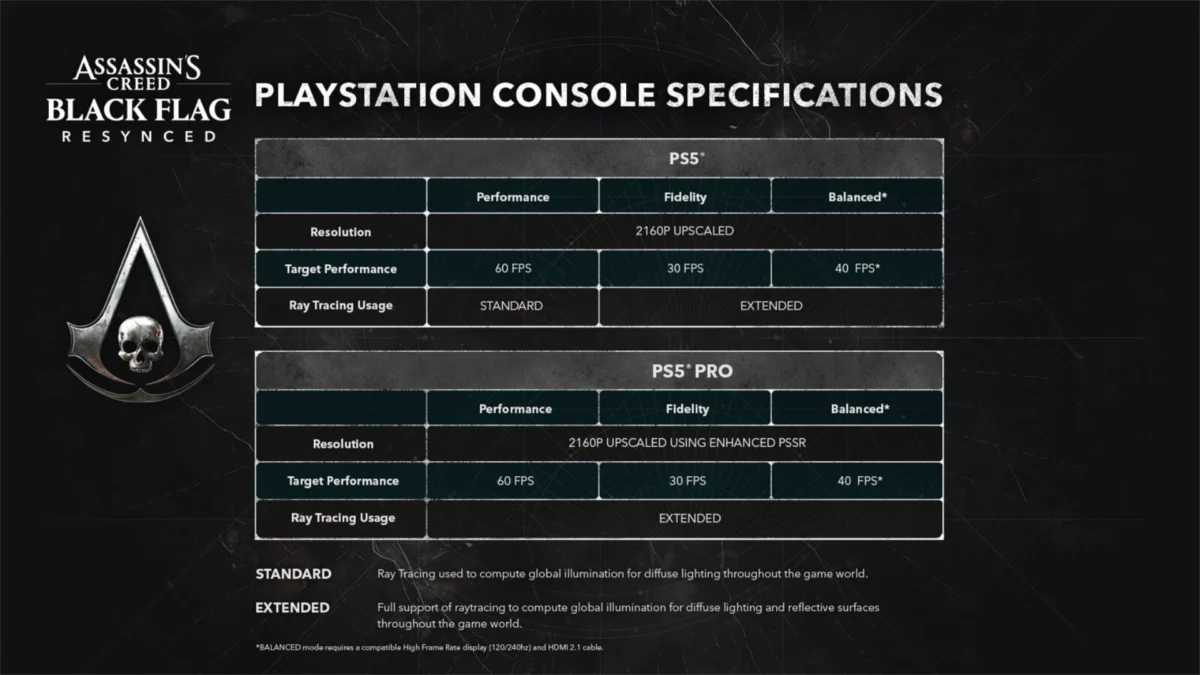
By Mustafa Mahmoud
In the rapidly evolving landscape of console gaming, the PlayStation 5 Pro has often been the subject of intense scrutiny regarding its value proposition. However, as the hardware matures, it is becoming increasingly clear that Sony’s mid-generation refresh is finding its stride. Central to this resurgence is the integration of cutting-edge software suites, most notably the PSSR 2 (PlayStation Spectral Super Resolution) upscaling technology.
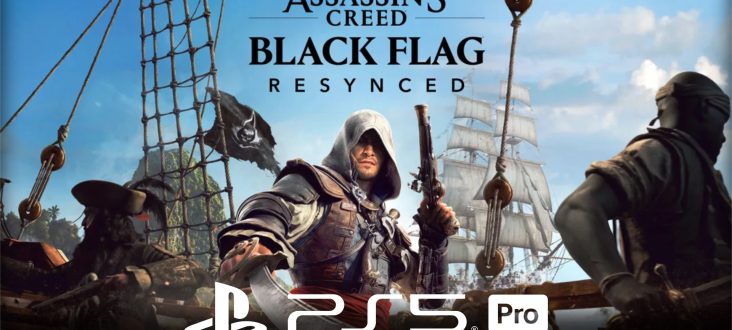
As we approach the July 9th launch of Assassin’s Creed Black Flag Resynced, Ubisoft has pulled back the curtain on how they are utilizing the PS5 Pro’s specific toolset to elevate a beloved classic into a modern technical showcase. By tapping into the Pro’s enhanced GPU and machine learning capabilities, Ubisoft aims to deliver what technical directors are calling the "definitive experience" for Edward Kenway’s high-seas adventure.
Main Facts: The Resynced Evolution
The Assassin’s Creed Black Flag Resynced update is more than a simple resolution bump. It represents a fundamental recalibration of the 2013 title to meet the demands of 2026 display technology. While the original game was a marvel of its time, Resynced brings it into the modern era by utilizing the PS5 Pro’s advanced architecture to facilitate higher frame rates, more stable performance, and enhanced visual fidelity.
The primary improvements hitting the PS5 Pro include:
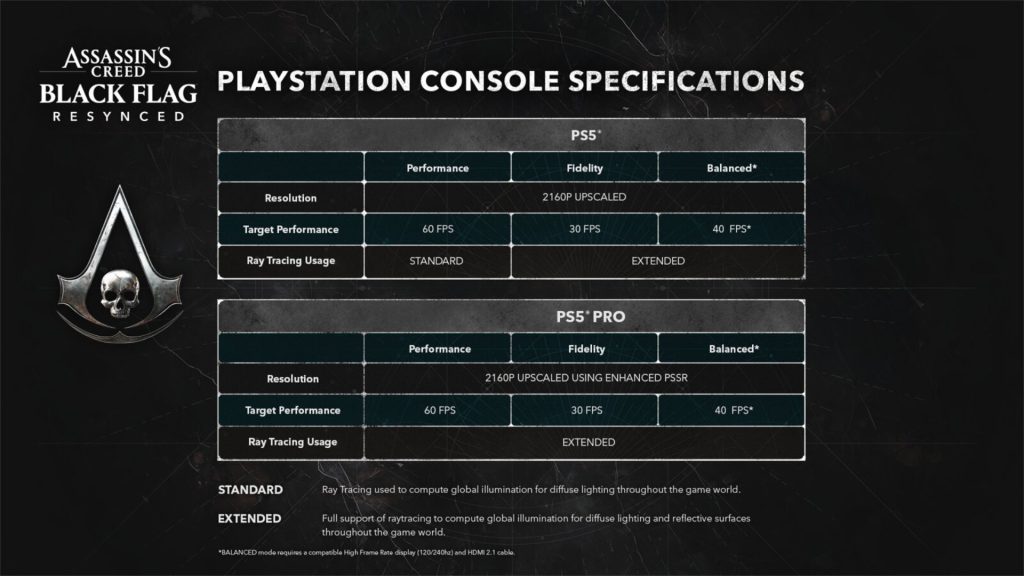
- PSSR 2 Integration: Utilizing Sony’s latest upscaling technology to deliver a 4K output that preserves fine detail in dense environments like Havana and Nassau, effectively eliminating the shimmering artifacts common in earlier upscaling solutions.
- Enhanced Lighting and Volumetrics: Ubisoft has overhauled the global illumination models, allowing for more realistic sun shafts through the sails of the Jackdaw and improved ambient occlusion in urban environments.
- Dynamic NPC Strand System: A new, proprietary technology that manages the complexity and density of crowd AI, ensuring that the bustling streets of the West Indies feel alive without compromising the console’s performance budget.
- Performance Modes: Dedicated modes that prioritize either a locked 60fps at high resolution or an unlocked, high-refresh-rate mode for players with compatible VRR (Variable Refresh Rate) displays.
Chronology: The Road to Resynced
The journey of Black Flag Resynced is inextricably linked to the broader push by Ubisoft to modernize its back catalog for the PS5 Pro hardware.
- Early 2026: Reports begin to circulate regarding Ubisoft’s "legacy optimization" initiative, aimed at bringing key titles from the Assassin’s Creed franchise to the PS5 Pro with specialized patch support.
- April 2026: Sony announces the rollout of PSSR 2, citing improved temporal stability and motion vector handling. Ubisoft is named as a key partner for implementing this tech in upcoming titles, including Assassin’s Creed Shadows.
- June 15, 2026: Ubisoft confirms the existence of Black Flag Resynced, positioning it not just as a patch, but as a full-scale technical overhaul designed to showcase the Pro’s capabilities.
- June 29, 2026: Ubisoft’s technical directors, Nicolas Lopez and Jussi Markkanen, officially detail the technical specifications via the PlayStation Blog, marking the final lead-up to the July 9th launch.
Supporting Data: The Power of PSSR 2
The inclusion of PSSR 2 is arguably the most significant variable in the performance of Black Flag Resynced. In technical terms, PSSR 2 uses a deep learning-based upscaling algorithm that is trained on a massive library of game assets. Unlike previous iterations, PSSR 2 is designed to handle "sub-pixel detail"—essential for a game like Black Flag, which features dense foliage, complex rigging on ships, and shimmering ocean water.
Internal data provided by Ubisoft suggests that the PS5 Pro can render the game internally at a base resolution significantly higher than the base PS5, while PSSR 2 fills in the gaps to provide a native-like 4K image. This approach effectively solves the "jaggy" edge problem that plagued the original game’s post-processing anti-aliasing. Furthermore, the GPU overhead saved by utilizing PSSR 2 is being reallocated to increase the draw distance for foliage and improve the quality of water reflections—a critical component for an open-world pirate game.
Official Responses: Ubisoft’s Technical Vision
In their recent communication, technical directors Nicolas Lopez and Jussi Markkanen were clear about their objectives. "Our goal with Black Flag Resynced was never to simply increase the frame rate," stated Lopez. "We wanted to look at the game through the lens of 2026 technology. How would we render the Caribbean if we were building it today? The PS5 Pro’s toolset gave us the headroom to re-introduce graphical elements that were previously stripped away for the original console release."
Markkanen added, "The NPC strand system is particularly exciting. It allows us to manage crowd density on a per-zone basis, reacting to player actions in real-time. If you cause a commotion in a market, the crowd density shifts and reacts, and the Pro handles this logic without any stuttering or frame drops. It’s the kind of density we’ve always wanted to achieve."
Implications: The PS5 Pro’s Maturation
The success of Black Flag Resynced carries significant implications for the future of the PlayStation 5 Pro. For months, critics have argued whether a mid-generation upgrade is truly necessary. However, if Ubisoft can successfully transform a 13-year-old game into a modern-looking title through targeted software updates, it changes the conversation from "hardware power" to "hardware utility."
1. The Longevity of Classics
If developers continue to leverage the Pro to "remaster" older titles via these patches, we may see a decline in the need for full-scale remakes. Instead, the industry may shift toward "Resynced" editions that use modern AI upscaling to provide a premium experience without the development time or cost of rebuilding a game from the ground up.
2. PSSR as a Competitive Standard
PSSR 2 is proving to be a massive differentiator for Sony. By moving away from traditional checkerboard rendering and embracing machine learning, Sony is creating a platform where the software does the "heavy lifting" to make games look superior. This sets a high bar for competitors and creates a clear incentive for third-party developers to prioritize the PS5 Pro version of their games.
3. The NPC Strand System and AI
The implementation of the "NPC strand system" in Black Flag acts as a proof-of-concept for more complex AI management. As games become more ambitious, the ability to manage thousands of autonomous entities without hitting CPU bottlenecks will become the next frontier in open-world design. Ubisoft is clearly testing these systems in Black Flag to prepare for larger, more dense environments in the Assassin’s Creed franchise moving forward.
Conclusion: A New Standard for Mid-Gen Upgrades
As July 9th approaches, the excitement surrounding Assassin’s Creed Black Flag Resynced is palpable. It is a rare example of a company looking back to move forward, using the power of the PS5 Pro to refine the gems of the past.
Whether you are a long-time fan of the franchise or a newcomer eager to see what the PS5 Pro can truly do, Resynced promises to be a milestone title. It proves that with the right tools, hardware isn’t just about raw power—it’s about the ability to breathe new life into the experiences that defined the medium.
Has the PS5 Pro finally justified its existence? With titles like Black Flag Resynced leading the charge, the answer is increasingly becoming a resounding "yes." The focus has shifted from the hardware itself to the experiences it enables, and for players, that is the most promising development of all. As we wait for the final release, one thing is certain: the high seas have never looked this good.
For more on the latest in gaming hardware and software updates, stay tuned to our ongoing coverage of the PS5 Pro’s library. Let us know in the comments below: Are you excited to return to the Caribbean, or is the NPC strand system just another piece of "marketing fluff"? We want to hear from you.


 Iffa Jayyana
 Muslim