

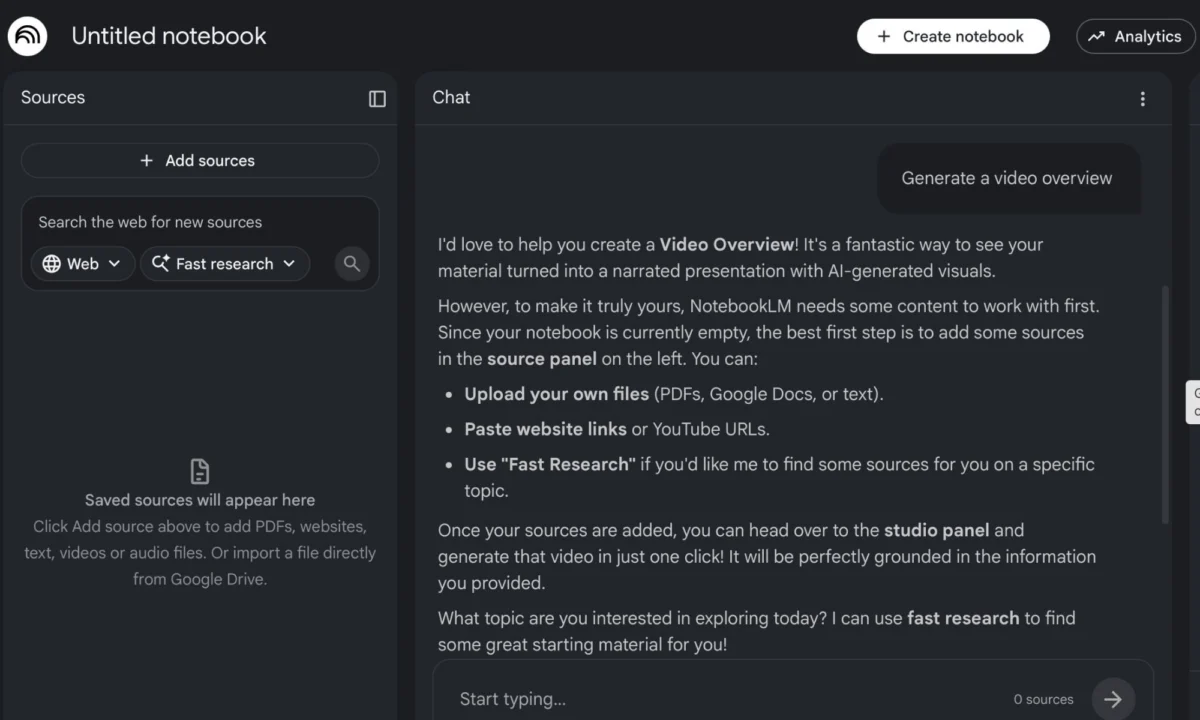
In an era where the digital landscape is defined by the relentless pace of vertical, short-form video, our consumption habits have undergone a fundamental shift. From the endless streams of TikTok and Instagram Reels to the algorithmic feeds of X and the burgeoning short-form experiments on Netflix, the modern attention economy is built on bite-sized content. It is within this context that Google has introduced "Short Video Overviews" for NotebookLM—a feature that bridges the gap between passive entertainment and active intellectual engagement.
By transforming dense, multifaceted documents into 60-second visual summaries, Google is not merely adding another tool to its AI suite; it is fundamentally altering how users synthesize, understand, and retain complex information.
The Core Innovation: Distilling Complexity into Clarity
At its heart, NotebookLM has always been an advanced research assistant designed to ground large language models (LLMs) in the user’s specific source material. With the addition of Short Video Overviews, the platform moves beyond text-based synthesis. The feature parses uploaded PDFs, research papers, long-form notes, and reports, using generative AI to construct a one-minute, vertical video walkthrough that highlights the most critical concepts.
The utility of this feature is immediate: it serves as a bridge for visual learners and those overwhelmed by information density. By converting abstract text into a dynamic, guided visual narrative, users are presented with a "TL;DR" (Too Long; Didn’t Read) that is both highly contextual and scientifically structured for better retention.
A Chronology of the Integration
The development of Short Video Overviews follows a rapid trajectory of AI-driven productivity enhancements at Google:
- The Foundation: NotebookLM initially launched as an experimental "AI Notebook," allowing users to upload specific sources to prevent AI "hallucinations" by grounding answers solely in provided data.
- The Expansion: Recognizing the need for varied content formats, Google expanded the tool to include audio summaries, which were met with widespread acclaim for their ability to turn dry text into conversational, podcast-like experiences.
- The Shift to Video: In late June 2026, Google officially announced the integration of Short Video Overviews. This move acknowledged the reality that for a significant demographic, the "vertical scroll" has become the primary mechanism for daily information ingestion.
- The Rollout: The feature began its deployment phase for Google AI Ultra and Pro subscribers on both web and mobile platforms, with a clearly defined roadmap to include free-tier users in the near future.
Supporting Data: The Neuroscience of Visual Learning
The efficacy of this feature is supported by established pedagogical principles. Research into cognitive load theory suggests that learners struggle when faced with an "information glut." When complex data is presented in a singular, text-heavy format, the brain’s working memory can easily become overwhelmed.
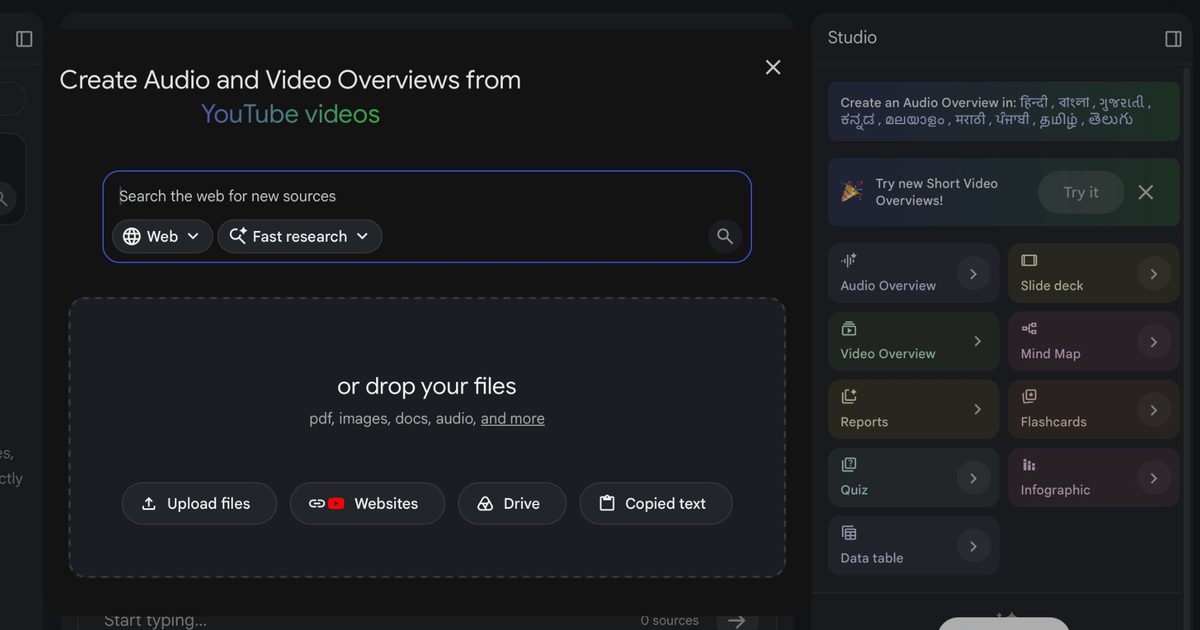
By introducing a visual medium that is time-constrained (60 seconds), Google is leveraging the "segmentation effect." This educational psychology concept posits that breaking down information into small, meaningful units allows the learner to manage cognitive load more effectively. When the brain is presented with a concise, visual summary, it creates a "scaffold" for the knowledge, making it significantly easier to deep-dive into the original source material afterward.
For students and professionals alike, this reduces the friction of starting a complex task. The "anxiety of the blank page" or the "dread of the 50-page report" is mitigated by the knowledge that a manageable, high-level overview is only a click away.
Official Responses and Strategic Positioning
Google’s positioning of this feature is strategic, aiming to capture the "productivity-curious" demographic. In their official communications, the NotebookLM team emphasized the duality of the tool: it is both an educational resource and a means of reclaiming time.
"Doomscrolling, but make it educational," the team noted in their announcement, directly addressing the cultural critique that short-form video is a time-sink. By framing this feature as a way to "deep dive into any concept," Google is attempting to sanitize the medium of the "short," suggesting that the format itself isn’t the problem—the lack of substance is.
Early testers have praised the tool’s ability to act as a "first draft" generator. For content creators, this represents a significant workflow optimization. Turning raw, technical research into a polished, accessible video script usually takes hours of manual labor. With NotebookLM, that initial synthesis happens in seconds, allowing creators to focus on the nuance and creative polish of their work.
Implications for the Future of Learning
The introduction of Short Video Overviews carries profound implications for how we will interact with knowledge in the coming decade.
The Optimization of the Human Brain
We have, in many ways, "optimized" our brains for 60-second bursts of information. This has been a source of much hand-wringing among educators and psychologists. However, Google’s latest move suggests a pragmatic pivot: if we cannot return to an era of long-form, uninterrupted deep reading, we must ensure that the "quick bursts" we now crave are actually providing value. If our attention spans have shrunk, our tools must become more efficient at delivering high-density information.
The Democratization of Content Creation
This tool significantly lowers the barrier to entry for educational content. One does not need to be a video editor or a scriptwriter to distill a complex, 100-page academic paper into an engaging, vertical-format lesson. By democratizing the ability to create high-quality educational summaries, Google is effectively encouraging a surge in "micro-learning" across social platforms.
Limitations and the Path Forward
Despite the enthusiasm, the feature is not without its current constraints. The most notable is its restriction to English-language sources. In a globalized digital environment, this limits the immediate impact for international users. However, given Google’s historical track record with linguistic expansion in its AI suite, it is highly probable that multi-language support is in the immediate development pipeline.
Furthermore, there is the risk of over-reliance. If users begin to rely exclusively on 60-second summaries, they may lose the ability to perform deep, analytical reading—a skill that remains essential for critical thinking. The challenge for users will be to treat these videos as a gateway to knowledge, rather than a final destination.
Conclusion: A Net Positive for the Information Age
Ultimately, the emergence of Short Video Overviews in NotebookLM represents a sophisticated compromise between our modern habits and our intellectual needs. While there is an irony in using the same medium that often contributes to distraction to instead provide education, the net result is a powerful, accessible, and highly efficient tool for knowledge management.
As the feature rolls out to free users, we are likely to see a shift in how students approach revision, how professionals summarize industry reports, and how creators build their content libraries. If we are destined to live in a world of scrolling, we might as well ensure that the content we encounter—even if it is only 60 seconds long—actually makes us a little smarter. Google’s latest innovation suggests that, for once, the tools we use to manage our attention might actually be helping us reclaim it.











