Laily UPN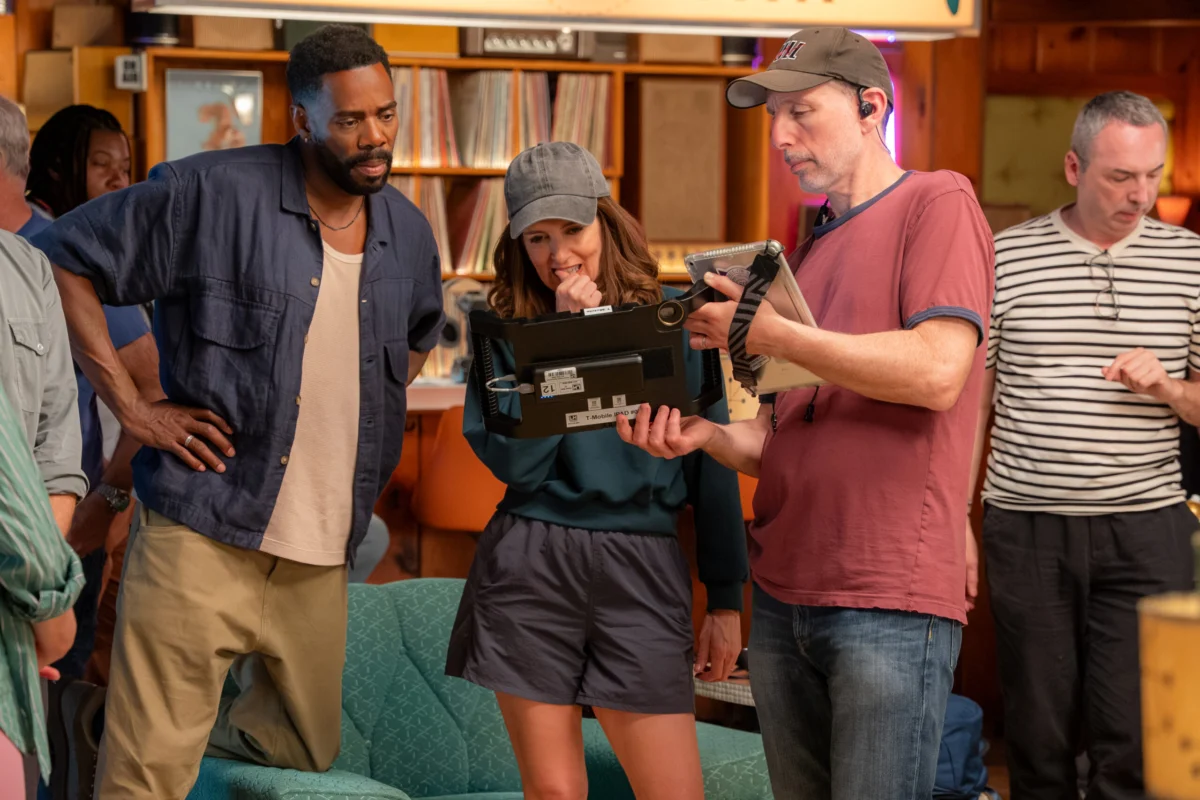
As The Four Seasons returns to Netflix for its highly anticipated second season, the production—inspired by the 1981 Alan Alda classic—has evolved into a masterclass of ensemble television. While the series remains anchored by its core group of friends navigating the complexities of middle-aged camaraderie, the second season marks a pivotal shift in its creative execution. By placing series regulars in the director’s chair and maintaining a rigid, naturalistic visual philosophy, the show is proving that its greatest strength lies in the interplay between its cast and the creative atmosphere they foster.
A Directorial Pivot: Domingo and Fey Take the Helm
The credits for the opening episodes of Season 2 signal a new era for the production. For the season premiere, "Hiking," the reins were handed to Colman Domingo. Known for his Emmy-nominated performance as the interior designer Danny, Domingo’s transition from actor to director offered a fresh, albeit challenging, perspective on the series.
During a recent virtual USG University panel moderated by IndieWire, Domingo described the experience as a significant departure from his previous directorial work, which often leaned heavily on technical spectacles. "Before I directed Fear the Walking Dead, which is big special effects and stunts and all, my experience was different," Domingo explained. For the premiere of The Four Seasons, the goal was not pyrotechnics, but emotional continuity. His task was to reintroduce the audience to the ensemble while signaling the shifting dynamics that define the new season.
"I wanted to take us to a place of remembering all those warm feelings of why you want this group to stay together," Domingo said, "and then setting up that there’s going to be some conflict—some little things that become bigger things that will challenge the group."
The second episode, "Funky Motel," marks a major milestone for the series: the directorial debut of co-creator, co-showrunner, and star Tina Fey. For a 10-time Emmy winner who has spent decades in the writers’ room, the decision to direct was not taken lightly. Fey emphasized that she wanted her presence behind the camera to be "additive," rather than serving as a restrictive force on the creative process.

"I’ve always felt that as a writer first, I wanted to make sure that if I was going to direct, it was additive in some way," Fey noted. "It wasn’t just the writer policing that no one changed their lines." Fey admitted that while the technical aspects of camera operation were initially intimidating, her deep familiarity with the actors’ rapport allowed her to focus on the human element of the storytelling.
Visual Cohesion in a Rotational Environment
With different directors stepping in for various episodes, the burden of visual consistency falls on cinematographer Tim Orr. As the series’ sole cinematographer, Orr acts as the "keeper of the tone," ensuring that the transition between directorial styles does not fracture the show’s established aesthetic.
"There’s new ideas from each director that come into play," Orr explained, "and it’s navigating the right way to incorporate those and have it still feel like it’s the same show." Orr characterizes the visual language of The Four Seasons as one of "elegant simplicity," favoring a "real" and "naturalistic" look that prioritizes the actors over flashy camera movements.
This commitment to naturalism is underscored by the show’s intricate production design. Sharon Lomofsky, the production designer, works to capture the absurdity of the characters’ vacation environments. A standout example in the new season is a barbecue restaurant situated near a remote, enigmatic Upstate New York hotel. Lomofsky’s design choices were intentional in their eccentricity: "I put all the animal heads facing everybody so that they were looking at them—wherever the camera turned, the animal heads were looking at our table," she revealed.
This environment serves as a mirror for the characters’ internal states. As Domingo noted, the seating and set design are reflections of the characters’ subjective experiences. "It’s beautiful about what she does because every character has a different opinion about the hotel, and so it’s depicted in her seating design too," he added.

The Chemistry of Casting: Scaling the Ensemble
The success of The Four Seasons is largely attributed to its ability to attract high-caliber guest stars who integrate seamlessly into the core group. Casting director Sherry Thomas points out that the reputation of a Tina Fey production acts as a magnet for talent.
"It is not difficult to cast for a Tina Fey show," Thomas joked. "Everybody wants to come and be a part of it." However, the process is far from haphazard. According to Thomas, the goal during casting was to create a balanced ensemble where no two characters felt like carbon copies. "When we assembled our core group, we really had a sense of the other elements to bring in because tonally, you don’t want everybody to feel exactly the same. You want people to feel like their own person."
This season features a host of recognizable faces popping in for single-episode arcs. Thomas notes that these actors are drawn to the project by the strength of the material and the absence of industry ego. "You will recognize people from very significant roles on other things that are popping in for a day because they want to be a part of it," she said.
When asked what defines the "perfect" addition to the cast, both Fey and the casting team look for a blend of professionalism and personality. "Ultimately, they feel like somebody we would hang with," Fey said. "And they’re usually people who are genuinely funny—truly funny." Season 2 sees actors like Toby Huss and Steven Pasquale stepping into these roles, fitting into the established rhythm of the show with remarkable ease.
Implications: The Future of "Comfort Comedy"
The evolution of The Four Seasons in its second season suggests a broader trend in television: the rise of the "actor-as-auteur" in ensemble comedies. By allowing stars like Domingo and Fey to move behind the camera, the show deepens the intimacy between the performance and the frame. This structural choice reinforces the show’s themes of friendship and aging; the characters are not just being watched, they are being "observed" by those who know them best.

Furthermore, the reliance on a single cinematographer to bridge the gap between episodes ensures that the "visual DNA" of the show remains intact. As television continues to move toward shorter, more cinematic seasons, the strategy employed by the team behind The Four Seasons provides a blueprint for how to maintain quality and coherence in a collaborative, multi-director environment.
As the series continues its run on Netflix, the focus remains firmly on the balance between the "conflict" that drives the plot and the "warm feelings" that keep viewers invested. Whether it is the subtle placement of an animal head in a restaurant or a 360-degree turntable shot that captures the chaotic joy of a dinner party, every element is curated to serve the ensemble.
In an era where audiences are often overwhelmed by high-concept sci-fi or intense dramas, The Four Seasons offers a refreshing, grounded alternative. It is a show about people, made by people who clearly enjoy the company of those they work with—a quality that translates, frame by frame, to the screen.
The Four Seasons is produced by Universal Television, a division of Universal Studio Group, and is now streaming exclusively on Netflix.
IndieWire partnered with Universal Studio Group for USG University, a series of panels celebrating the outstanding artistry and artisans behind the 2025–2026 television season across NBCUniversal’s portfolio of shows. USG University, a Universal Studio Group program, is presented in partnership with the Motion Picture & Television Fund.

 Sagoh
Sagoh
 Nana Wu