When we think of a majestic forest, our minds typically drift to the towering silhouettes of ancient sequoias or the vast, dappled canopies of old-growth oak groves. We look up to find scale, grandeur, and perspective. But what if we were to change our vantage point? What if we shrank our world down to the size of a beetle, a solitary ant, or a patrolling hoverfly?
Photographer Theo Bosboom has spent years answering this question. By plunging his camera into the dense, verdant undergrowth of the Netherlands, Belgium, and Germany, he has captured a series of images that transform common wild geraniums, garlic, and buttercups into towering, otherworldly forests. His new project, Flowerscapes, A Bug’s Eye View, does more than provide a visual feast; it serves as a profound meditation on the fragile state of our pollinators and the urgent need to preserve the hidden worlds beneath our feet.
The Perspective Shift: From Micro to Macro
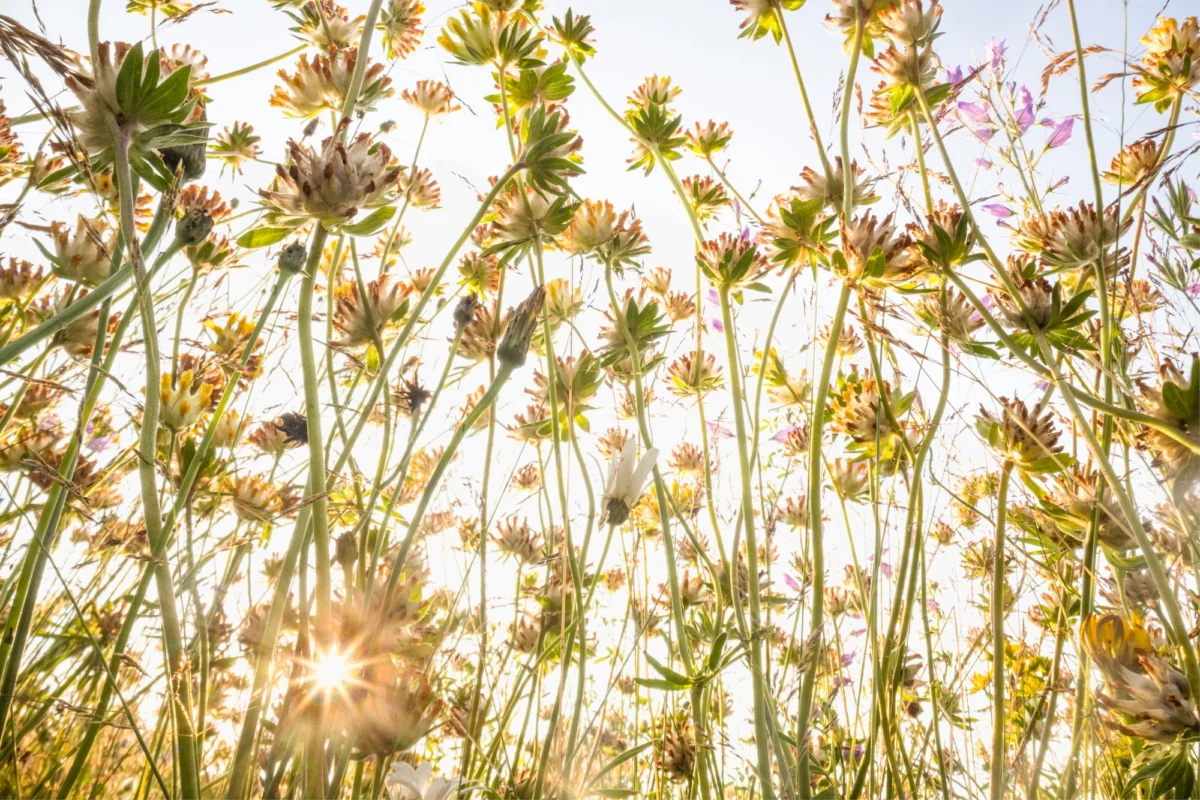
Bosboom’s technique involves getting as close to the earth as physically possible. By utilizing low-angle photography, he shifts the viewer’s frame of reference. In his images, the stems of a meadow flower become sturdy, gnarled tree trunks; the delicate, overlapping leaves form a canopy that blocks out the sky, creating the same sense of awe one might feel while walking through a redwood cathedral.

"The endlessly surprising perspectives completely captivated me," Bosboom notes. "I found myself constantly marveling at their beauty, elegance, and strength." This artistic endeavor is not merely a technical exercise in macro photography. It is an invitation to empathy. By forcing the human eye to occupy the space of an insect, Bosboom successfully bridges the disconnect between the human experience and the minuscule, yet vital, lives of our smallest neighbors.
A Chronology of Decline: The Eerie Silence
The origins of this project were not purely aesthetic. During his frequent excursions—ranging from local parks and roadside verges to the wilder dunes of the Netherlands—Bosboom began to notice a troubling trend. The landscapes he was photographing were increasingly silent.
- 2015–2018: Bosboom began scouting locations for his "Flowerscapes" series. Initially, he focused on the interplay of light and geometry in common weeds and wildflowers.
- 2019–2021: As his photographic technique evolved to capture the "bug’s eye" perspective, the absence of life became impossible to ignore. He documented frequent instances where, despite prime flowering conditions, there were no pollinators to be found.
- 2022–2024: During the compilation of his book, the contrast between the visual "lushness" of his subjects and the biological "emptiness" of the environment became the central theme of his work.
- 2025–Present: The publication of Flowerscapes serves as a clarion call, highlighting the disparity between the beauty we see and the ecological collapse occurring in real-time.
"At times, it was eerily quiet," Bosboom writes in his preface. "This matches recent studies showing that the numbers of flowers and insects have declined sharply across Western Europe over the past decades."

Supporting Data: The Global Insect Crisis
The observations made by Bosboom are supported by a growing body of scientific literature. The decline of insect populations is not a localized phenomenon; it is a global crisis with catastrophic implications for the food chain.
Recent research published in journals such as Biological Conservation has highlighted that more than 40% of insect species are declining globally. The drivers of this decline are multifaceted:
- Industrial Agriculture: The widespread use of neonicotinoids and other synthetic pesticides has decimated insect populations, directly killing pollinators and removing their food sources.
- Habitat Fragmentation: As urban development creeps into wild spaces, the "corridors" that insects use to travel between feeding and breeding grounds are being severed.
- Climate Instability: Unpredictable seasonal shifts and rising temperatures have caused "phenological mismatch," where flowers bloom before their specific pollinators emerge, leaving both parties starved.
- Pollution: Beyond chemical pesticides, light pollution and atmospheric nitrogen deposition are altering the behavior and survival rates of nocturnal and diurnal insects alike.
The "silence" Bosboom describes is the sound of an ecosystem unraveling. When insect populations drop, it creates a domino effect: insectivorous birds lose their primary source of protein, and wild plants—dependent on these insects for pollination—fail to reproduce, leading to a long-term reduction in botanical diversity.

Official Responses and Changing Management
While the outlook is sobering, Bosboom’s work also points toward a path of recovery. He has observed, particularly within the Netherlands, a shift in land management strategies that suggests a growing societal awareness.
Local governments and municipal authorities have begun to experiment with "wild-friendly" maintenance. This includes:
- Reduced Mowing Schedules: Allowing roadside verges and public parks to grow long provides essential refuge for pollinators.
- Native Plant Reintroduction: Replacing non-native ornamental flowers with indigenous flora, which are better suited to support local insect life.
- Pesticide-Free Zones: Cities are increasingly adopting policies that ban the use of glyphosate and other harmful chemicals in public green spaces.
These efforts, while often small in scale, represent a fundamental shift in how we perceive the "utility" of land. For years, the standard for a well-maintained space was a manicured lawn. Today, there is an emerging movement—one that Bosboom supports through his art—that prioritizes the "messy," biodiverse landscape as a symbol of health.

The Philosophical Implications of the "Bug’s Eye"
Beyond the ecological data, there is a deep, almost philosophical, argument in Bosboom’s work. By adopting a local-first approach to his photography—focusing on places he can reach by bike or on foot—he is also addressing the carbon footprint of the artistic process.
"I was drawn to reducing my environmental impact by working more locally," he explains. This decision mirrors the broader movement toward localized food production and community-supported agriculture. If we, as humans, start viewing our immediate surroundings—our backyards, our parks, our local roadsides—as vital, interconnected "forests," we are more likely to protect them.
The "bug’s eye view" is a powerful metaphor for environmental stewardship. It suggests that we do not need to travel to the Amazon or the Serengeti to witness the wonders of nature. The miracle of life, the struggle for survival, and the intricate beauty of the botanical world are happening right beneath our feet.

Conclusion: A Call to Action
The work of Theo Bosboom serves as a reminder that we are the stewards of a world that is much larger—and much smaller—than we typically perceive. Through his lens, a simple daisy becomes a monumental landmark, and a small spider becomes a resident of an expansive, leafy kingdom.
As we move forward into a future defined by climate uncertainty, we must learn to see the world as these insects do: as a series of interconnected, fragile habitats that require our protection. The silence in our meadows is a warning, but it is not a finality. By supporting native plants, reducing chemical usage, and changing our aesthetic standards for public spaces, we can ensure that these "micro-forests" remain vibrant, loud, and full of life.
Flowerscapes, A Bug’s Eye View is more than a book of photography. It is a mirror held up to our own environmental impact, challenging us to look closer, to care deeper, and to protect the tiny, essential giants of our world.

To explore more of Bosboom’s work, view his prints, or purchase his book, visit theobosboom.nl. You can also follow his ongoing journey and field observations on Instagram.